
12 Outdoor Living Space Ideas That Work with a Pool
July 9, 2026
How Long Does It Take to Build a Pool?
July 9, 2026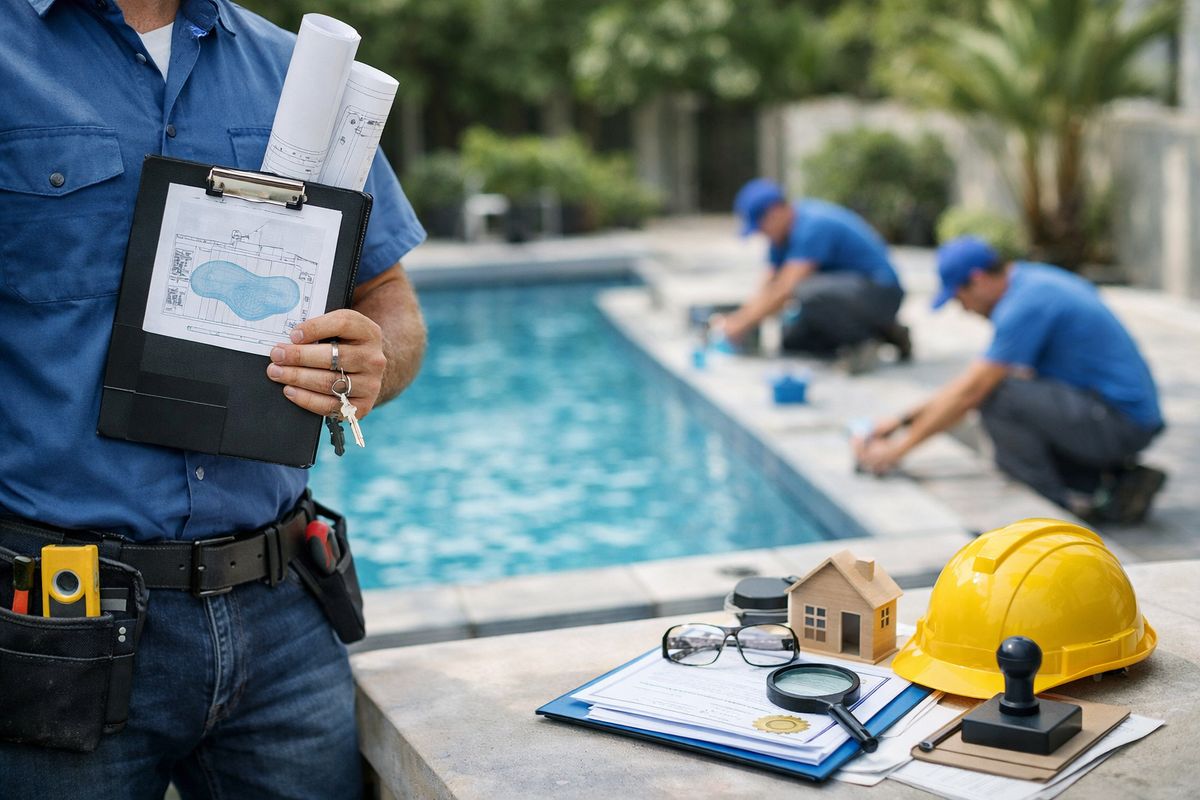
A licensed pool contractor can look exactly like an unlicensed one in a glossy quote, and that is what trips people up. Your pool project feels exciting right up until permits stall, inspections fail, or a “small change” adds thousands, so the smartest move is to check the boring stuff first and the pretty photos second.
Why hiring a licensed pool contractor matters more than the sales pitch
A strong sales pitch is easy to fake. A valid license, current insurance, and a clean track record are much harder to fake, and those are the things that protect your yard, your budget, and your stress level once digging starts.
In plain English, a licensed pool contractor is a business or individual approved by the state to perform pool construction work legally. That license is not just a piece of paper. It shows that minimum requirements were met, and it creates accountability if something goes wrong. If a contractor is not properly licensed for pool work in Florida, your contract can become a mess fast, especially when permits and inspections enter the picture.
In Gainesville, local conditions matter more than people think. Heavy summer rain, drainage patterns, soil conditions, and neighborhood lot layouts can all affect a pool build. A contractor who knows how work gets reviewed locally is less likely to get surprised by code details halfway through the job. That matters because surprises in construction are rarely fun and almost never cheap.
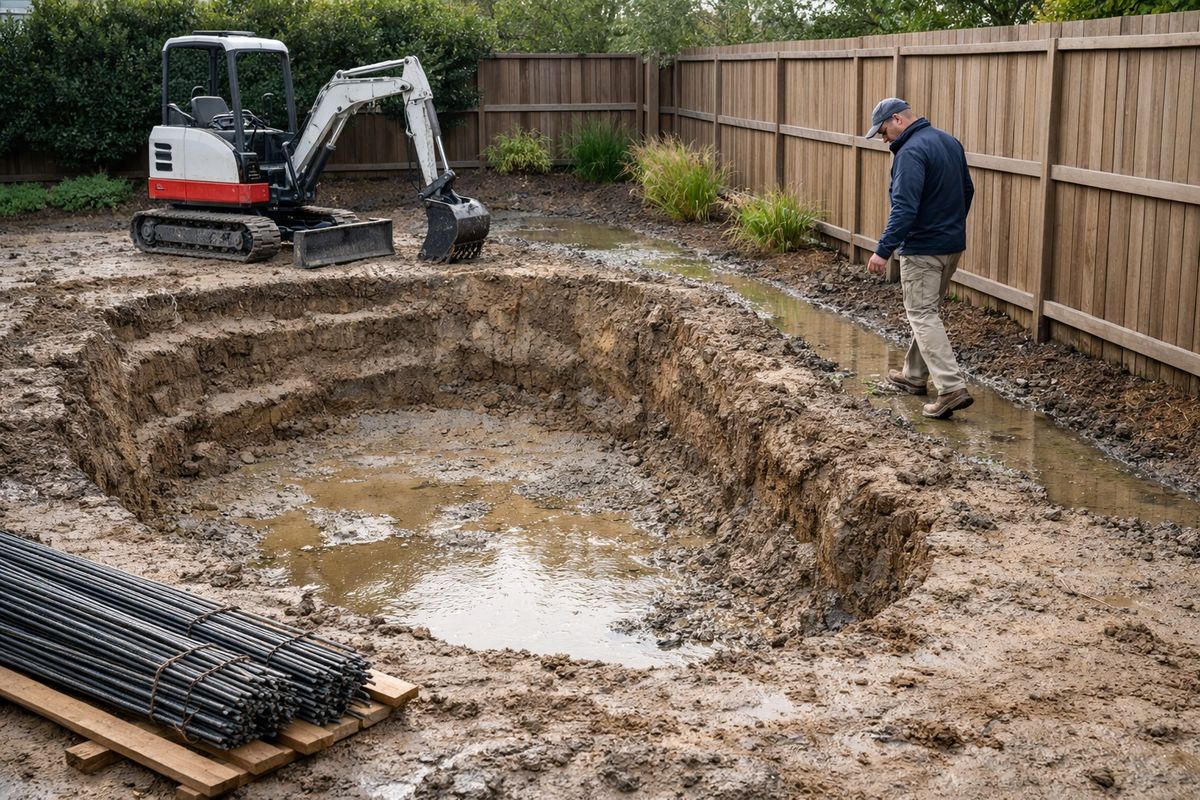
Start with the license, not the brochure
Photos can be borrowed. Promises can be polished. A clean estimate can still come from the wrong contractor.
So start with the license. Before spending time comparing pool shapes, tanning ledges, or finish colors, make sure the business is legally set up to do the work you want done. If the license is off, expired, or tied to a different kind of work, the rest of the conversation barely matters.
Confirm the contractor’s Florida license status
Florida makes this check fairly straightforward through the Department of Business and Professional Regulation. Search the contractor by name or license number and make sure the record is active, current, and connected to swimming pool construction, not some loosely related trade.
Pay attention to the exact name on the license record. The name on your proposal and contract should match what appears in the state database. If the proposal says one company name but the license belongs to another, stop and sort that out before going further. That mismatch can become a real problem if a dispute comes up later.
Also check the license type. “Licensed” is not a magic all-purpose word. Pool construction requires the right classification for the work. A company can be licensed for one area of construction and still not be the right fit to build or remodel your pool.
Check for complaints, disciplinary actions, and expiration dates
An “active” status is a starting point, not the finish line. Look for disciplinary history, complaint records, and expiration dates. A license that is technically active today but expires next month is worth noting, especially if your project is about to begin.
Complaint history needs context, but patterns matter. One old issue with a clear resolution is different from repeated problems involving permits, unfinished work, or contract disputes. The Florida Attorney General’s office also warns homeowners to verify contractors and avoid unlicensed work because it can lead to serious financial loss and little recourse if the job goes sideways.
This step feels tedious, honestly. But it can save you from the kind of headache that keeps a half-built pool sitting in your backyard while summer keeps moving.
Make sure insurance is real and current
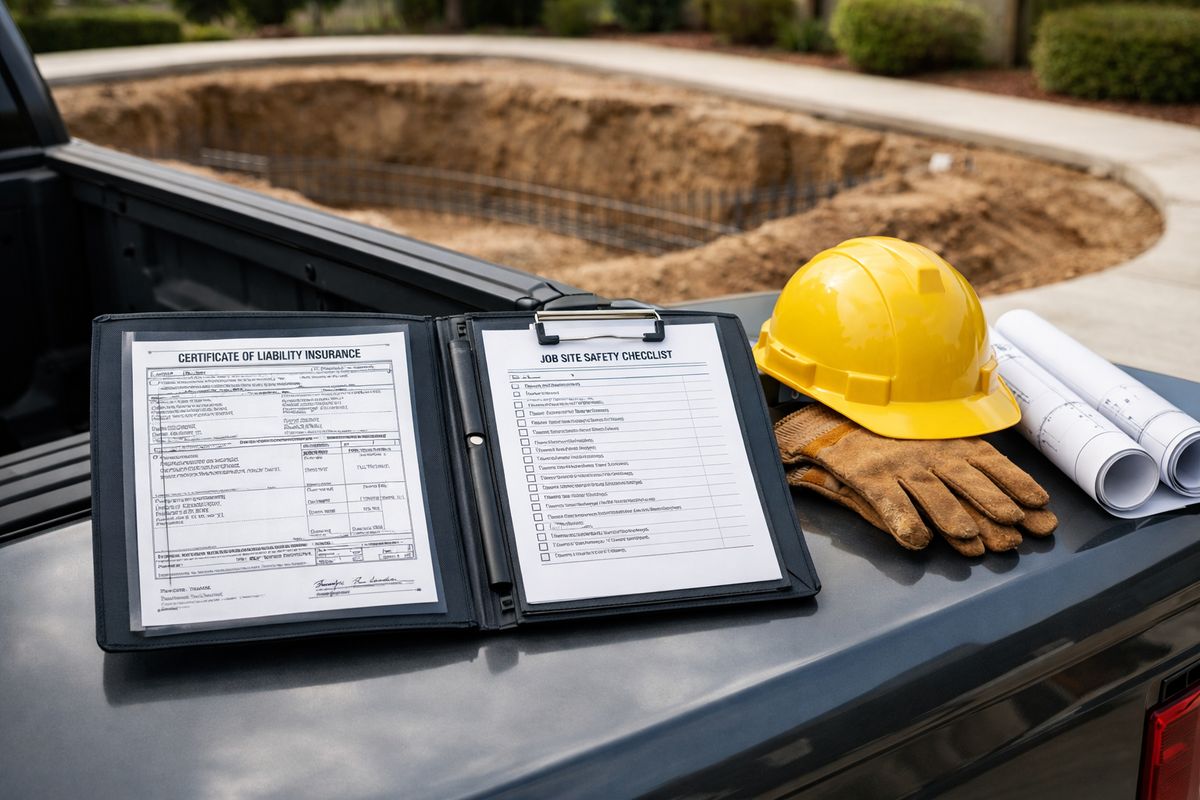
A contractor saying “fully insured” is nice. A current certificate proving it is better.
Insurance matters because a pool project includes excavation, heavy equipment, plumbing, electrical work, concrete, and crews moving through your property for weeks or months. If property damage or an injury happens, you want clear proof that coverage exists before work starts, not vague reassurance after something goes wrong.
Ask for general liability and workers’ comp proof
General liability insurance helps cover damage to your property or other losses tied to the contractor’s operations. If equipment damages your fence, driveway, or part of your home, this is one of the policies that may come into play.
Workers’ compensation covers job-related injuries for employees. If a worker gets hurt on your property and there is no proper workers’ comp coverage, the situation can get ugly fast. Pool builds are not light handyman jobs. There is too much risk involved to gloss over this.
Ask for current certificates, not old copies sitting in a sales folder. The dates matter. Coverage that expired two weeks ago does not help you now.
Verify who is covered on the job
Here’s the catch: insurance can be real and still not cover everyone stepping into your backyard. Some companies use employees, some use subcontractors, and some use a mix. You need clarity on which workers are covered under which policy.
If parts of the job are subcontracted, ask whether those subcontractors carry separate insurance and licenses when required. Ask who is responsible if a subcontracted crew causes damage or leaves defective work behind. The answer should be clear, direct, and backed by paperwork.
If the explanation gets fuzzy, that is your signal. A contractor who cannot explain coverage clearly at the start usually will not become clearer once a problem appears.
Check local permits, code knowledge, and Gainesville-specific experience
A pool is not just a hole with water in it. It is a permitted structure with safety rules, setbacks, drainage considerations, and inspection requirements that can vary by location.
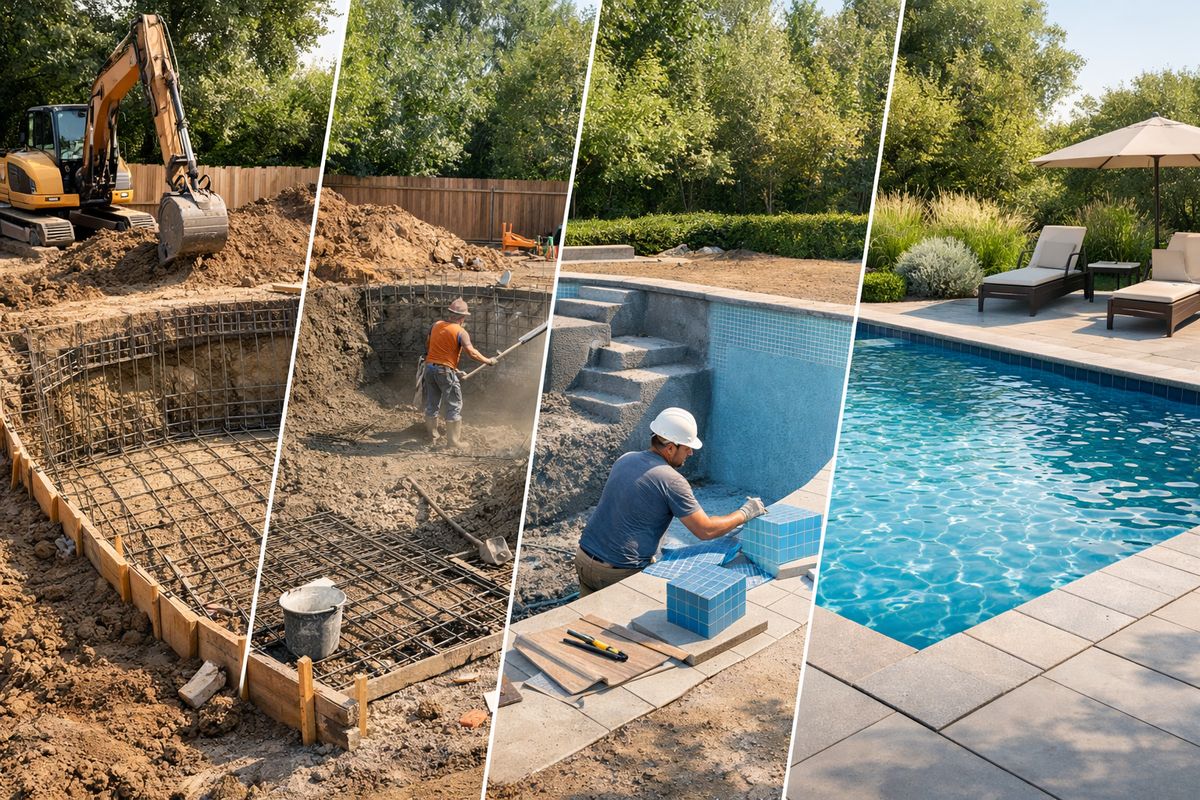
That is why local experience matters. A contractor who understands Gainesville and nearby areas has a better chance of spotting problems early, before your project gets delayed by site issues or permit corrections. If you want a fuller sense of how construction stages tend to unfold, it helps to read through what happens from dig day to final inspection before you compare bids.
Ask who pulls the permit
In most cases, your contractor should handle the permit application. That is part of the job. If you get pushed to pull your own permit as the homeowner, treat that as a serious warning sign.
Why? Because pulling your own permit can shift responsibility onto you in ways you may not expect. It can also be a tactic used when a contractor is not properly licensed to do the work. If somebody says it is “easier” if you pull it yourself, easier for whom is the right thought to have.
A legitimate contractor should be comfortable explaining the permit process, the expected review timeline, and what needs to happen before work begins.
Ask about inspections, setbacks, and drainage
This is where local knowledge starts to show. Ask how the pool location fits your lot, what setbacks apply, how drainage will be handled, and what inspections are expected along the way.
In a neighborhood with tighter spacing, like parts of older Gainesville areas, yard layout can become a real design constraint. A backyard near Haile Plantation may raise different questions about access, grading, and existing landscaping than a newer open lot. Those details affect excavation, decking, and drainage, which affects both cost and scheduling.
Ask how stormwater moves through your property now, and what changes once a pool and deck are added. Also ask about fencing and safety barrier requirements. A contractor who knows the local process should be able to explain these issues in plain language without sounding annoyed that you asked.
Look closely at the contract before you hire
Good intentions do not belong in the contract. Specifics do.
If the quote is where you get excited, the contract is where you slow down. This is the document that decides what you are actually buying, when payment is due, what happens when changes pop up, and what support exists after completion.
Scope of work
The scope of work should spell out exactly what is included. That means excavation, shell construction, plumbing, electrical, decking, coping, finish materials, equipment installation, cleanup, startup, and any agreed add-ons like lighting or water features.
Vague wording is where surprise charges like to hide. “Pool installation” by itself tells you almost nothing. A good contract breaks the project into understandable parts so you can see what is covered and what is not. If something important is missing from the scope, assume it may become an extra cost later.
This is also the right moment to compare the contract against the estimate line by line. If a feature was discussed during the sales process but never made it into writing, treat it as not included.
Payment schedule
A reasonable payment schedule usually follows actual progress. Think milestones, not giant leaps of faith.
A very large upfront deposit deserves a hard look. Construction businesses do need cash flow for scheduling, materials, and permits, but you should still be able to see a payment structure tied to completed stages of work. For example, one payment after excavation, another after shell completion, another after equipment installation, and a final payment after startup or final punch list items are addressed.
Clear payment timing protects both sides. If you are already comparing funding options, it also helps to understand how homeowners usually pay for a build, because financing terms can affect how payment schedules work in practice.
Timeline, change orders, and warranty terms
Pool timelines are rarely exact to the day, especially in Florida weather, but your contract should still include an expected start window, a general completion range, and language covering delays. Rain happens. Inspection scheduling happens. Material lead times happen. The point is not to demand perfection, it is to avoid a timeline so vague that nothing can be enforced.
Change orders matter just as much. A change order is simply a written update showing what changed, what it costs, and how it affects timing. If you add a spa, swap finish materials, or move plumbing, that should be documented before the work happens. Handshake changes are one of the fastest ways to lose track of cost.
Then there are warranties. Workmanship warranties cover the contractor’s labor or installation quality. Manufacturer warranties cover equipment or materials made by someone else. Those are not the same thing. If the pump fails, one warranty may apply. If the plumbing was installed poorly, another may apply. You want those terms in writing, not floating around in somebody’s memory.
Review past work the smart way
Pretty pool photos are nice. They are not proof.
The goal here is not to find the flashiest project on social media. The goal is to see whether the contractor produces solid, consistent work across different properties and follows through after the final payment.
Ask for recent local projects
Recent projects matter more than old highlights. Local projects matter more than random luxury builds in a different market.
Ask for examples from Gainesville or nearby areas, especially projects with lot sizes, access conditions, or design goals similar to yours. A compact backyard with limited equipment access is a different challenge from a wide open lot. So is a remodel versus a brand-new installation.
Recent local work also gives you a better sense of what is realistic for your property. If the contractor has completed several jobs in neighborhoods similar to yours, that is useful context. It is easier to trust examples that look like your real life, not just a dream board.
Read reviews for patterns, not just star ratings
Star ratings are the thumbnail. The written reviews are the movie.
Read enough reviews to spot repeated themes. Look for mentions of communication, delays, billing surprises, permit handling, warranty follow-through, and cleanup. A single angry review does not tell you much by itself. Repeated complaints about missed deadlines or sudden extra charges tell you plenty.
It also helps to go deeper on how to read contractor feedback without getting fooled by the surface. Reviews can be useful, but only if you know what patterns to notice.
Request references and ask better questions
A reference call should go beyond “Were you happy?” That question almost invites a polite half-answer.
Ask whether the final price stayed reasonably close to the quote. Ask whether permits and inspections were handled correctly. Ask whether crews showed up when expected and whether problems were fixed without a fight. Ask what surprised the homeowner, good or bad.
You are trying to learn what the process felt like after the deposit was paid. That is the part the brochure never shows.
Understand who will actually be in your backyard
The person who sells your project may not be the person who manages it, and that gap matters more than most homeowners expect.
Your daily experience depends on who schedules the crews, answers questions, notices mistakes, and fixes issues before they grow. If you do not know who that person is, you are trusting a moving target.
Ask who supervises the project
Ask who will manage the work day to day and who your main contact will be once construction begins. A project manager, site supervisor, or owner can fill that role, but somebody needs to clearly own communication.
This matters because construction questions never arrive at a convenient moment. A drain location needs confirmation. Decking details need approval. A crew shows up and cannot proceed until a design question gets answered. If your point of contact is vague or constantly changing, your project can start drifting.
A good answer sounds organized, not improvised. You should know who to call, when updates happen, and how jobsite issues get handled.
Find out what work is subcontracted
Subcontracting is common in pool construction. Electrical, decking, screen enclosures, and some specialty finishes are often handled by outside crews. That is not automatically a problem.
The real issue is coordination and accountability. Ask what parts of the job are subcontracted, who schedules those crews, and how licenses and insurance are checked. If something goes wrong in a subcontracted portion, you should know whether your main contractor is still your point of contact or whether you get bounced around from one company to another.
That handoff is where frustration grows. Clear responsibility keeps small issues from turning into long arguments.
Compare estimates without falling for the cheapest number
The lowest bid is often the most expensive one later. That is not a scare tactic. It is how incomplete quotes work.
A cheap-looking estimate can leave out permitting, use weak allowance numbers, gloss over site conditions, or include lower-grade equipment that costs more to maintain later. Comparing bottom lines without comparing details is like buying a car based only on the monthly payment.
What should be included in a pool estimate
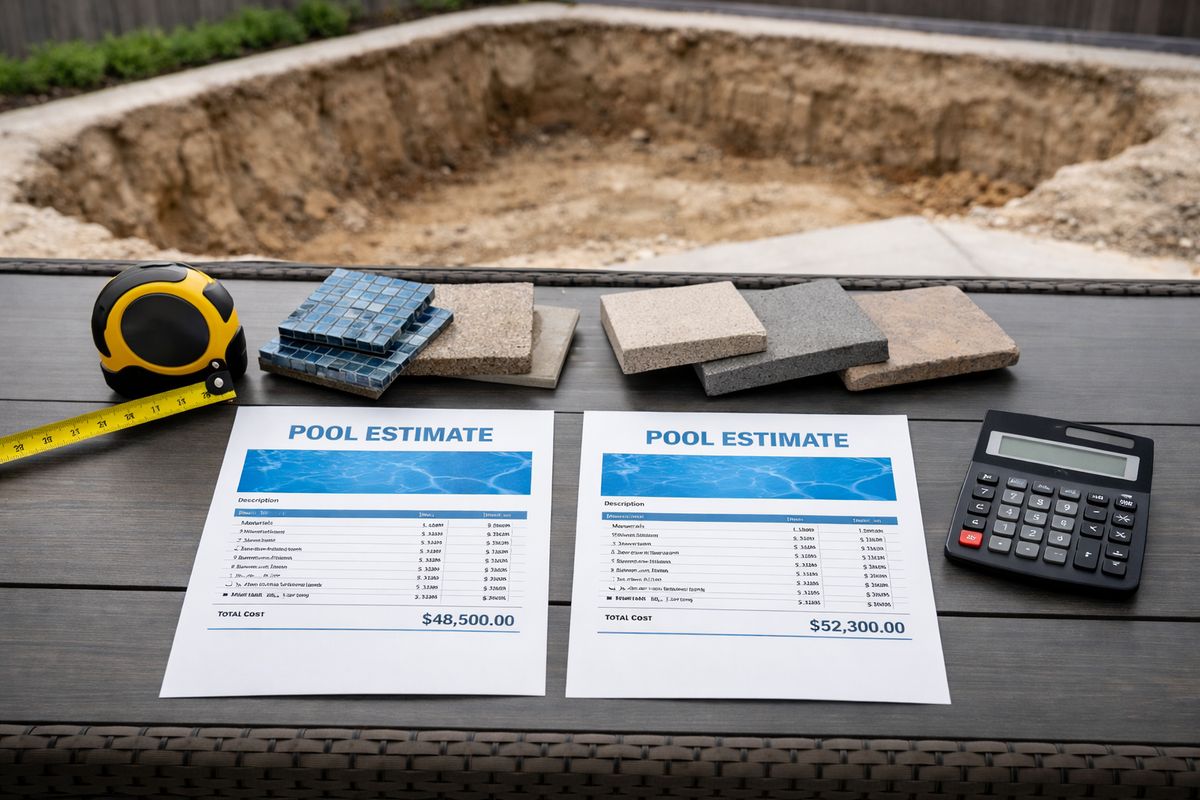
A useful estimate should cover the major parts of the project in enough detail that you can compare one quote to another honestly. That usually includes design, excavation, shell construction, plumbing, electrical, circulation equipment, interior finish, coping, decking, permits, inspections, safety barriers if required, and cleanup.
If your estimate includes extras like lighting, automation, heating, water features, or landscaping tie-ins, those should be listed separately. The more clearly each line item is described, the easier it is to compare value instead of guessing.
If price differences are making your head spin, it helps to understand what tends to push a build higher in Florida. Cost jumps usually come from a few predictable factors, not mystery math.
Why price gaps happen
Price gaps happen for real reasons. Shell type changes the cost. Equipment quality changes the cost. Deck material changes the cost. Site access changes the cost. Soil conditions, grading needs, and drainage work can all raise the total.
The catch is that some of those factors are obvious and some are buried. A contractor dealing with a tight backyard, limited access for excavation equipment, or a difficult drainage setup may need more labor and more time. Another contractor may leave those realities out of the quote and hope to price them in later.
That is why the line items matter so much. The more specific the estimate, the less room there is for expensive “discoveries” after work begins.
Spot allowance traps and vague wording
An allowance is a placeholder number for something not fully selected yet, like tile, decking, or a finish material. There is nothing inherently wrong with allowances. The problem starts when the numbers are unrealistically low.
A quote can look cheaper simply because the allowance assumes bargain-level selections that you would never actually choose. Then, once real materials get picked, the price climbs. Fast.
Watch for vague phrases like “standard equipment,” “owner to select finish,” or “allowance for deck material” without enough detail to understand what those numbers actually buy. If a line item is unclear, ask for the range of products or materials included under that allowance. If the answer stays fuzzy, the quote is not ready to sign.
Ask about equipment, materials, and long-term upkeep
A pool is not just a construction project. It is an ongoing system you live with.
That means some choices that seem minor during the sale can affect your weekends, utility bills, cleaning routine, and repair costs for years. A pool that looks great on day one but becomes annoying to maintain is not a good buy.
Pool type, finish, and deck materials
Different pool structures and finishes come with different trade-offs in durability, texture, appearance, and maintenance. Some surfaces feel smoother underfoot. Some show wear differently. Some require more attention to water chemistry to stay looking good.
Deck materials matter too. Heat retention, slip resistance, cleaning, and long-term appearance all affect how enjoyable the area feels in July. In Gainesville, where summer sun can make a deck uncomfortably hot by midafternoon, this is not a tiny design detail. It affects how much you actually use the space.
It also helps to think beyond the shell itself. If you want the surrounding area to feel finished, browse ideas for making the yard work better around the water before locking in your layout.
Pumps, filters, heaters, and automation
Pool equipment is where “bigger” and “better” can get misleading. What matters is the right setup for how you plan to use your pool.
Pumps move water. Filters remove debris and fine particles. Heaters extend comfort in cooler months. Automation lets you control settings more easily. The right combination depends on pool size, usage, and how hands-on you want to be with upkeep.
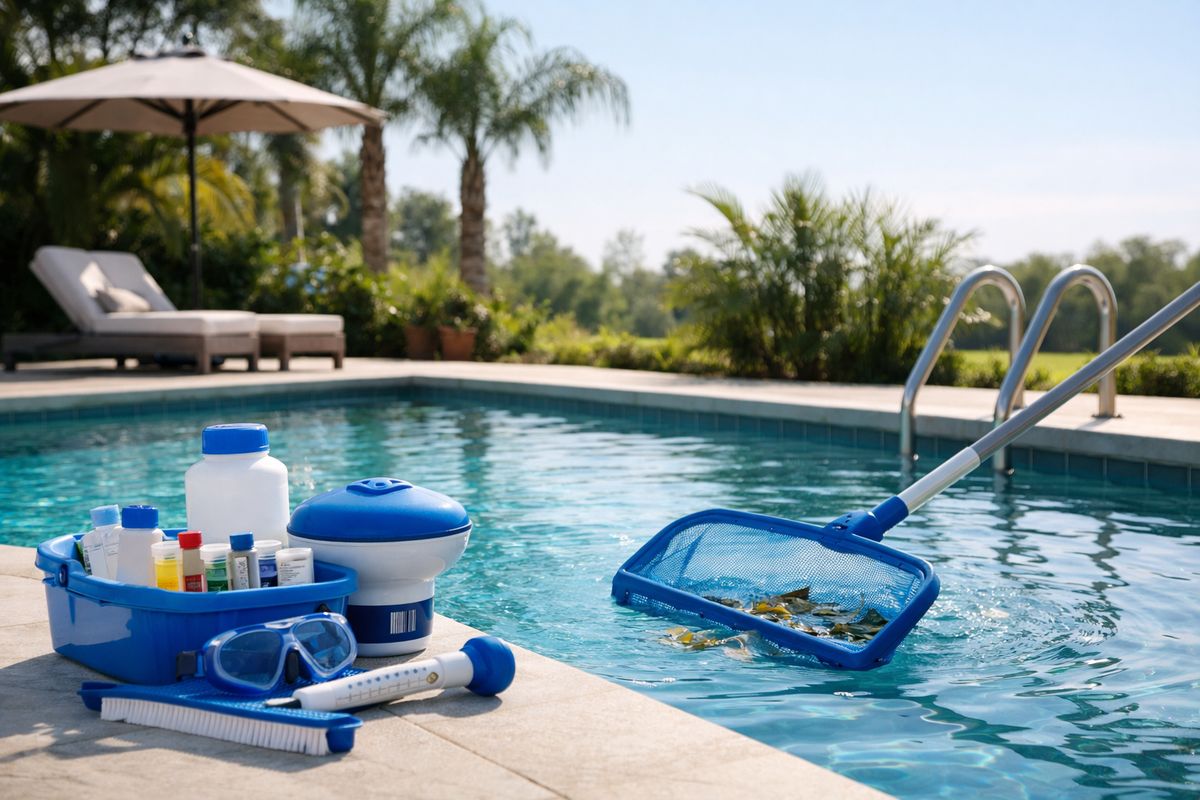
Ask what kind of maintenance routine the equipment setup is designed for. Ask about energy use. Ask how easy it is to service locally. And ask how your choices affect day-to-day care in Florida heat. If you want a better sense of what ownership feels like after the build is done, reading about keeping a pool manageable through Gainesville’s hot months can make equipment choices much easier.
Watch for red flags before you sign
Some warning signs are subtle. Others are loud enough to hear from the driveway.
Either way, it is cheaper to pause before signing than to untangle a bad contract after demolition starts.
High-pressure sales tactics
Be careful with rushed deadlines, “today only” discounts, or pressure to sign before checking credentials. A good contractor does not need to corner you into a fast decision.
Pressure usually shows up when somebody wants you focused on excitement instead of verification. If the sales process feels pushy now, imagine how change orders or warranty calls might feel later. That early tone often tells you more than the pitch itself.
Cash-only deals or unusually large deposits
A cash-only offer should make you slow down immediately. So should a demand for a huge deposit before permits, scheduling, or clear paperwork are in place.
Paper trails matter. Clear invoices matter. Payment methods that create records matter. When money moves without documentation, your protection shrinks. That is the exact opposite of what you want in a project this expensive.
No physical address, vague paperwork, or poor communication
A missing business address, sloppy documents, or slow responses are not tiny issues. They are previews.
Poor communication at the estimate stage often turns into worse communication once your yard is open and your money is committed. It is like noticing a wobble in a ladder before climbing it. That wobble is the warning. Do not talk yourself out of seeing it.
Questions to ask a licensed pool contractor before hiring
A consultation goes better when you already know what you need answered. Keep your questions practical, and listen for clear responses instead of polished ones.
Licensing, insurance, and permits
Use questions like these during calls or meetings:
- What is your Florida license number?
- Is your license specifically for pool construction or remodeling?
- Can you send a current certificate for liability insurance?
- Do you carry workers’ compensation coverage?
- Will you pull the permit for this project?
- Which inspections should your project go through?
Short, direct questions work best here. If answers come wrapped in detours, that is information too.
Timeline, crew, and communication
Construction gets smoother when you know who is doing what and when. Ask:
- When could your project realistically start?
- What completion range makes sense for this scope?
- Who will supervise the job day to day?
- What parts of the project are subcontracted?
- How often should you expect updates?
- What is the fastest way to get an answer during construction?
If you want a clearer expectation for scheduling, it helps to review how long each phase usually takes before treating any quoted timeline as gospel.
Costs, warranties, and post-build support
Money questions deserve plain answers. So do warranty questions. Ask:
- What payment milestones do you use?
- What could cause the quoted price to change?
- Which materials or finishes are listed as allowances?
- What workmanship warranty do you provide?
- What manufacturer warranties come with the equipment?
- What support is available after startup if something needs adjustment?
You are not being difficult by asking these questions. You are doing the part that keeps your project from getting weird later.
How to choose the right contractor for your pool project
The right choice usually becomes clear once you stop chasing the best sales pitch and start comparing the right categories side by side: license status, insurance, contract detail, communication, local experience, and estimate clarity.
If one contractor is cheaper but vague, another is polished but pushy, and a third is clear, licensed, insured, and specific in writing, that third option is usually the safer bet even if the number is not the lowest. A pool build is too expensive to treat like an impulse buy.
Try one thing first: check the Florida license record for your top two candidates before reading another quote. That one move cuts through a surprising amount of noise, and it puts you back in control of the decision.