
Pool Construction Timeline: Every Stage Explained
July 9, 2026
Florida Pool Care: What Changes in the North Heat
July 9, 2026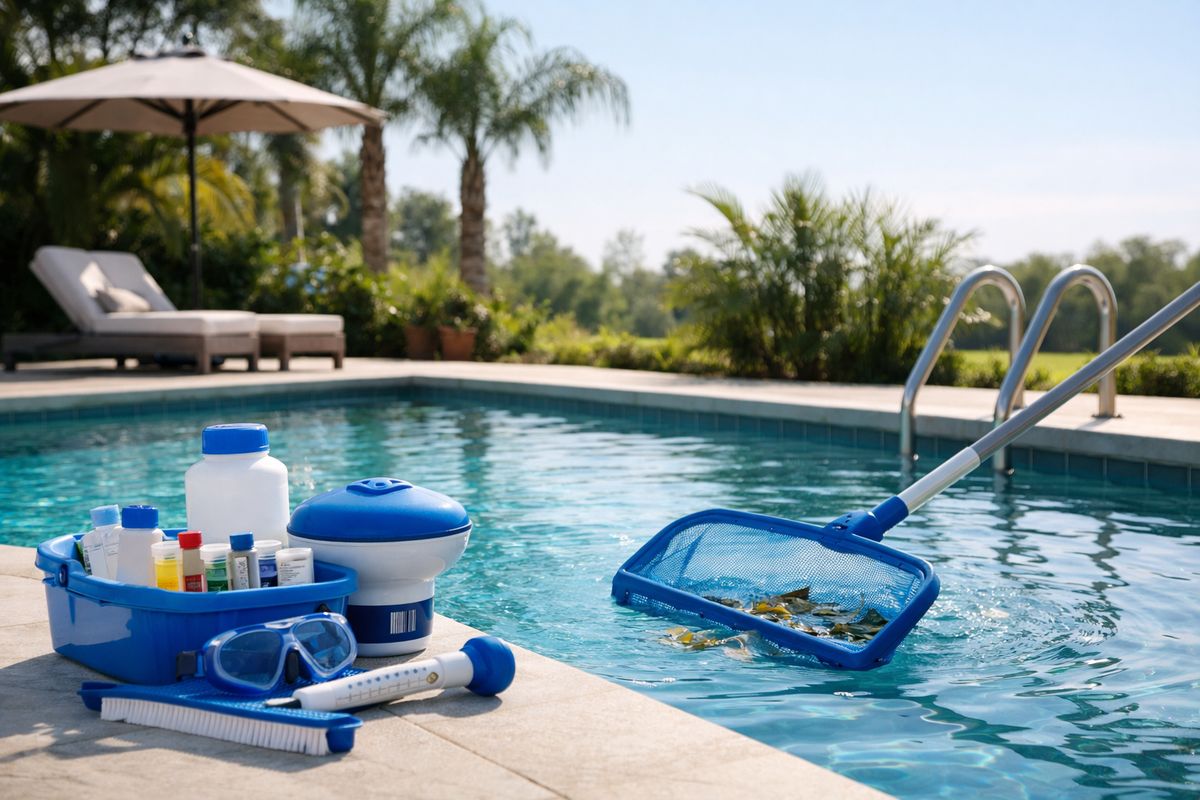
Pool maintenance Gainesville style is not a once-a-week-after-coffee kind of job. Step outside near Haile Plantation in July and your pool can already feel warm, collect a layer of pollen, and turn cloudy after one hard afternoon storm. This guide gives you the routine that actually works in Gainesville heat, without turning pool care into a second hobby.
If you want the short version, pool maintenance means keeping water clean, balanced, and moving so it stays safe, clear, and easy on your equipment. In Gainesville, that job gets harder because heat, rain, humidity, and debris all speed up the problems you’re trying to prevent.
Why Pool Maintenance Hits Different in Gainesville
A Gainesville pool deals with two jobs at once: water care and outdoor cleanup. The swim season runs long, the sun is strong, and storms can dump leaves and diluted rainwater into the pool in one evening. That combination changes the pace. If you skip a few days, the water notices.
Early in the season, it helps to understand how North Florida conditions change pool care, because Gainesville’s weather creates faster swings than a milder climate. A pool that looked fine on Tuesday can look tired by Friday.
The Gainesville factors that change the routine
The troublemakers are predictable. Strong sun burns through chlorine faster. Afternoon rain throws off water balance. Humidity and heat help algae grow quickly, especially in still corners. Add pollen, oak leaves, and general yard debris, and your pool needs more attention than a pool in a cooler, drier place.
Here’s the thing: Gainesville pools need an active routine, not a reactive one. Waiting until the water looks bad usually means more chemicals, more cleaning, and more frustration.
The Basics Your Pool Needs Every Week
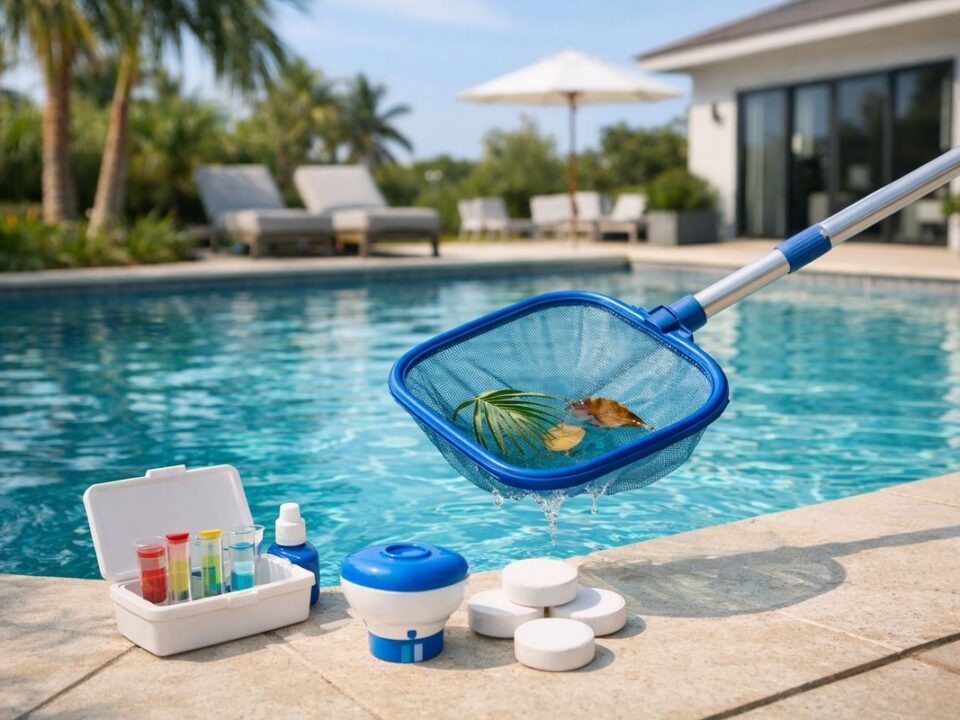
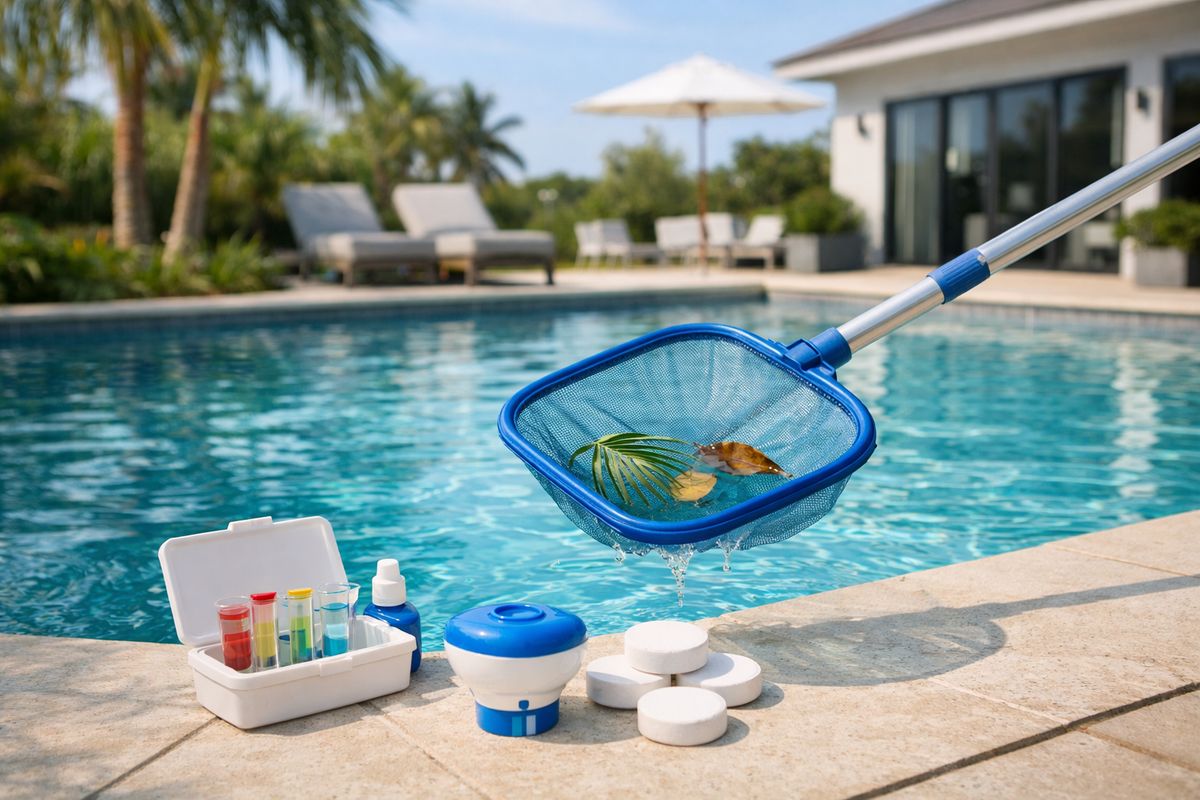
Most weekly maintenance is simple. You remove debris, keep water moving, and test chemistry before small issues become ugly ones. That’s the whole game.
Skim, brush, and vacuum before small messes turn into big ones
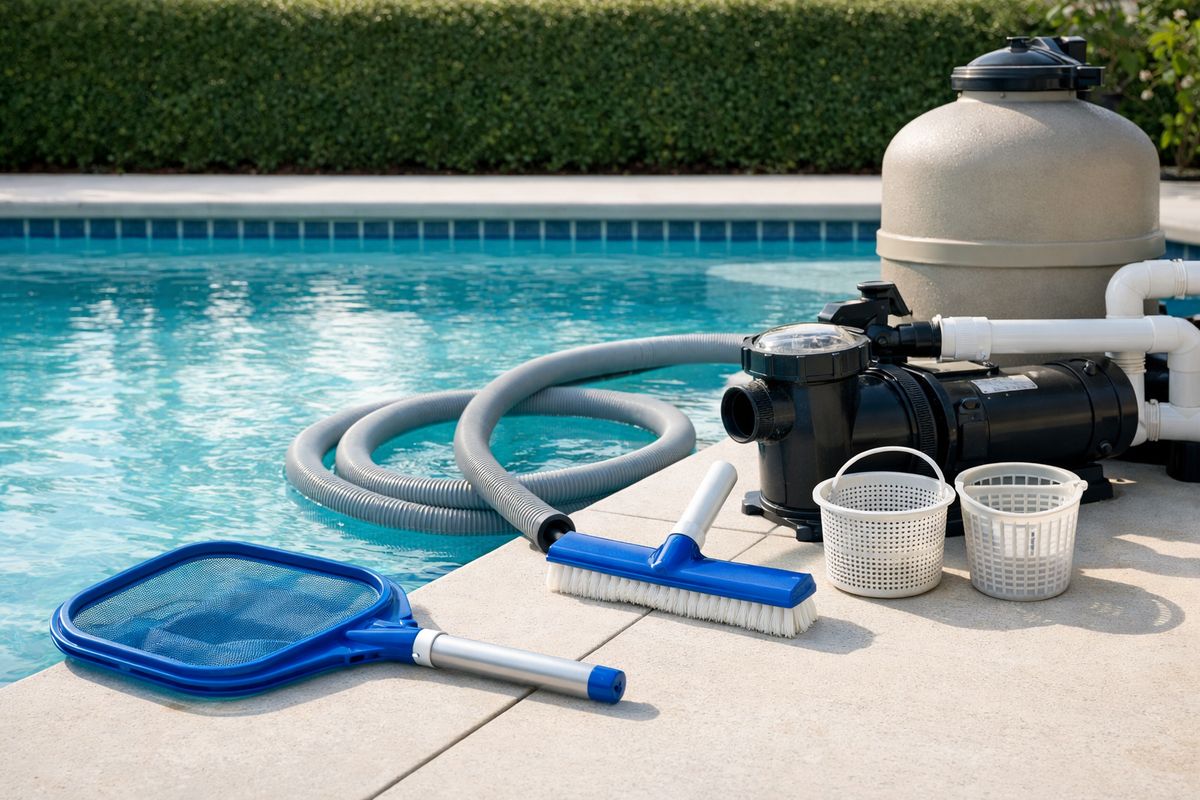
Skimming gets leaves, bugs, and pollen off the surface before they sink. Brushing walls, steps, and corners breaks up grime and early algae growth. Vacuuming removes dirt from the bottom so it does not sit there staining the finish or feeding cloudiness.
In hot weather, a little mess becomes a bigger one fast. That faint dust on the steps can turn into slick green patches quicker than most homeowners expect.
Keep the filter and pump doing the heavy lifting
Your pump and filter handle most of the dirty work, but only if water is circulating well. Circulation just means the water keeps moving so debris gets trapped and chemicals spread evenly instead of sitting in one spot.
Check skimmer baskets and the pump basket every week. If the return jets feel weak or the surface is not pulling debris toward the skimmer, something is off. Clean or backwash the filter on schedule so the system does not have to struggle.
Test the water and fix problems early
You do not need to become a chemist. Test chlorine, pH, alkalinity, and stabilizer. Chlorine keeps the water sanitized, pH affects comfort and how well chlorine works, alkalinity helps keep pH from bouncing around, and stabilizer protects chlorine from sunlight.
The trick is catching drift early. A small pH correction is easy. A cloudy, irritating pool takes more time and money.
Hot-Weather Water Chemistry Without the Headache
Summer chemistry sounds intimidating until you strip it down to what actually happens. Sun uses up chlorine, rain dilutes the water, and swimmers bring in sunscreen, sweat, and extra demand on the sanitizer.
Why chlorine disappears faster in summer
Sanitizer is the chemical that kills germs and helps stop algae. In Gainesville summer, strong UV light and frequent swimming burn through it quickly. That means your chlorine level can look fine one day and drop hard the next.
If algae keeps showing up, brushing and dosing alone may not solve the pattern. A more focused look at stopping algae before it takes hold can save a lot of trial and error.
How to handle pH swings after rainstorms
Heavy rain changes the water by dilution and debris runoff. After a storm, pH and chlorine can both shift, and cloudy water often follows. The fix is simple: retest after the storm instead of guessing based on yesterday’s numbers.
That one habit prevents a lot of wasted chemicals. Tossing products in without testing is like seasoning soup before tasting it.
When to shock the pool
Shocking means adding a stronger dose of chlorine to reset the water. It makes sense after a pool party, after a storm dumps debris in, when the water turns cloudy, or at the first sign of algae.
Brush first, then shock if needed. That helps the treatment reach what is clinging to the walls instead of just floating past it.
Common Gainesville Pool Problems and Quick Fixes
Most pool problems look dramatic before they are actually serious. The catch is that delay turns a quick fix into a weekend project.
Cloudy water
Cloudy water usually points to poor filtration, off-balance chemistry, or leftover storm debris. Start in order: test the water, adjust what is out of range, run the pump longer, and clean the filter. That sequence solves a lot more than random chemical dumping ever will.
Green spots and algae growth
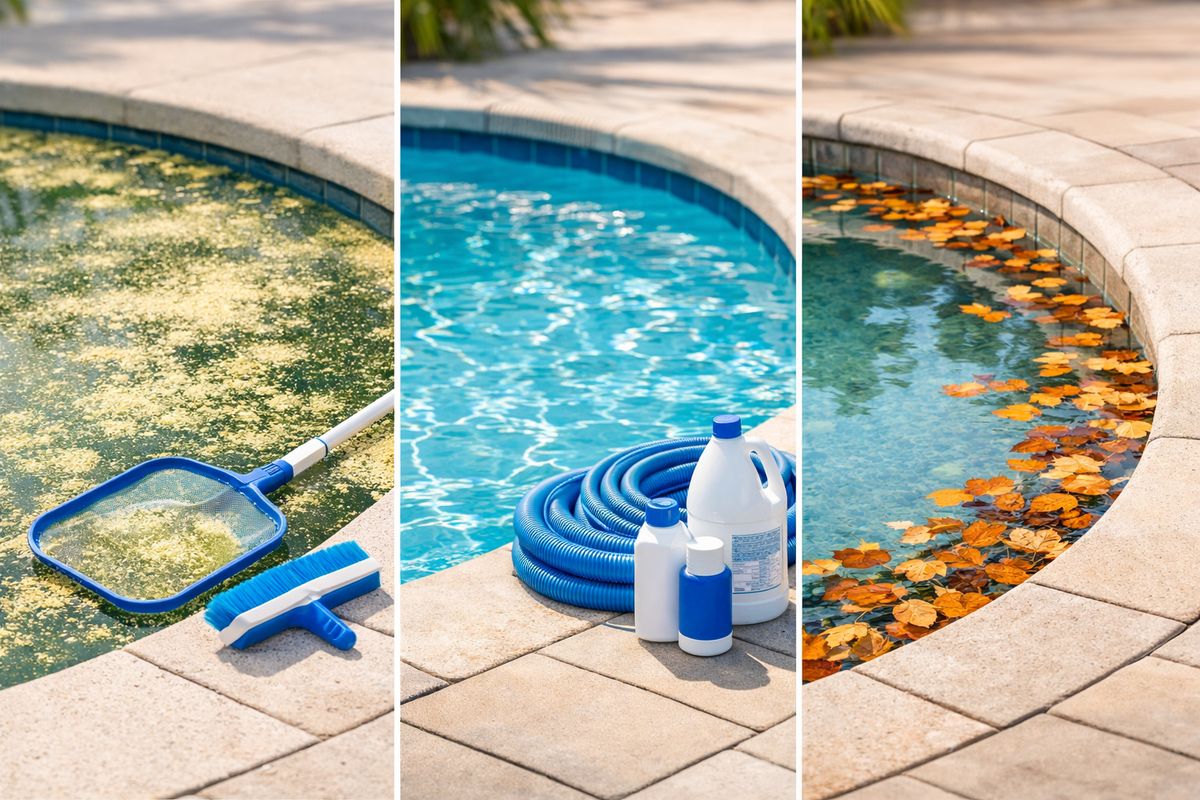
Algae loves shady corners, steps, tight edges, and spots behind ladders where water does not move well. Brush those areas first so the growth loosens up, then treat the water. If you skip brushing, chemicals may not fully reach the problem.
Stains, scale, and that rough feeling on the walls
Stains are discoloration from leaves, metals, or organic debris. Scale is crusty mineral buildup, and it often leaves that sandpapery feel on the walls or tile line. The difference matters because a stain treatment will not fix scale, and scrubbing scale without balancing the water invites it back.
A Seasonal Pool Care Rhythm for Gainesville
Even with a long swim season, your routine should shift a little through the year.
Spring prep before daily swim season starts
Spring is pollen season, startup season, and algae prevention season. Clear debris, check equipment, and test more often as temperatures climb. Getting ahead of problems now is easier than trying to rescue the pool in the first real heat wave.
Summer upkeep during peak heat and heavy use
Summer is the high-maintenance stretch. More swimmers, more sunscreen, faster evaporation, and faster chlorine loss all hit at once. This is the time for steady testing and consistent cleaning, not shortcuts.
Fall and mild-winter care
Cooler weather helps, but it does not erase the job. Leaves still collect, water still needs balance, and neglected winter care usually shows up later as stains, algae, or equipment strain.
DIY Pool Maintenance vs. Hiring a Local Pool Service
A lot of Gainesville homeowners can handle regular upkeep just fine. The key is staying consistent.
What you can realistically handle yourself
Skimming, brushing, vacuuming, basket cleaning, and basic testing are all manageable for most homeowners. Small chemical adjustments usually are too. If you stay on top of those jobs, you catch trouble early and avoid bigger messes.
When a pro is worth it
A pro earns the cost when algae keeps returning, equipment stops behaving, water balance gets stubborn, or your schedule just does not leave room for consistency. If you need outside help, start with what to check before hiring a contractor so you do not end up paying for guesswork.
What pool service usually includes in Gainesville
Routine service usually covers cleaning, water testing, chemical balancing, filter care, and basic equipment checks. Repairs and renovations are usually separate. If maintenance issues lead to bigger plans later, it helps to understand what drives build and upgrade pricing before committing.
Pool Maintenance Costs and How to Keep Them Reasonable
Pool care costs are usually steady until neglect gets involved. Then the price jumps.
The regular costs to expect
Expect ongoing spending on chemicals, test supplies, electricity for the pump, occasional filter cleaning, and replacement parts like lids, baskets, or seals. None of that is shocking on its own. The expensive stuff usually starts when water turns green or equipment works harder than it should.
Small habits that help you avoid expensive fixes
Run the pump on schedule. Empty baskets before they clog. Brush weekly. Test after storms. Those habits are the pool version of changing the oil before the engine complains. Boring, yes. Worth it, absolutely.
A Simple Pool Maintenance Checklist You Can Actually Stick To
A simple routine beats an ambitious one you stop doing after two weeks.
Weekly checklist
Skim the surface, brush walls and steps, vacuum as needed, empty baskets, and test the water. That short list handles most of the work that keeps a Gainesville pool clear and swim-ready.
Monthly checklist
Clean or backwash the filter, inspect visible equipment, check the water level, and look for wear on seals, lids, and other easy-to-see parts. Catching one loose lid or cracked basket early can save a bigger repair later.
After-storm checklist
Remove debris, retest the water, make sure circulation looks normal, and watch for cloudiness or algae over the next day or two. Start with one habit if you want the easiest win: test your pool the day after every big Gainesville storm. That single move solves a surprising number of problems before they get expensive.