
Pool Construction Costs: What Raises the Price Fast
July 9, 2026
Pool Financing Options: How Homeowners Fund a Build
July 9, 2026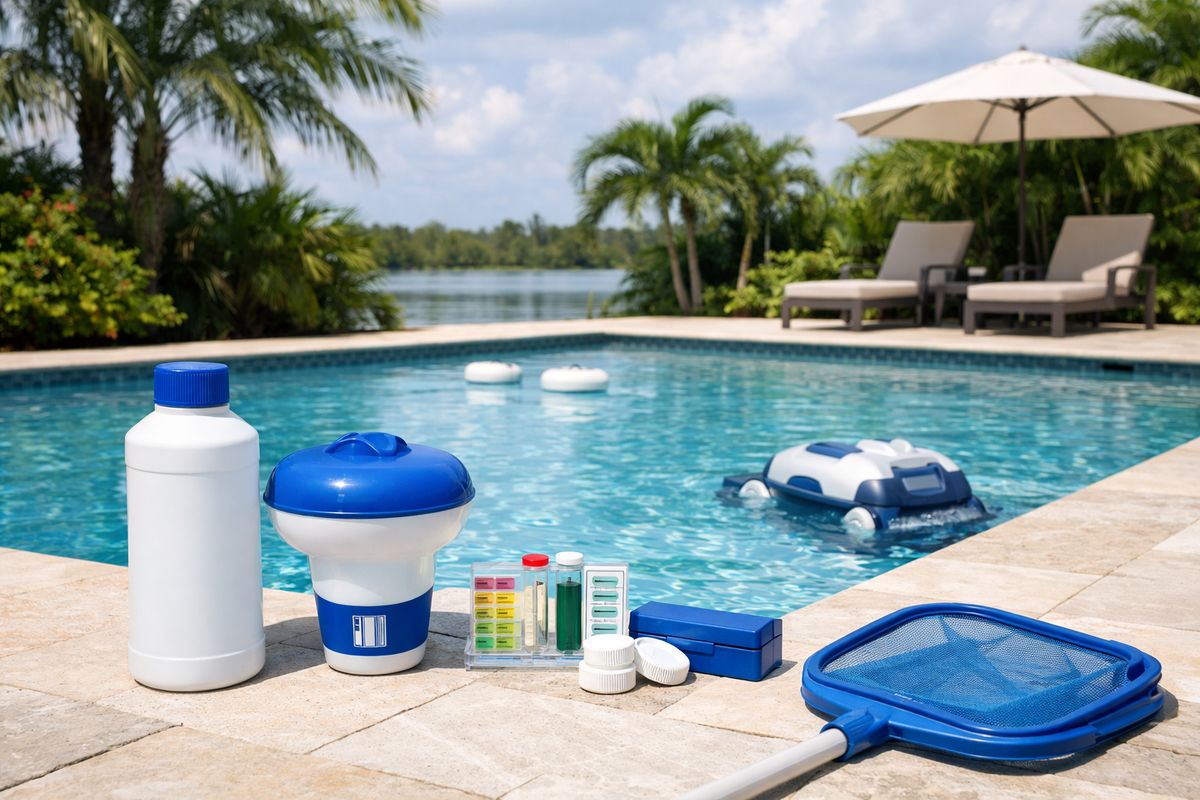
If your pool looks clear on Monday and a little dull by Thursday, Florida is doing what Florida does. In Gainesville, algae prevention pool care is less about heroic cleanups and more about a steady routine that keeps hot water, rain, and debris from getting the upper hand.
What you’ll need before you start
A good prevention routine gets much easier when everything is already within reach. If you have to stop halfway through to find a test kit, buy chlorine, or untangle a brush pole, small maintenance jobs start turning into weekend projects.
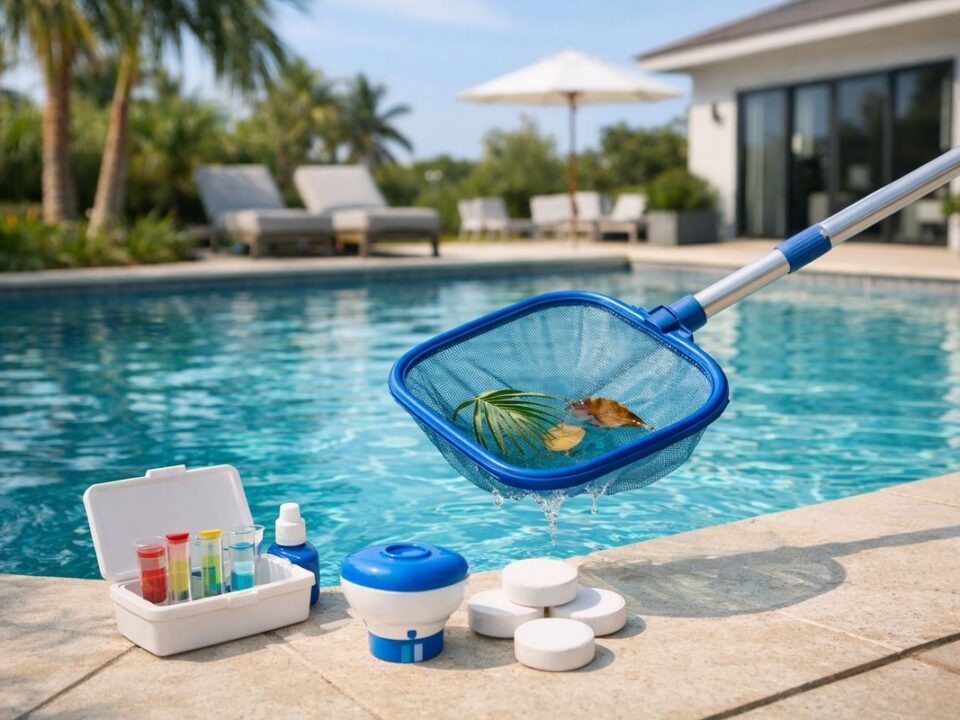
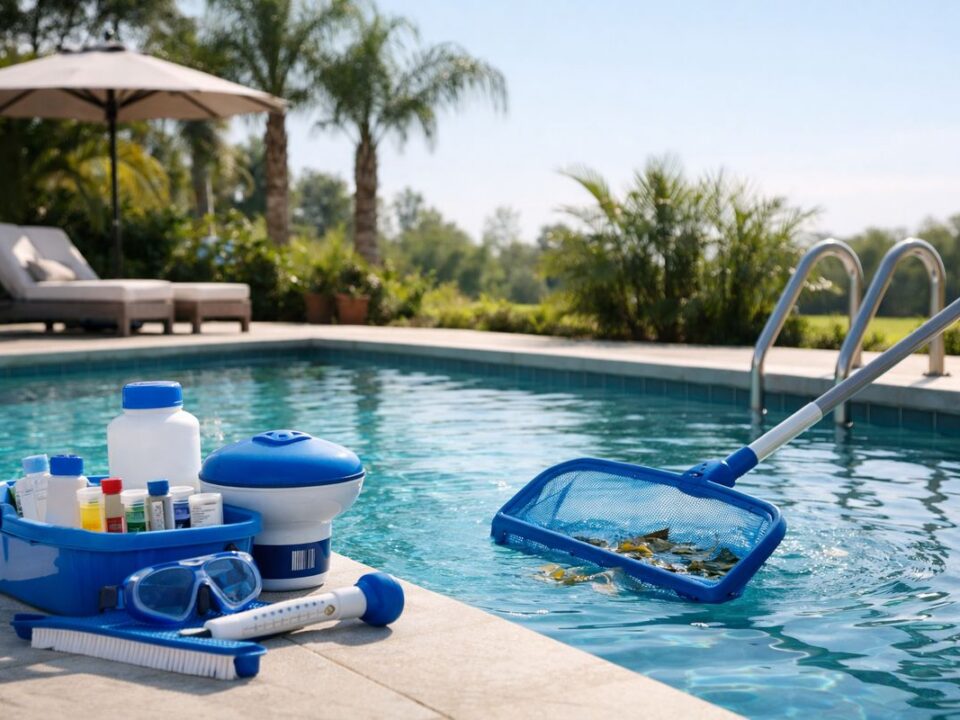
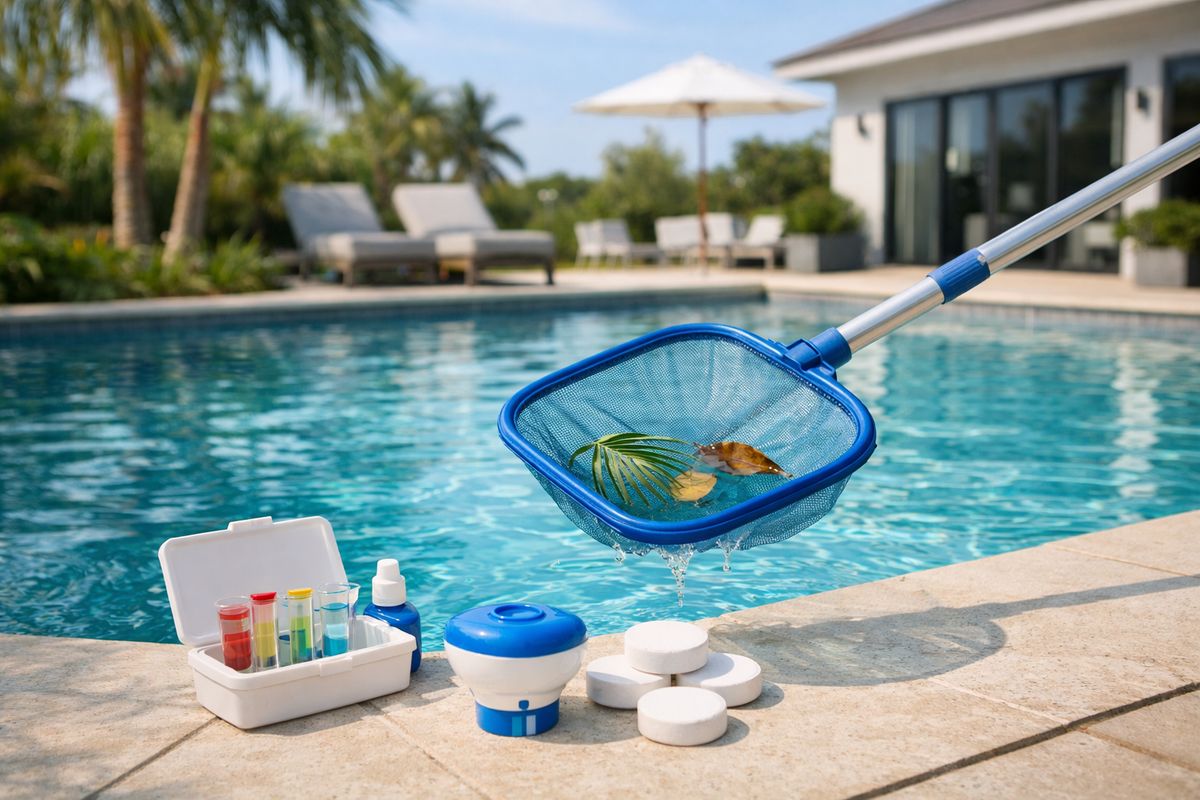
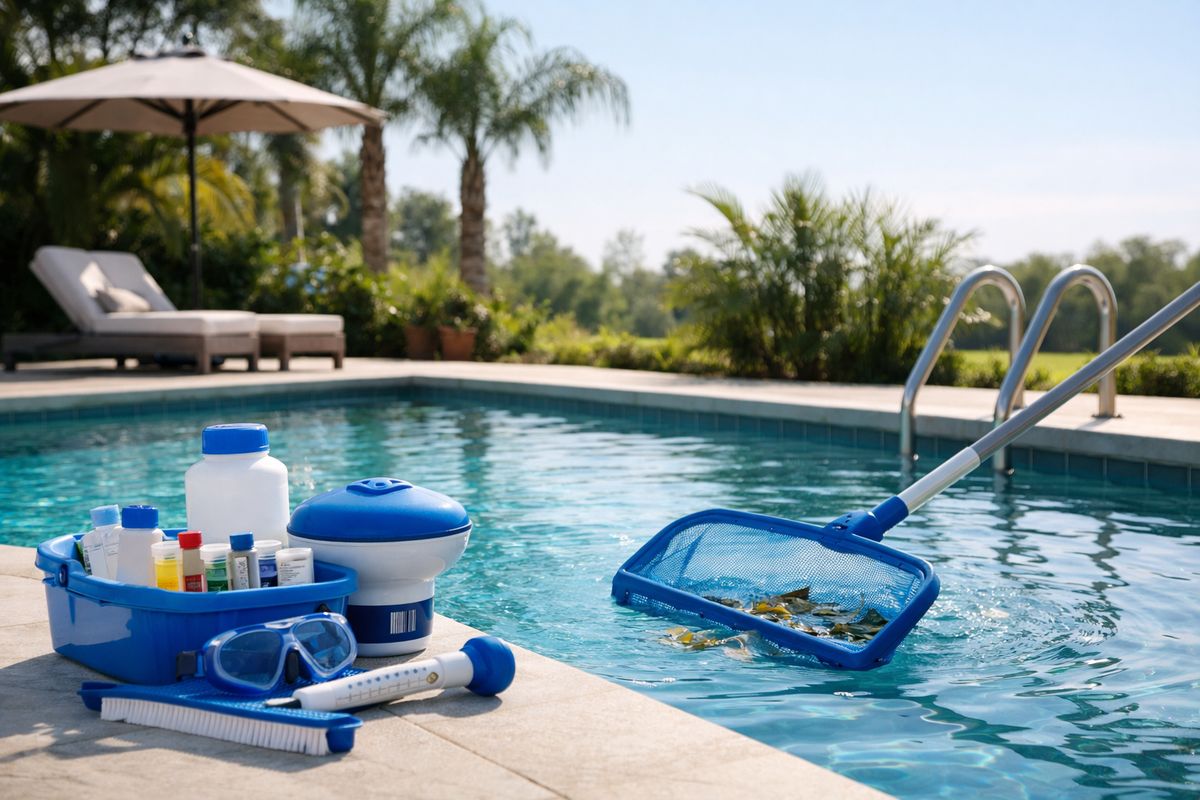
Basic testing and cleaning tools
Start with a reliable water test kit. A drop-based kit usually gives better readings than basic strips, though strips are still better than guessing. The goal is simple: know what your chlorine, pH, and alkalinity are doing before the water starts looking off.
You will also want a pool brush that fits your pool surface, a skimmer net for leaves and bugs, and either a manual vacuum or robotic cleaner for the floor. A timer for your pump matters more than many homeowners expect, because a pool stays healthier when circulation happens on purpose instead of whenever you happen to remember to switch it on.
Keep these tools in one spot near the pool pad or storage area. That sounds small, but it removes friction. And friction is what breaks routines.
Pool chemicals for prevention, not crisis cleanup
For prevention, keep the basics on hand: chlorine, pH increaser or decreaser, and alkalinity adjusters. Chlorine is your sanitizer, which means it kills and controls the stuff you do not want growing in the water. pH affects how well that chlorine works. Alkalinity helps keep pH from swinging around every time it rains or the pool gets heavy use.
You may also keep a preventative algaecide, but treat it like backup, not the star of the show. It helps support clean water. It does not replace chlorine, brushing, or circulation.
If your chemistry has always felt confusing, it helps to think of it like cooking rice on the stove. Too much heat, too little water, or bad timing can throw the whole thing off. Pool water works the same way. The pieces are simple, but they need to stay in balance.
A quick note on Florida conditions
Gainesville pools deal with a longer swim season, heavy humidity, strong sun, and those quick afternoon storms that seem to roll in right when everything looked fine. A muggy July afternoon after a hard rain can turn clear water dull faster than most homeowners expect.
That is why adjusting your care routine for North Florida weather matters. The maintenance rhythm here is not the same as it is in a milder climate with cooler nights and shorter summers.
Why algae shows up so fast in Florida pools
Algae is opportunistic. It does not need much of an opening, just warm water, sunlight, and a drop in sanitizer or circulation. In Florida, those openings show up all the time.
Warm water, sunlight, and constant moisture
Hot water gives algae a head start. Add long sunny days, and your pool can start acting like a greenhouse. You may not see green water right away, but the conditions for growth are already there, especially during stretches when the water never really cools off overnight.
That is why prevention beats cleanup every time. Once algae gets established, you are not doing a quick touch-up anymore. You are fighting a bloom.
Rain, debris, and diluted sanitizer
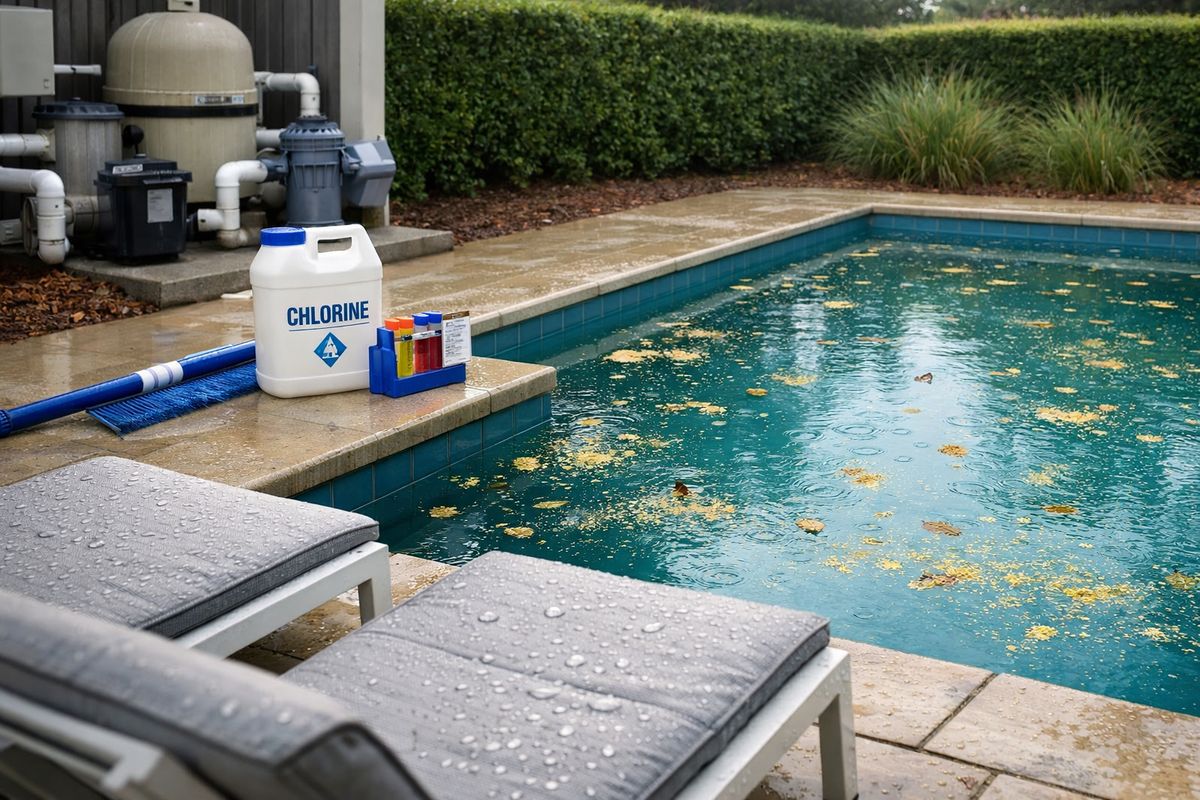
Rain does more than leave a puddle on the deck. It dilutes sanitizer, changes water balance, and drops in all kinds of organic material like leaves, dust, pollen, and tiny bits of yard debris. Chlorine gets used up breaking that stuff down, which leaves less protection in the water.
Storms knock pool chemistry off balance. That is the real problem. A messy-looking pool can be cleaned. An unbalanced one becomes a setup for algae.
Poor circulation creates hidden trouble spots
Circulation means water consistently moving through the pool and filter. When that movement is weak, algae often starts in quiet areas first: corners, steps, behind ladders, under pool toys, or along a shaded wall.
These spots can look harmless until you brush them and notice a slippery feel. By then, algae is already trying to settle in.
Step 1: Test your pool water on a set schedule
If you only test when something looks wrong, you are already late. A set testing habit catches trouble while the water still looks normal, which is exactly the point of prevention.
Test chlorine, pH, and alkalinity first
- Test free chlorine first, because it is your main algae defense.
- Test pH next, since high or low pH can weaken chlorine.
- Test total alkalinity after that, because it helps keep pH stable.
- Compare the readings to the target ranges on your test kit or product labels.
- Make adjustments the same day if something is off.
Balanced water helps chlorine work properly instead of getting weakened or burned off too quickly. If chlorine is present but the water balance is poor, you can still end up with algae problems.
Check more often during Gainesville heat and rain
- Test at least two to three times a week during hot months.
- Test after a heavy rainstorm.
- Test after a pool party or a busy swim weekend.
- Test after several brutally hot days in a row.
- Test if you missed a cleaning week.
That may sound frequent, but it is much easier than recovering from cloudy or green water. If your pool has ever gone dull after three days of rain, this is why.
Write down results so patterns are easy to spot
- Open a phone note or keep a small notebook near your pool supplies.
- Record the date, weather, and your main test results.
- Add a quick note if the pool had heavy use, storms, or lots of debris.
- Look back after a few weeks for repeat patterns.
- Adjust your routine based on what you notice.
This helps you catch recurring issues, like chlorine always dropping after back-to-back rainy days. If you want a broader seasonal rhythm to compare against, keeping up with local hot-weather pool care gives useful context for what tends to shift in Gainesville.
Step 2: Keep sanitizer levels steady, not just “good enough”
Big chemical corrections feel productive, but steady chlorine is what actually prevents algae. The trick is keeping the floor from getting slippery in the first place.
Add chlorine in a routine you can actually keep
- Pick consistent days to check and add sanitizer.
- Match that routine to your pool use and weather.
- Use your feeder, tabs, or liquid chlorine the same way each week.
- Recheck the water after any adjustment.
- Avoid skipping a week and then trying to fix everything at once.
Think of it like taking out the trash. A simple recurring routine works better than waiting until everything is overflowing.
Know when sunlight and heat are burning through chlorine
- Watch for faster chlorine drops during long sunny stretches.
- Expect warm water to increase sanitizer demand.
- Notice how heavy swimming uses up chlorine faster.
- Recheck levels after especially bright, hot days.
- Treat sudden drops as a pattern, not a mystery.
Florida sun can chew through chlorine fast. If you test one day and the number looks fine, then test again after a steamy weekend and it has fallen hard, the weather is often the reason.
Use algaecide as a backup, not a shortcut
- Use a preventative algaecide only as directed on the label.
- Add it to a clean, balanced pool.
- Keep chlorine in range before and after adding it.
- Do not use algaecide instead of brushing or testing.
- Treat it as support, not a substitute.
Here’s the thing: algaecide helps, but it does not rescue lazy maintenance. Chlorine still does the heavy lifting.
Step 3: Run your pump long enough for Florida weather
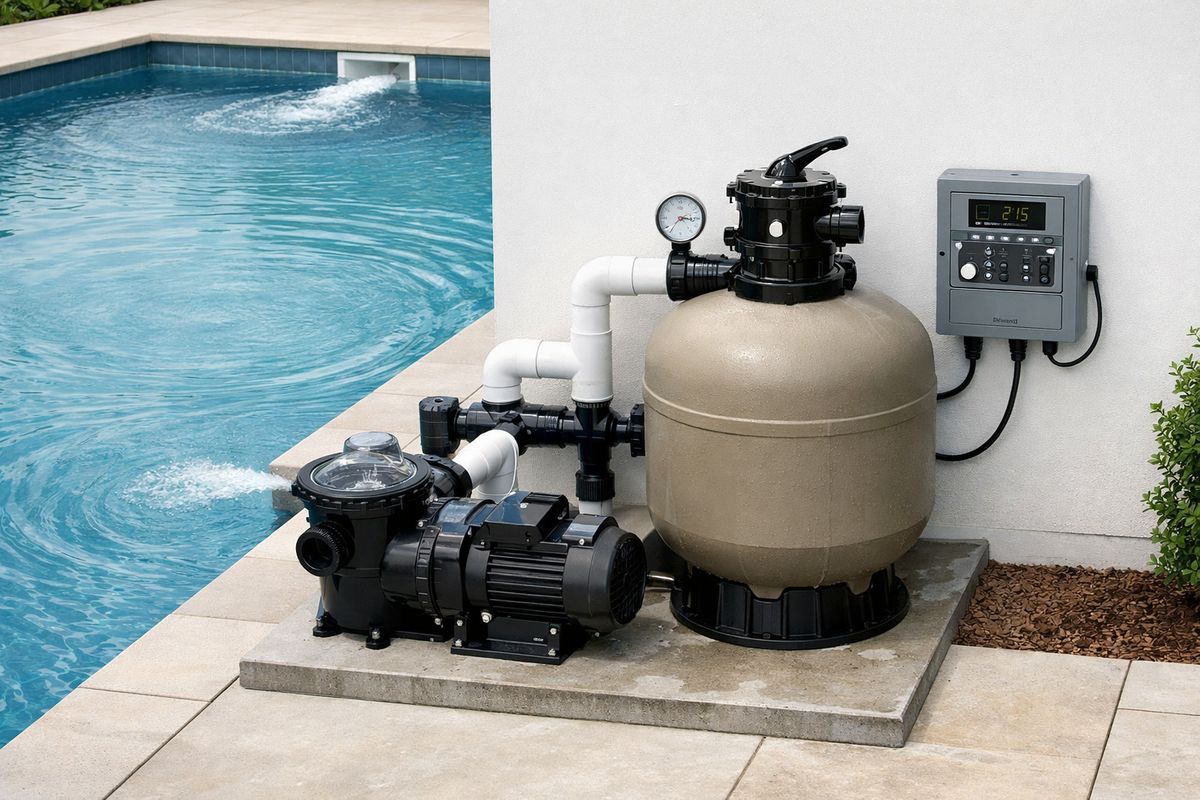
A pool can have decent chemistry on paper and still struggle if water is not moving enough. Circulation spreads sanitizer, pushes debris toward the skimmer, and helps the filter catch what does not belong in the water.
Set a daily pump schedule that matches the season
- Start with a daily schedule that runs long enough to keep water moving consistently.
- Increase runtime during peak summer.
- Run longer when the water is warm and the pool gets frequent use.
- Use your timer so the schedule happens automatically.
- Recheck clarity after a few days and adjust if needed.
During Gainesville’s hottest stretch, short pump cycles usually are not enough. Steamy afternoons, warm nights, and frequent swimming ask more from the system.
Adjust after storms, parties, and extra debris
- Add extra pump time after rainstorms.
- Increase runtime after a party or holiday weekend.
- Run longer if leaves, pollen, or dirt washed in.
- Keep the system going until clarity improves.
- Return to your normal schedule once the pool stabilizes.
This is where flexibility matters. A one-size-fits-all schedule sounds easy, but Florida weather rarely cooperates with that plan.
Check return jets and dead zones
- Look at how water moves near steps, corners, and attached spas.
- Notice spots where debris settles again and again.
- Aim return jets to create a gentle circular motion across the pool.
- Brush suspected dead zones while the pump is running.
- Recheck those same spots a day later.
If one corner always gets dull or slippery first, weak movement is a likely cause. That kind of repeat issue is often easier to fix than it looks.
Step 4: Brush the pool before algae can cling
A pool can look clean and still need brushing. Algae often starts as a thin film on surfaces long before the water turns cloudy or green.
Focus on walls, steps, corners, and behind ladders
- Brush the pool walls from top to bottom.
- Scrub steps, ledges, and tanning shelves carefully.
- Pay extra attention to corners and seams.
- Reach behind ladders and around fixtures.
- Revisit any area that feels slick.
Those hidden spots matter. Algae likes quiet, shaded surfaces where nobody looks closely until the problem gets obvious.
Match the brush to your pool surface
- Use a brush made for plaster if your finish can handle a stiffer bristle.
- Choose a softer brush for vinyl liners.
- Use a non-abrasive option for fiberglass.
- Check the label before using a new brush.
- Replace worn brushes that no longer scrub well.
The wrong brush can damage the surface or simply fail to do much. This is one of those small equipment choices that saves trouble later.
Build brushing into a weekly routine
- Pick one or two set days each week.
- Brush before vacuuming if possible.
- Brush after storms when debris has settled.
- Brush problem spots even if you skip a full clean.
- Keep the session short and regular.
That is the trick. Ten consistent minutes beats a dramatic deep clean once a month.
Step 5: Remove debris before it feeds algae
Leaves, pollen, bugs, and dirt do not just look messy. As that material breaks down, it uses up chlorine and gives algae more to work with.
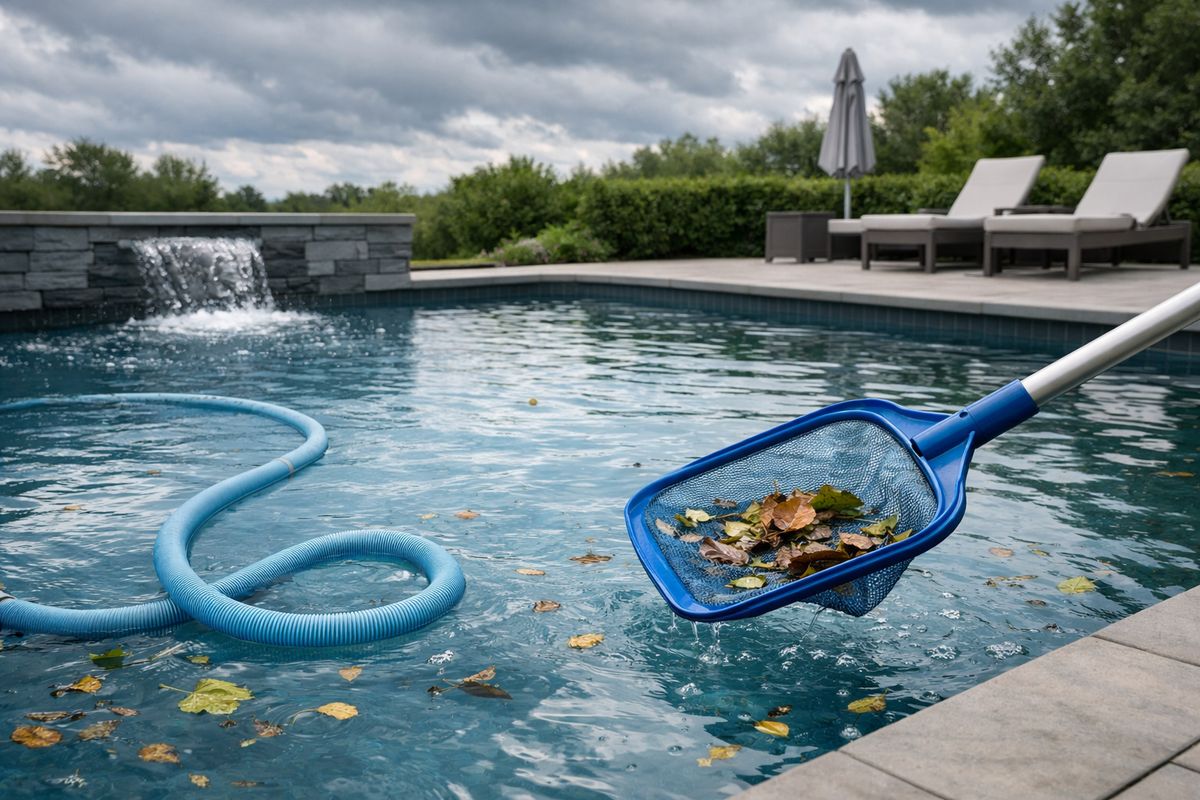
Skim the surface and empty baskets often
- Skim floating debris before it sinks.
- Empty skimmer baskets regularly.
- Check the pump basket too.
- Do it more often during storm season.
- Stay extra alert during heavy pollen periods.
In Gainesville, oak pollen and storm debris can pile up fast. Full baskets also reduce water flow, which hurts both circulation and sanitation.
Vacuum the floor and watch shaded areas
- Vacuum the floor on a regular schedule.
- Check shaded edges for settled dirt.
- Pay attention to spots under overhangs or trees.
- Brush loose anything that seems stuck first.
- Recheck the area after vacuuming.
The pool floor can hold trouble while the surface still looks mostly fine. That is why dull water sometimes seems to come out of nowhere.
Trim back plants if the pool is constantly collecting debris
- Look at which shrubs or branches drop material into the water.
- Trim back what hangs directly over the pool.
- Remove leaf-heavy plants near skimmer areas if needed.
- Sweep the deck so less debris blows in.
- Reduce the mess at the source when possible.
If landscaping is turning the pool into a leaf trap, the cleanup routine will always feel harder than it should. Even a few smart yard changes can make a visible difference, especially if your space is already pulling double duty as part of your backyard setup around the pool.
Step 6: Clean and monitor the filter so it can actually do its job
Even perfect chemistry struggles when the filter is clogged, dirty, or wearing out. If the filter cannot remove fine debris efficiently, water clarity slips and algae gets more chances to settle in.
Know the signs your filter needs attention
- Watch for rising pressure on the gauge.
- Notice weaker return flow.
- Look for cloudy water that lingers.
- Check if debris blows back into the pool.
- Pay attention if the pool seems slower to clear after cleaning.
These are practical signs, not mystery symptoms. If the water is not moving well or staying clear, the filter deserves a closer look.
Backwash or clean the filter on schedule
- Learn which filter type you have: sand, cartridge, or DE.
- Follow the recommended cleaning schedule for that type.
- Backwash when pressure rises on sand or DE systems.
- Clean cartridges thoroughly and let them dry if the manufacturer recommends it.
- Reassemble everything carefully before restarting.
Backwashing means reversing water flow to flush trapped debris out of the filter. It sounds technical, but the idea is simple: get the gunk out so the system can breathe again.
Replace worn parts before they become algae problems
- Inspect cartridges for tears or collapse.
- Check O-rings for cracks or flattening.
- Replace worn seals that can affect performance.
- Keep an eye on aging pressure gauges.
- Fix small failures before they become recurring water issues.
If your equipment has a pattern of poor flow, leaks, or unexplained performance drops, routine care may not be enough anymore. At that point, it helps to know what to look for before hiring someone to inspect or repair pool equipment.
Step 7: Stay ahead of Florida storms and heavy humidity
Florida storms can undo a week of good habits in one afternoon. The smart move is having a quick reset routine you can do before the water turns cloudy.
Skim, test, and rebalance after rain
- Skim out leaves and floating debris first.
- Empty skimmer and pump baskets.
- Test chlorine, pH, and alkalinity.
- Rebalance the water based on the results.
- Run the pump while the pool clears.
That order works because debris removal helps circulation, and circulation helps every chemical adjustment work more evenly.
Shock the pool when the water has taken a hit
- Shock the pool after heavy rain if chlorine dropped sharply.
- Shock after heavy swimmer use.
- Shock at the first signs of cloudiness or dullness.
- Follow product directions carefully.
- Run the pump longer afterward.
Shocking means raising chlorine quickly to reset the water. It is not something to do blindly every weekend, but after storms or a heavy contamination load, it can stop a small problem from growing.
Watch for early warning signs the next day
- Check for slippery walls.
- Look for water that seems dull instead of bright.
- Test chlorine again.
- Watch for a faint green tint.
- Brush and retest if anything seems off.
The day after the storm matters almost as much as the storm itself. Many algae problems start quietly there.
Step 8: Spot the first signs of algae and act fast
Early algae is easier to fix than almost anything else in pool care. Wait a few days, and the job gets bigger fast.
Green, yellow, and black algae: what each one looks like
Green algae usually shows up as a light green haze, cloudy water, or soft patches that brush away fairly easily. Yellow algae, often called mustard algae, tends to cling to walls and shady areas and can look like sand or pollen at first glance. Black algae is darker, more stubborn, and often appears as small spots rooted into rough surfaces.
If you can spot the difference early, you can respond faster and with less guesswork.
Confirm it is algae, not just dirt or pollen
- Brush the spot and watch what happens.
- Notice whether it lifts into a cloudy plume.
- Check if it returns quickly after vacuuming.
- Compare the area to nearby surfaces.
- Test the water right away.
Dirt tends to settle and stay put until disturbed. Algae often comes back quickly, feels slippery, or spreads in a pattern.
Take same-day corrective steps
- Brush the affected areas thoroughly.
- Test chlorine, pH, and alkalinity.
- Rebalance the water if needed.
- Shock the pool if chlorine is low or signs are spreading.
- Run the pump longer and recheck the next day.
Speed matters here. Same-day action is how you keep a quick fix from turning into an all-weekend cleanup.
Step 9: Build a weekly algae-prevention routine you can stick with
The best routine is the one you actually keep. It does not need to be complicated. It needs to happen often enough that problems never get a strong foothold.
A simple weekly checklist
- Test chlorine, pH, and alkalinity.
- Skim the surface and empty baskets.
- Brush walls, steps, corners, and trouble spots.
- Vacuum or run your cleaner.
- Check pump operation, filter pressure, and water clarity.
Done in this order, each task supports the next one. Test, clean, circulate, then verify.
A monthly deeper check
- Review your test log for patterns.
- Inspect the filter more closely.
- Check return jets and dead zones.
- Look at chemical use over the past month.
- Replace worn small parts if needed.
This is where slow-building issues show themselves. If the same problem keeps appearing, the monthly check usually explains why.
When to do extra maintenance
- After returning from vacation.
- After a string of storms.
- After a swim-heavy holiday weekend.
- After several very hot days in a row.
- After any week with unusual debris or cloudy water.
Extra maintenance is not failure. It is just matching the routine to the conditions.
Troubleshooting common pool algae prevention problems
Sometimes you do the right things and the pool still acts stubborn. Usually there is a catch, and the catch is easier to find when you troubleshoot in order instead of dumping in extra chemicals and hoping for the best.
Chlorine keeps dropping too fast
Strong sun, warm water, heavy swimmer load, rain, and organic debris can all burn through chlorine quickly. Start by checking for recent weather swings, full baskets, or extra debris on the floor. Then look at pH and alkalinity, because unbalanced water can make sanitizer less effective than it should be.
If chlorine loss keeps happening, tighten the testing schedule for a couple of weeks. Patterns tend to show up fast once you start tracking them.
Water looks cloudy even though the numbers seem fine
Cloudy water with decent test results often points to filtration, circulation, hidden debris, or early algae. Check the filter pressure, inspect baskets, vacuum the floor, and brush the walls before adding more product. If clarity improves after stronger circulation and cleaning, the chemistry probably was not the main issue.
Cloudiness is often physical before it is chemical. That is the part many homeowners miss.
Algae keeps coming back in the same spot
Recurring algae in one area usually means a dead zone, a rough patch, a shaded surface, or a spot that never gets brushed well. Check behind ladders, around lights, near steps, and along corners where water movement is weak. Aim a return jet toward that area and brush it more aggressively for a while.
If the same spot keeps winning, the issue is rarely random.
The pool turns green after every storm
That usually means the post-storm routine is too slow or too light. Skim first, test right away, rebalance fast, and run the pump longer than usual. If storms repeatedly hit your water hard, pre-storm prep can help too: empty baskets, make sure circulation is strong, and avoid heading into bad weather with already borderline chlorine.
When to call for local pool help in Gainesville
Sometimes recurring algae is not about effort. It is about equipment, water balance problems that do not stay fixed, or an outbreak that has gotten beyond a simple homeowner routine.
Signs the issue is bigger than routine maintenance
Repeated blooms, staining, poor circulation despite long pump runs, or chemistry that refuses to stabilize are all signs that something larger may be going on. A failing pump, undersized filter, hidden plumbing issue, or worn internal part can keep sabotaging your water.
If your pool has become a repeat cleanup story instead of a maintenance routine, it is time for a closer diagnosis.
What to ask before scheduling service
Ask what is causing the recurring algae, not just how the water will be treated today. Ask whether filter performance, circulation, and equipment condition have been checked. Ask what same-week follow-up steps will keep the algae from coming right back.
If you end up needing a contractor visit, it helps to know how to evaluate service companies before booking the work. A clear diagnosis matters more than a quick sales pitch.
What results to expect and what to do next
Once your routine is working, your pool should stay clearer, your chemical swings should calm down, and you should spend a lot less time rescuing the water after every storm. That is the real win. Not perfection, just a pool that stays ready without constant drama.
Try one thing tonight: test the water and brush the walls, especially if Gainesville has been hot, humid, or rainy this week. That small reset is often enough to stop algae before it ever gets started.