
Building a Pool on a Sloped Yard: Options That Work
September 13, 2026
Florida Pool Barrier Law: What Homeowners Must Know
September 20, 2026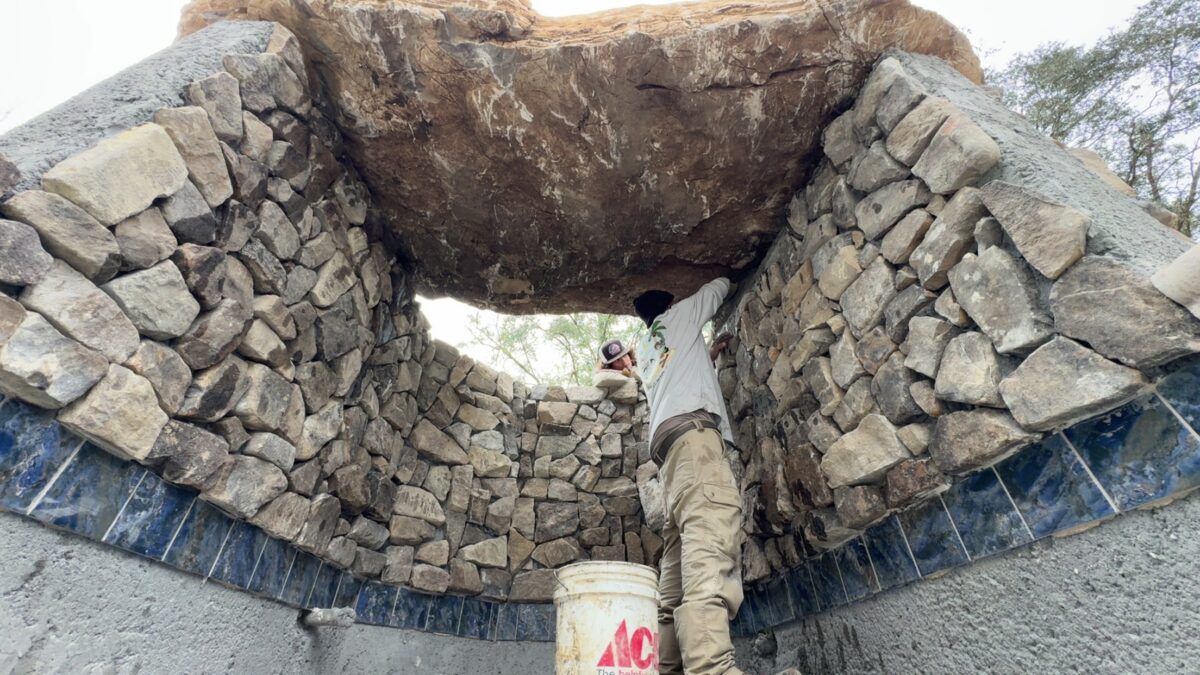
A waterfall can look great in a pool photo and drown out your patio conversation in person. The best pool water features fit how you use your backyard, not just how you want your pool to look. For your Gainesville-area build or renovation, start with the effect you want, then weigh the space, sound, construction, and operating costs behind it.
1. Add a sheer-descent waterfall for a clean look and adjustable sound
A sheer descent sends a smooth sheet of water from an opening in a raised wall into your pool. You get movement and a clean focal point without giving up deck space to a large rock structure.
Add one when a raised wall already belongs in your design. Building a wall solely for a spillway adds structural work, finishes, and plumbing that a simple rendering can hide.
Drop height matters as much as appearance. A taller fall generally produces more sound and splash, so skip a high drop beside your dining table. Specify adjustable flow within the spillway manufacturer’s operating range, since too little flow can turn a sheet into uneven streams.
Keep the spillway opening accessible. Mineral deposits can interrupt the water pattern, and a concealed unit should not require demolishing finished masonry for replacement.
2. Choose bubblers when your plan already includes a sun shelf
Bubblers are small upward fountains built into a shallow shelf. A low plume adds playful movement without making the whole backyard feel like a splash park.
The strongest case for bubblers is a shelf you already want for lounging. Building extra shallow space only to accommodate fountains can become an expensive detour. Before choosing nozzle locations, settle how your shallow lounging area should work.
Shelf depth, nozzle selection, and flow determine the final effect. Have your plan show chairs, foot space, and plumbing locations together so a fountain does not end up directly beneath your lounger.
Shallow does not mean safe without supervision. Keep active adult supervision part of any child’s time on the shelf, with barriers protecting access when your pool is not in use.
3. Make a spa spillover earn its place
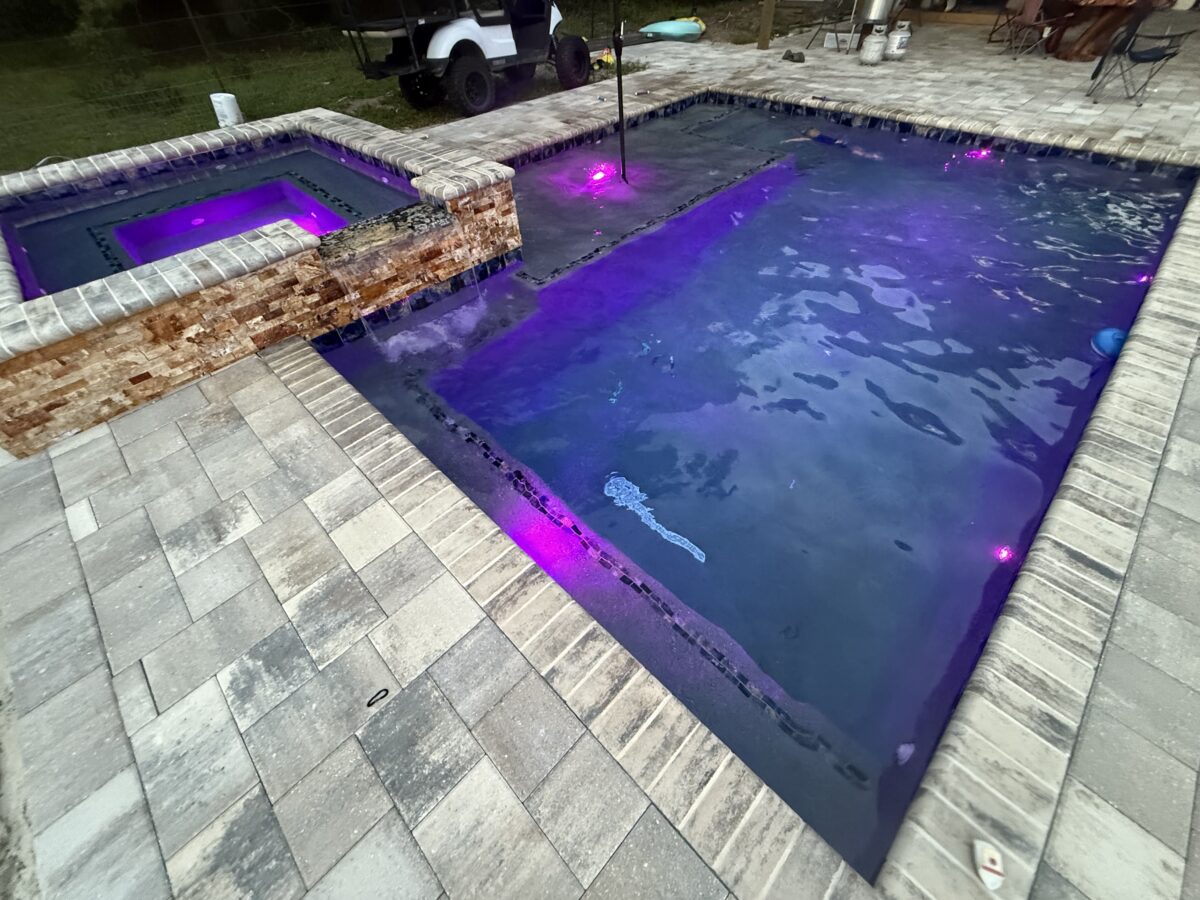
If a spa already belongs on your wish list, a spillover can give you a water feature without adding a separate decorative structure. Water flows over an opening in the raised spa wall into your pool.
But a spa is too much construction to justify solely for a waterfall effect. Decide whether an attached spa fits your backyard use before choosing the spillway.
Compare spillway width, drop height, and distance from seating. A broad sheet creates a different look and sound from a narrow stream, and a nearby conversation area can make either feel louder than expected.
Specify controls that let you select spillover operation without heating the spa unnecessarily. Decorative water movement does not replace properly designed circulation and filtration for your pool and spa.
4. Use deck jets Sparingly, and skip wind-exposed arcs
Deck jets send streams from deck-mounted nozzles into your pool. Standard jets create a conventional stream; laminar jets produce a smoother, glass-like arc through more specialized equipment.
A few carefully placed arcs usually work better than a perimeter full of crossing streams. Each nozzle adds a deck opening, a plumbing connection, and an access point that needs to remain reachable.
Wind is the catch. An arc that lands neatly inside your pool on a calm morning can spray the deck during a breezy afternoon. Gainesville summer storms make wind-aware placement more useful than a perfect still-air rendering.
Keep an arc from crossing the route between your Haile Plantation patio door and pool steps. Walking routes should stay clear whether the feature is running or off.
5. Save rock waterfalls for backyards with room to spare
A rock waterfall makes sense when you want a natural-looking setting and a stronger waterfall sound. It can anchor a generous yard without looking squeezed between the pool and fence.
The footprint extends beyond the visible rocks. Your design needs suitable support, waterproofing, plumbing, and access to concealed components. In North Florida, sandy soil over limestone makes site-specific foundation planning especially relevant for a heavy structure.
Skip an oversized waterfall if open deck space or an unobstructed view matters more. A smaller feature cannot magically make a cramped layout feel spacious.
Keep decorative rocks from becoming an unintended climbing platform or diving spot. Shape, placement, and separation from usable deck space should make the intended use clear.
6. Keep fountain spouts simple instead of adding a whole row
Wall-mounted spouts offer a smaller focal point than a broad waterfall. A few outlets can suit a raised wall without turning the entire pool edge into moving water.
Choose the landing pattern, not just the metal finish. A projecting stream, narrow ribbon, and short cascade create different sounds and splash zones. Flow requirements also vary by outlet, so adding more spouts can mean more equipment demand.
Skip high sprays beside seating or along exposed pool edges. Extra height gives wind more opportunity to push water outside your pool.
Permanent spouts belong in the plumbing and construction plan. Temporary return-mounted accessories attach to an existing return fitting, but do not provide a blueprint for an integrated inground feature.
7. Skip any retrofit that requires more rebuilding than you want
Yes, you can add water features to an existing inground pool. The limits come from your shell, deck, available plumbing routes, equipment capacity, and the structure supporting the feature.
During a new build, feature lines can go in before the deck is finished. During a major renovation, open construction areas may offer a similar opportunity. Cutting into an otherwise finished deck solely for an add-on is a different decision.
A retrofit can trigger deck removal, excavation, structural work, electrical changes, new plumbing, or a separate pump. An above-ground accessory or inground waterfall kit does not eliminate those requirements.
For an older pool, include the feature in your renovation scope before approving resurfacing or replacement decking. Avoid paying to finish an area that the feature installation will need to reopen.
8. Check pump capacity before you commit to the effect
Flow rate describes how much water moves through the feature, usually in gallons per minute. Total dynamic head means the resistance your pump must overcome from pipe friction, fittings, equipment, and elevation.
Here is a hypothetical example: outlets requiring 10 gallons per minute each need 20 gallons per minute combined. Your pump must deliver that amount at the actual system resistance while preserving the required filtration flow if the systems share a pump.
Horsepower alone cannot confirm the result. Have your estimate identify manufacturer flow requirements, pipe sizing, elevation changes, valves, and the pump curve, which shows flow at different resistance levels.
A dedicated feature pump deserves consideration when the effect needs substantially different flow or operating hours from filtration. With separate schedules and equipment controls, you can run the feature during patio time rather than every time filtration operates.
9. Compare the installed price with the cost of running it
Adding a water feature costs more than buying the visible outlet. Your installed price reflects structure, plumbing distance, excavation, deck repair, electrical work, equipment, finishes, and controls.
A spout incorporated into a planned wall is a different project from a rock waterfall added across a finished deck. Get a current written estimate tied to your site and specifications, not a whole-pool average presented as feature pricing. If you plan to borrow, review project financing against the full construction scope.
For electricity, use actual pump power, runtime, and your rate. The calculation is kilowatts multiplied by operating hours multiplied by dollars per kilowatt-hour. With a shared variable-speed pump, compare power use at the required feature setting against normal filtration operation.
Splashing can increase evaporation and refills, while evaporative cooling can increase heat loss. Aeration can also raise pH by encouraging dissolved carbon dioxide to leave the water.
During North Florida’s long swim season, those trade-offs favor a feature you genuinely enjoy running, with controls that make shutting it off easy.
10. Finalize placement and safety before you approve the design
Compare your favorite feature against the same practical criteria before approving the plan:
- Appearance from your house
- Sound at your seating area
- Splash beyond the pool edge
- Structure and deck footprint
- Installation and repair access
- Long-term upkeep requirements
Have the plan show wind-aware placement, clear walking routes, accessible nozzles and valves, and water landing inside your pool. Confirm access for correcting clogged outlets, scale, or concealed leaks without tearing apart finished work. Include manufacturer requirements for freeze protection or draining exposed components during North Florida cold snaps.
Electrical bonding, applicable electrical protection, compliant suction fittings where required, and pool barriers belong in the construction review. Decorative features do not excuse gaps in the underlying safety design.
Verify current permitting requirements with the City of Gainesville, Alachua County, or your municipality, including Newberry, High Springs, or Alachua. Check HOA design approval separately in planned neighborhoods around Jonesville and Haile Plantation. HOA approval does not replace a permit.
Frequently asked questions
Are pool water features worth adding?
Yes, when the sound, appearance, and daily use justify the construction and operating costs. A modest feature that runs during your patio time is a better investment than a dramatic waterfall you keep switched off because of noise or splash.
Can you add a waterfall without rebuilding the whole pool?
Often, but the answer depends on structural support, plumbing access, and equipment capacity. You may be able to preserve the shell while opening part of the deck. Get the demolition and restoration boundaries shown in your renovation estimate before committing.
What water feature works best in a small backyard?
A compact wall spout or sheer descent can add movement without consuming much deck space, especially when a raised wall is already planned. Bubblers also fit well when your design already includes a sun shelf. Protect usable swimming and seating space first.
Can a water feature help cover traffic noise?
Water sound can make background noise less noticeable from a particular seat, but it will not soundproof your yard. Compare a similar installation in person if possible. Too much waterfall sound can simply replace traffic noise with another obstacle to conversation.
Should you add lighting to a water feature during construction?
Plan permanent lighting alongside plumbing and electrical work, even if the final effect stays subtle. Confirm fixture access, glare from your seating area, and compatible controls. Adding concealed wiring after masonry and decking are complete can require avoidable demolition.
Bring one favorite feature and one must-avoid trade-off to your pool-build consultation. Try the Swim State pool cost estimator or call Swim State at (352) 318-9782, then request estimates with and without the feature so you can see exactly what the upgrade adds.