Building a Pool on Florida Limestone: What to Expect
November 1, 2026
Choosing a Pool Builder in Alachua, FL (What to Check)
November 7, 2026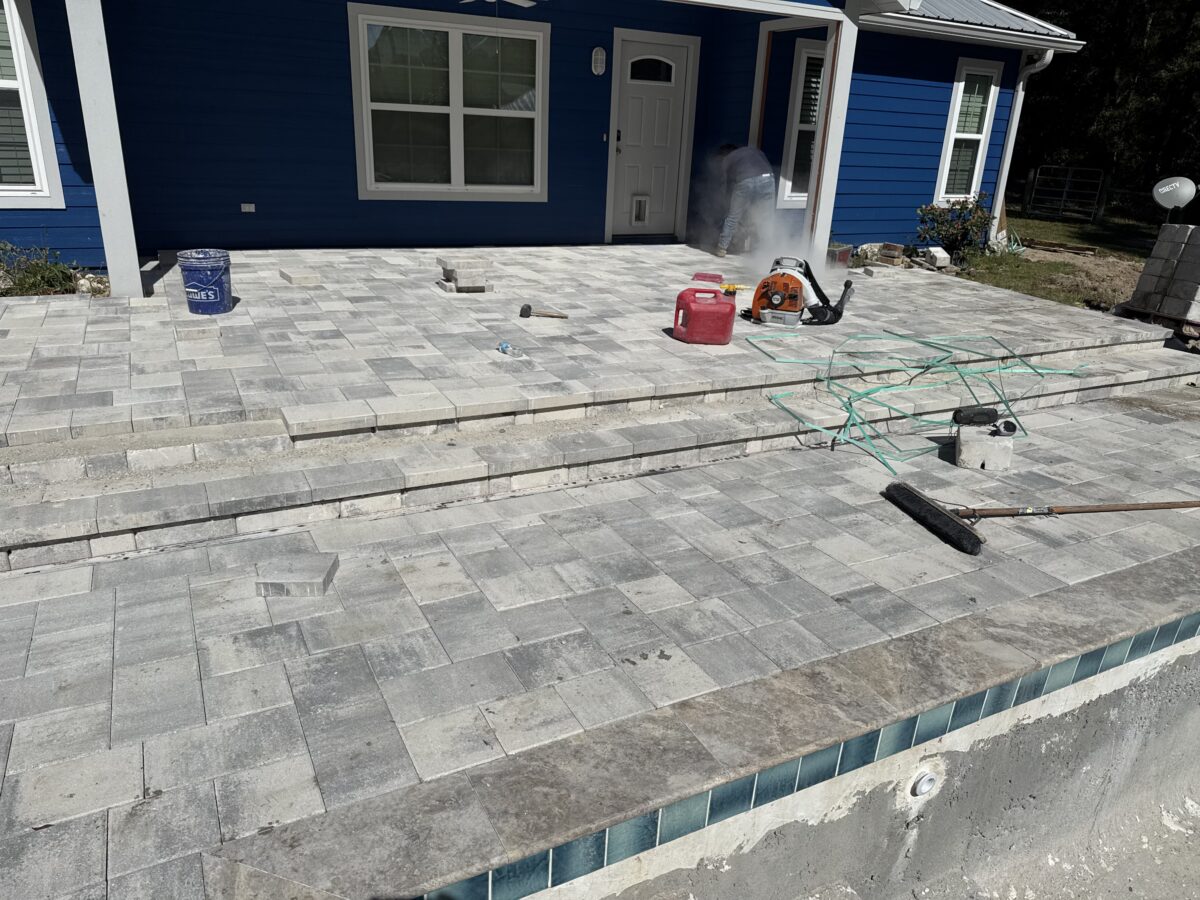
Your pool can look inviting while the walk from your back door feels too hot for bare feet. Choosing a pool deck material for Florida means comparing more than stone versus concrete: color, wet grip, shade, and construction beneath the surface determine how comfortably your deck handles Gainesville’s long swim season.
What your pool deck has to handle in Gainesville
A premium material alone won’t guarantee a comfortable deck. Dark stone in afternoon sun can feel hotter than a lighter, less expensive surface. Start with color and sun exposure, then compare texture and material.
For Gainesville and Alachua County, your strongest shortlist is light-colored travertine, textured concrete pavers, and properly finished concrete. The best choice depends on your budget, shade, drainage, and tolerance for visible repairs.
Summer storms add another requirement: reliable footing when your deck gets wet. Texture helps, but a rough-looking surface isn’t automatically suitable around a pool.
Before choosing finishes in Haile Plantation or another planned neighborhood, check HOA approval requirements for colors, structures, and exterior changes. Keep those approvals separate from applicable City of Gainesville or Alachua County permitting. Your deck, pool, and shade plan should fit together before construction starts.
Compare pool deck materials for Florida heat
Use this comparison as a starting point, not a guaranteed ranking. Color, finish, sealer, and exposure can change the result.
| Material | Barefoot comfort in sun | Wet traction | Installed budget tier | Future upkeep | Repairability |
|---|---|---|---|---|---|
| Light natural stone | Often favorable, still heats up | Verify exact finish | Higher | Sealing as specified | Individual pavers replaceable |
| Light concrete pavers | Moderate, color-sensitive | Verify finish and sealer | Middle | Joint work, possible sealing | Lift and reset units |
| Brushed concrete | Moderate in light colors | Brush texture helps | Lower | Finish-dependent | Patches often visible |
| Stamped concrete | Highly color-dependent | Pattern alone insufficient | Middle to higher | Possible resealing | Repairs difficult to disguise |
| Acrylic overlay | Product-dependent | Verify complete coating system | Lower over sound slab | Periodic recoating | Patches may show |
| Exterior porcelain | Product-dependent | Verify exterior barefoot suitability | Middle to higher | Joint-system care | Assembly-dependent |
These are ground-level surrounds for inground pools. Raised wood or composite decks require a different structural design and separate heat, framing, and fastening decisions.
Travertine and other light natural stone
Light travertine and shellstone deserve consideration for sunny walking routes. Pale colors and porous textures can improve comfort, but no stone stays cool under every condition.
Compare actual batches for holes, filling, thickness, and natural variation. Confirm poolside suitability, sealing requirements, and the exact finish’s wet traction. For a pool using a salt chlorine generator, verify stone and sealer compatibility with salt exposure and pool chemicals.
Expect higher installation costs than basic concrete.
Concrete pavers
Light concrete pavers balance price, pattern choices, and repair access. Individual units can be lifted for localized repairs or access beneath the deck, then reset.
The catch is base preparation. An attractive pattern won’t prevent uneven edges if the supporting material settles. Include joint upkeep in your ownership budget, avoid dark colors along busy barefoot routes, and check whether the proposed sealer changes color or grip.
Brushed and stamped concrete
Basic brushed concrete is commonly a lower-cost starting point for new construction, subject to your local quote. Its broom-textured finish is straightforward rather than decorative.
Stamped concrete adds patterns, coloring, and cost. A stamped pattern does not automatically provide reliable wet traction, especially with a film-forming sealer. Both options can crack, and patches often remain visible. Joint layout and support beneath the slab matter more than decorative detail.
Acrylic overlays and cool-deck coatings
An overlay is a finish applied over suitable concrete, not a replacement for the slab. A light, textured coating can make sense during a rebuild when the existing deck is structurally sound.
Preparation and compatibility determine whether the coating bonds properly. Include future recoating costs, and treat “cool” as a product claim to verify. An overlay cannot fix settlement or structural cracking.
Outdoor porcelain pavers
Exterior porcelain offers low absorption, stain resistance, and consistent color choices. Specify a product intended for pool surrounds, not ordinary indoor tile.
Your quote should identify the required support system, whether a prepared base, mortar assembly, or another approved installation. A light color or matte appearance alone does not establish heat comfort or suitability for wet bare feet. Verify both separately.
Check barefoot comfort and wet grip before you buy
Set samples beside your future pool in Newberry on a sunny afternoon. Compare identical exposure and use a suitable surface thermometer to identify hot surfaces. Never use bare skin to test a potentially burning-hot sample.
Include coping, steps, and your door-to-water route, not just the lounge area. Coping is the finished edge around your pool, and it deserves the same scrutiny as the main deck.
Request wet-slip documentation for the exact product, finish, and proposed sealer. DCOF, or dynamic coefficient of friction, measures friction while moving. A wet DCOF of 0.42 is not a universal pool-deck safety guarantee. The test method, intended application, and suitability for exterior barefoot use matter.
Reject “slip-proof” promises. Avoid polished finishes, and don’t assume every textured product is safe.
Shade can improve comfort more than an expensive material swap. Position coverage over standing areas and walking routes. Keep dark accents outside those routes, and don’t assume a screen enclosure provides the same shade as a solid cover.
Make sure your base and drainage can hold up
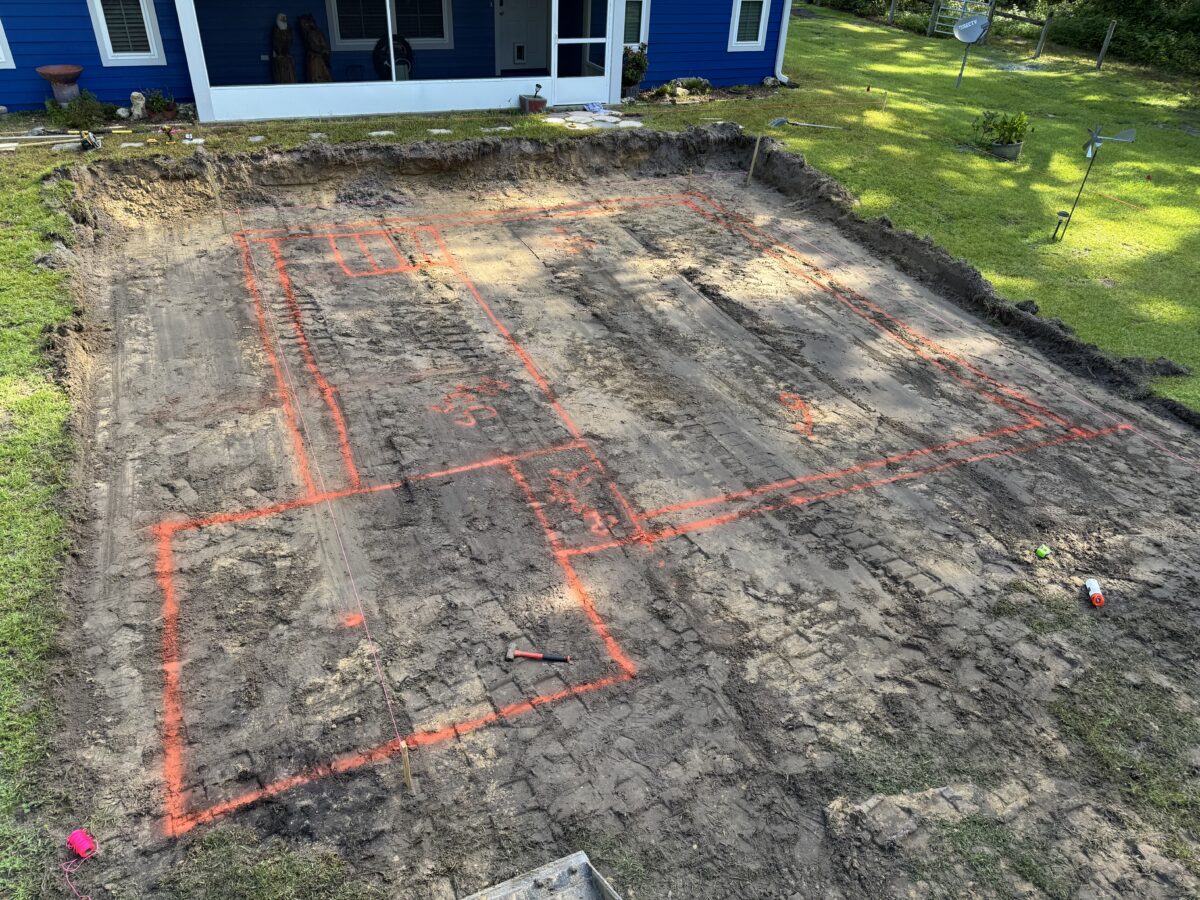
What sits underneath your deck matters as much as the finish. Across North Central Florida, sandy soil over limestone, variable groundwater, and recently backfilled pool excavations can affect preparation. Your particular yard needs an assessment, not a blanket assumption based on an Alachua County address.
Ask your builder to explain backfill selection, compaction, base thickness, and whether soil evaluation is needed. Pavers can settle and create uneven edges, although localized resetting is possible. Concrete slabs can crack or move, with repairs that are harder to hide.
For an older pool, separate cosmetic wear from structural movement before choosing a finish. Understanding when renovation makes more sense than replacement helps keep a surface upgrade from covering a deeper problem. Include the deck assessment in your pool renovation scope.
Drainage belongs in the design, too. Slopes, drains, coping elevations, and doorway transitions should work together to move runoff away from your house without sending dirty yard water into your pool. Request confirmation of applicable local requirements rather than accepting a universal slope recommendation.
Ordinary paver joints do not turn a deck into a designed permeable system. Drainage beneath and around the installation still needs attention.
If your rebuild follows flooding or storm damage, have washout, sunken pavers, loose coping, slab movement, and blocked drains assessed before covering damage with new material. Faded color may justify refinishing. Movement or lost support can require reconstruction.
Compare your full installed cost, not just material prices
Basic brushed concrete is frequently the least expensive pool deck material for new work. A coating can cost less when your existing concrete is sound. Demolition, difficult access, drainage changes, and base correction can reverse that order.
For a 12×12 area, start with 144 square feet. Using a purely illustrative installed rate of $15 per square foot produces a $2,160 area-based subtotal. That rate is arithmetic only, not a Gainesville quote or a promised price.
Keep demolition, base correction, drains, coping, and applicable fees separate unless the installed rate explicitly includes those items. Coping is often measured by linear foot, so a square-foot deck price may not cover the pool edge.
A 12×12 patio-sized area also isn’t necessarily enough for your complete surround. Leave room for circulation, entry, furniture, and required clearances. Coordinate deck dimensions with how much pool your backyard can comfortably fit.
Compare quotes using the same footprint, finish, coping scope, and preparation assumptions. Check material quantities and cutting waste, but don’t add waste twice when an installed price already includes it. Identify allowances, which are budget placeholders rather than fixed selections, and read exclusions closely.
At the lower budget tier, prioritize sound preparation, drainage, and a simple finish. A middle-tier budget can add pavers, pattern choices, and easier localized repairs. Higher spending can buy selected stone, complex layouts, or premium coping, but not an exemption from heat or traction checks.
Compare future recoating, sealing, joint work, and repair costs alongside the upfront total. If you’re considering financing the complete project, base the amount on a defined pool-and-deck scope rather than material pricing alone.
Match your choice to your yard and bring a shortlist to your pool estimate
For full-sun barefoot routes, start with light stone or light textured pavers, subject to verified traction. For a tighter new-build budget, compare brushed concrete. For a sound existing slab, investigate a compatible overlay. When future access and localized repairs matter, resettable pavers deserve extra consideration.
A mixed-material design can stretch your budget. Upgraded coping paired with simpler surrounding decking can put spending where your feet and hands meet the pool most often. Coordinate thicknesses and transitions before installation.
Avoid choosing from indoor samples alone, placing dark finishes across busy paths, or spending on patterns while skipping base and drainage work. Those mistakes cost more to fix than to prevent.
Set samples in your yard, then bring your shortlist, photos, and approximate dimensions to a build consultation. Try the Swim State pool cost estimator or call Swim State at (352) 318-9782. Frame your estimate around the complete pool-and-deck plan, including elevations, drainage, coping, and shade.
Frequently asked questions
What is the best material for a pool deck in Florida?
Light travertine, light textured concrete pavers, and properly finished concrete are practical starting points. Choose based on your actual sun exposure, verified wet traction, installation requirements, and full project budget rather than material name alone.
Can you put a new finish over an old pool deck?
Yes, if the slab is suitable for the specified overlay. Have settlement, structural cracks, drainage, and elevation problems assessed first. A coating can change appearance and texture, but cannot restore failed support.
Is porcelain too slippery around an inground pool?
Not necessarily. Use exterior pool-surround porcelain with documentation supporting the intended wet barefoot application. Indoor tile, a matte label, or a light color does not establish suitability.
Should your coping match your pool deck?
Matching is optional. A different coping material can improve the pool edge’s comfort and appearance while keeping surrounding decking simpler. Check compatible thicknesses, edge details, wet traction, and transitions before approving the combination.