Hiring a Pool Builder in High Springs, FL: What to Vet
October 4, 2026
Who to Trust With a Pool Build in Haile Plantation
October 11, 2026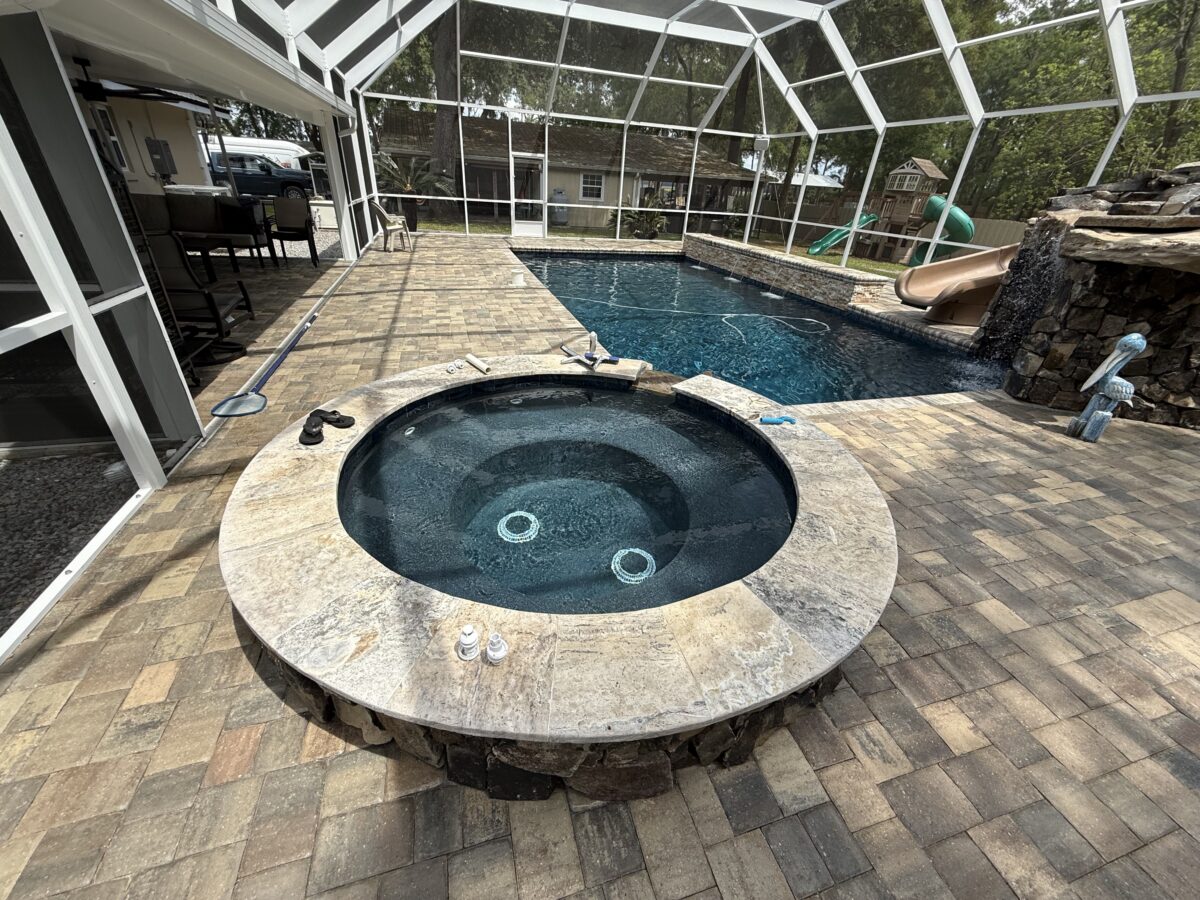
You want room to swim on a hot Gainesville afternoon and a warm soak on a cool January evening. A pool and spa combo can give you both, but the layout, equipment, and total build budget matter more than a good-looking spillover.
Is a pool and spa combo worth it in north Florida?
Adding a spa makes sense when soaking will become a habit, not just a feature you admire from the patio. If you expect regular use after exercise or on cooler evenings, the added construction and heating costs deserve consideration.
North Florida’s long outdoor season helps. Around Gainesville, Jonesville, and Newberry, you can enjoy your backyard well beyond summer without the extended winter shutdown common farther north.
But a long outdoor season does not mean free heat. Your spa still needs a properly sized heater during cooler weather, and keeping warm water separate from cooler pool water takes deliberate plumbing design.
Build around your routine first. A pool alone is a better investment than a spa you rarely use.
Compare your pool and spa combo options
A spa is a hot tub designed for warm-water soaking and jets. For a new inground build, an attached spa offers an integrated appearance, but attachment alone does not guarantee independent temperatures or simultaneous operation.
| Layout | Swimming experience | Separate temperatures | Best-fit backyard |
|---|---|---|---|
| Raised spillover spa | Main pool for swimming and play | Possible with isolation and suitable equipment | Room for raised walls and entry |
| Flush attached spa | Main pool for swimming and play | Possible with isolation and suitable equipment | Level, visually continuous design |
| Inground or plunge pool plus separate hot tub | Depends on pool dimensions | Yes, with independent systems | Room for separate access areas |
| Dual-zone swim spa | Swimming against a current | Yes, with separated compartments and controls | Compact exercise-focused space |
| Single-shell pool with jets | Swimming or soaking in shared water | No simultaneous temperature difference | Limited space and flexible use |
A raised spa adds a visible wall and waterfall effect. A flush spa sits near pool level for a quieter appearance. Both need suitable seating, entry, and water separation.
Pairing an inground pool with a separate hot tub provides independent operation, but takes more deck space. An above-ground hot tub beside an inground pool is different from a built-in spa, even when the deck connects both.
Current swimming keeps you in place. Lap swimming needs an uninterrupted lane, while games and multiple swimmers need open water. Start by matching dimensions to your activities, rather than squeezing every feature into the smallest footprint.
For an Endless Pool and hot tub combo, check the specific model’s compartments and controls. A brand name or “swim spa” label does not establish dual-temperature capability. One undivided body of water cannot provide cool swimming and hot soaking simultaneously.
Get the plumbing and heating right before choosing finishes
Your equipment design determines what can run together. Settle that before choosing tile.
Shared equipment vs. separate systems
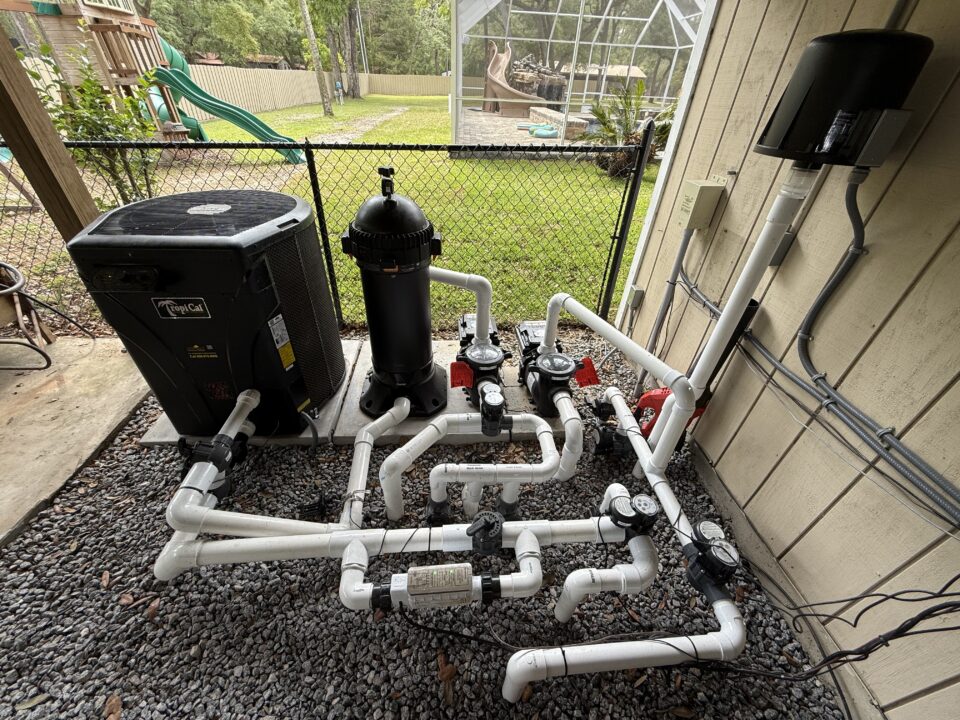
A pump moves water, a filter captures particles, a heater adds warmth, and valves direct flow. With shared equipment, spa mode commonly redirects circulation through the spa while pool circulation pauses.
That can work well for an occasional soak. But if you want pool circulation, spa jets, and heating operating together, your design needs dedicated circuits and equipment sized for that combination.
Different temperatures require physical water separation and appropriate plumbing controls, not just another temperature setting. Ask for an explanation of what runs in each mode and what stops.
Your controls should make everyday use straightforward. Compare how phone-based controls handle equipment, including temperature changes, valves, and spillover operation.
Heating speed, spillover, and everyday operation
Gas heating generally suits faster, on-demand heating. Heat pumps can offer efficient operation in favorable weather, but output drops as outdoor conditions cool. A combined system can pair a heat pump with gas for quicker spa heating.
No fixed heat-up promise fits every installation. Starting temperature, water volume, heater output, and a chilly Gainesville evening all affect performance.
Your design should let you stop spillover during heating, since sending warm water into the pool wastes heat. A fitted cover reduces heat loss, but needs convenient storage.
Shared water generally means shared filtration and treatment needs. Separate systems need separate testing, filtration, and draining provisions. Include equipment access in the plans; an attached spa is not upkeep-free.
What does an inground pool and hot tub combo cost in Florida?
Separate the spa’s incremental cost from the complete backyard project. A spa add-on allowance is not a finished pool-and-spa budget, and a statewide figure is not a Gainesville estimate.
Your build budget: spa add-on vs. complete project
At the lower end of the scope, a compact attached spa with shared equipment limits duplication. A larger spa, dedicated equipment, premium finishes, and elaborate spillovers increase the investment.
Your complete estimate should account for excavation, plumbing, heating, electrical or gas work, decking, drainage, permits, safety provisions, and covers. Include an optional screen enclosure before comparing totals, not after choosing a builder.
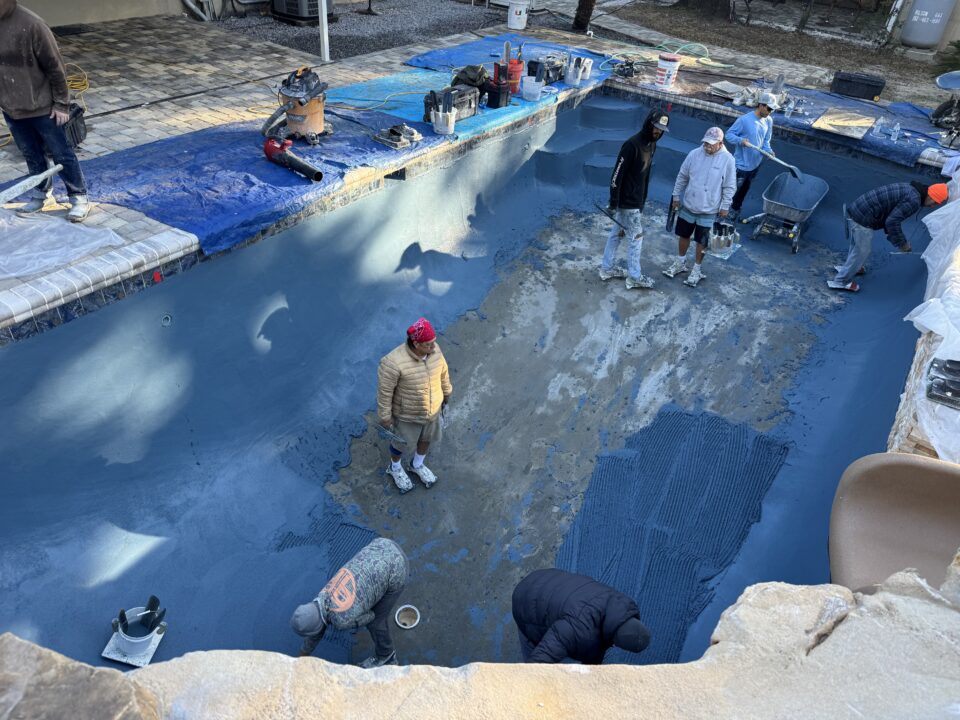
Adding a spa during new construction differs from cutting into an existing pool. With a new build, excavation, steel, plumbing, and decking can be coordinated from the start. A retrofit can require demolition, structural connections, and equipment replacement.
For an older pool, review what a spa addition can involve before assuming a small addition means a small project.
If borrowing is part of your budget, compare available project funding against the complete scope. A manageable monthly payment does not reduce the total cost.
Your ownership budget: heating, upkeep, and replacement
Occasional heat-on-demand soaking suits a different budget from keeping an insulated separate hot tub ready for frequent use. Neither approach is automatically cheaper for every household.
Allow for energy, water treatment, cover replacement, and eventual heater, pump, or valve repairs. Request estimated energy use with stated starting temperatures, target temperatures, outdoor conditions, and use frequency. Apply your actual utility rates.
Resale value varies by neighborhood, condition, and buyer preferences. Do not count on recovering the spa’s added cost when you sell.
Choose a spa you can actually sit in comfortably
Usable seating matters more than exterior dimensions. Thick walls, wide benches, and entry steps can leave surprisingly little room inside a compact spa.
Check bench depth, footwell space, and jet placement against your height and preferred sitting position. A nominal occupancy rating is a starting point, not a promise of comfort. Review a dimensioned seating plan or sit in a comparable finished spa before approving the layout.
Plan steps and access to a handrail without sacrificing every comfortable seat. Jet quantity matters less than placement and adjustability.
In a small Haile Plantation yard, an attached spa can preserve deck space compared with a separate hot tub. Still, you need walking room, entry clearance, cover storage, and equipment access.
Avoid common regrets: cramped seating, oversized spillovers that dominate the patio, and jets selected without checking comfort.
Check your lot, local rules, and build scope
Your usable project area extends beyond the water’s edge. Arrange an early site review before settling on a layout or treating a preliminary budget as a firm price.
Access, utilities, permits, and HOA approval
Check setbacks, easements, drainage, underground utilities, and septic constraints where applicable. Equipment placement affects noise, pipe runs, service access, and the route from your patio.
Around Alachua County, sandy soil over limestone makes site conditions worth investigating rather than assuming easy excavation. Summer storms also make drainage and construction access part of the design, not finishing details.
Prefabricated hot tubs and swim spas need a suitable foundation and delivery access, potentially including a crane. Every configuration needs adequate electrical capacity, required protection, and equipment service clearances.
Direct permit questions to the authority governing your address: the City of Gainesville, unincorporated Alachua County, Newberry, High Springs, or Alachua. HOA approval in a planned neighborhood is separate from government permitting.
Expect design and site review, approvals, excavation, installation, inspections, and startup. Access restrictions, weather, review requirements, and project scope prevent a universal completion timeline.
Safety and accessibility around both water areas
Your design needs to meet applicable Florida residential pool safety requirements and local review. Confirm the required combination of barriers, gates, alarms, or approved safety covers for your project.
A screen enclosure or ordinary thermal cover does not automatically satisfy safety requirements. Review protection around both water areas, especially where raised walls or adjoining furniture could create climbing opportunities.
Include slip-resistant surfaces, lighting, practical steps, handrails, and clear walking routes. Safety features support supervision, not replace it.
For a rebuild, inspect the existing shell, plumbing, electrical bonding, and equipment capacity before assuming reuse saves money. If the structure or layout needs major work, comparing repair with replacement can prevent spending heavily on the wrong starting point.
Choose your best fit and request a comparable estimate
Choose an attached spa when you want an integrated new build and shared backyard use. Compare a separate insulated hot tub when frequent, ready-to-soak convenience matters more than a continuous appearance.
Consider a dual-zone swim spa when compact current swimming fits your exercise goals. Choose a pool alone when swimming, play, and deck space matter more than soaking.
For a rebuild, price both a spa addition and a full redesign if the existing pool needs structural repairs, replacement plumbing, or major layout changes. Keeping the old footprint is not always the best value.
Try one practical step: bring a yard photo, your comfortable total budget, and your expected weekly swimming and soaking routine to a build consultation. Request itemized estimates with and without the spa, including equipment, heating assumptions, approvals, safety features, and exclusions.
Start with Swim State’s pool cost estimator or call Swim State at (352) 318-9782 for a pool-build consultation.
Frequently asked questions
Can you use the pool while the attached spa is hot?
Yes, with suitable water separation and equipment design. Confirm whether pool circulation continues during spa mode and whether the system supports simultaneous operation, rather than assuming attachment provides both.
Can you add a spa without rebuilding the entire pool?
Sometimes. The existing shell, available space, plumbing route, and equipment capacity determine feasibility. Request a site assessment and compare the addition with a broader renovation before approving demolition.
Can a plunge pool work as a hot tub too?
A single-shell plunge pool with jets can switch between swimming and warmer soaking conditions if designed for both. Without separate compartments, however, the entire body of water changes temperature.
Is a spillover necessary for an attached spa?
No. A spillover is primarily a design and sound feature. Your plumbing still needs appropriate circulation, and your controls should stop spillover when retaining spa heat matters. Prioritize comfortable seating and reliable operation before decorative water effects.