
Tanning Ledges: What They Are and Who Should Add One
October 1, 2026
Pool and Spa Combo: Is It Worth Building in Florida?
October 7, 2026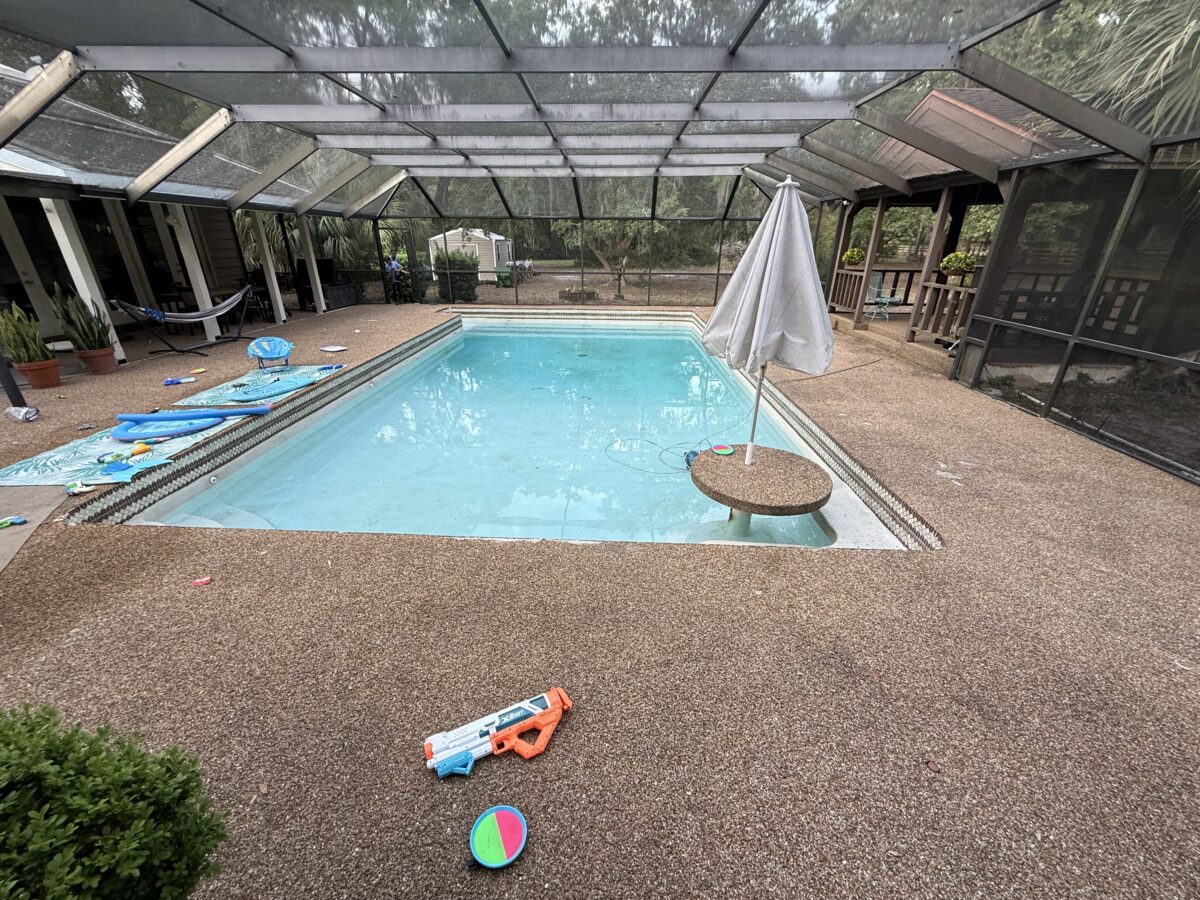
Your pool sketch looks great, but the estimate leaves excavation, permits, and cleanup unclear. When you search for a pool builder in High Springs, FL, a beautiful design is only the starting point: you also need verified credentials, a property-specific plan, and a written scope that explains the whole build.
Start with a pool builder you can verify
Build your shortlist around qualifications and comparable finished projects, not a directory ranking. Your builder needs to manage the work between the rendering and the final inspection, including site planning, approvals, construction, and handover.
Check your Builder’s Florida license and insurance
Use Florida’s Department of Business and Professional Regulation license search to check the contractor’s active status, license scope, and available disciplinary records. Confirm that the license covers your proposed construction or renovation work. A credential for servicing pools is not a substitute for the appropriate construction license.
Request current general liability insurance and workers’ compensation coverage or applicable exemption documentation. Check that your contract identifies the licensed business responsible for your project, with a business name and license information that match the records you verified.
Look beyond star ratings to recent local projects
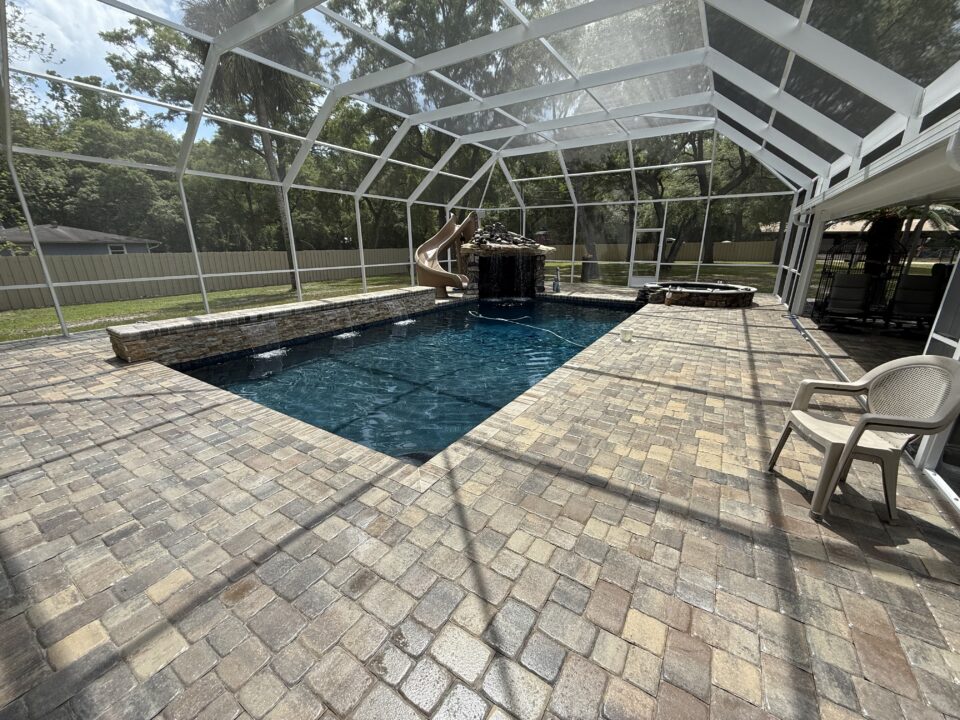
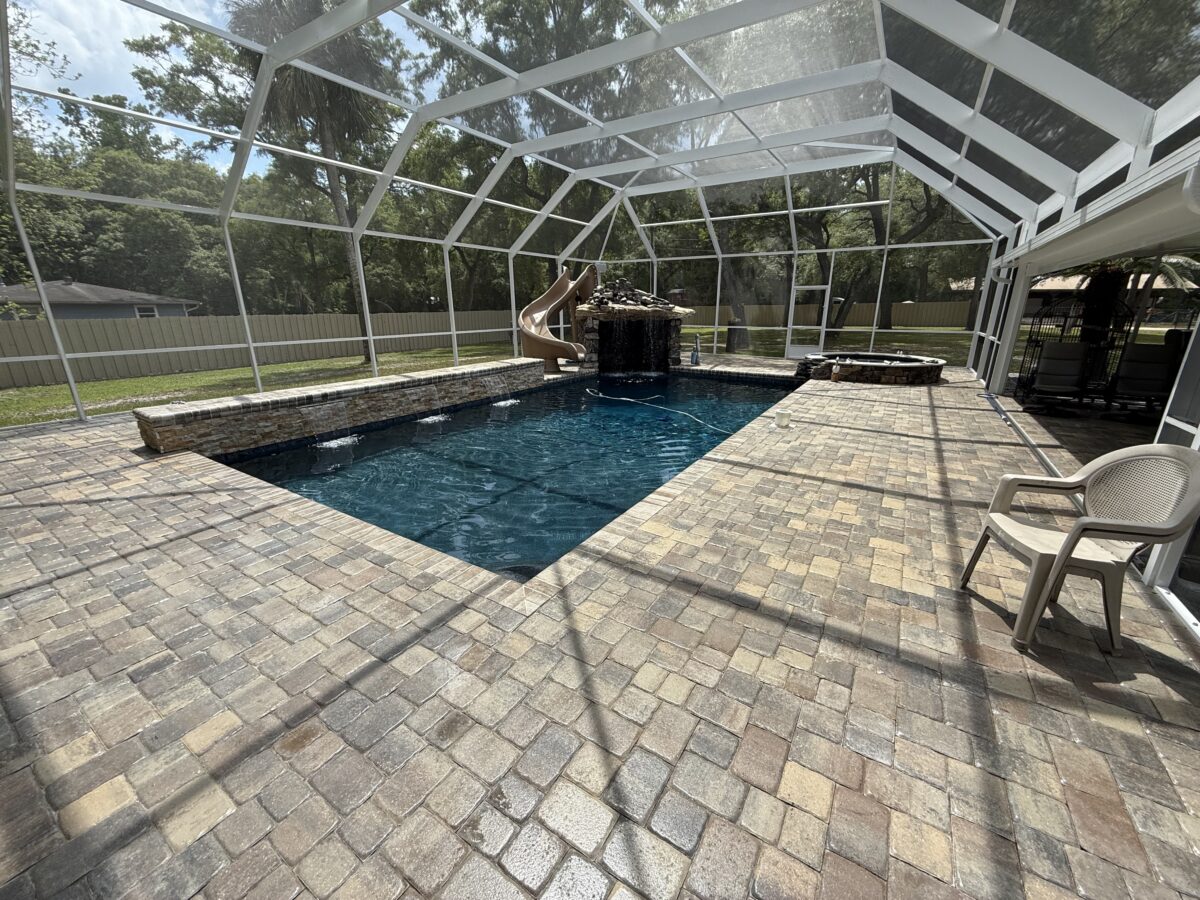
Read reviews alongside completed-project photos and recent references. Renderings show design ideas. Finished work shows execution.
Request examples comparable to your project in High Springs, Alachua, Newberry, or nearby Gainesville neighborhoods. During reference calls, focus on communication, unexpected charges, inspection corrections, property cleanup, and responses to warranty concerns. A simple rectangular pool offers limited evidence of experience with a complicated rebuild or a tight-access backyard.
Match your pool plan to your yard and how You’ll use it
Before requesting estimates, write a short project brief. Describe your preferred size and depth, swimming priorities, seating, entry style, accessibility needs, and must-have features.
For a long North Florida swim season, usable deck space and comfortable entry steps may deserve more of your budget than decorative features. If an enclosure is part of your plan, consider how screening affects your pool layout before fixing the pool position and deck dimensions.
Compare fiberglass and gunite for your project
Fiberglass pools arrive as prefabricated shells. You select from available shapes, sizes, depths, and integrated seating, then your builder prepares the excavation and installs the shell. Delivery access matters: a suitable pool shape accomplishes little if the shell cannot reach the backyard without costly access arrangements.
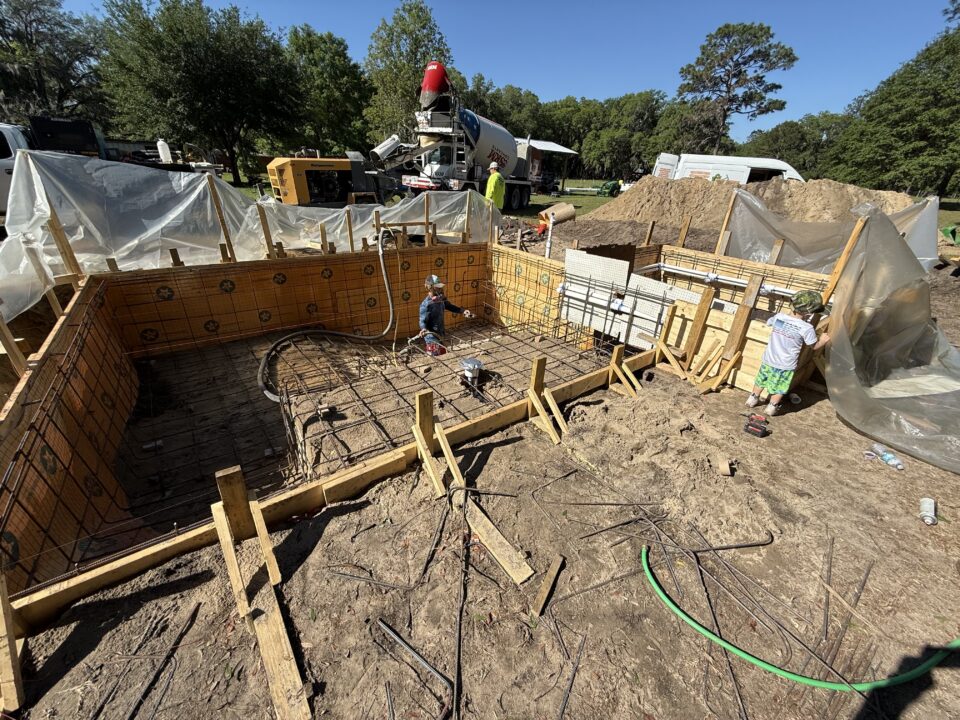
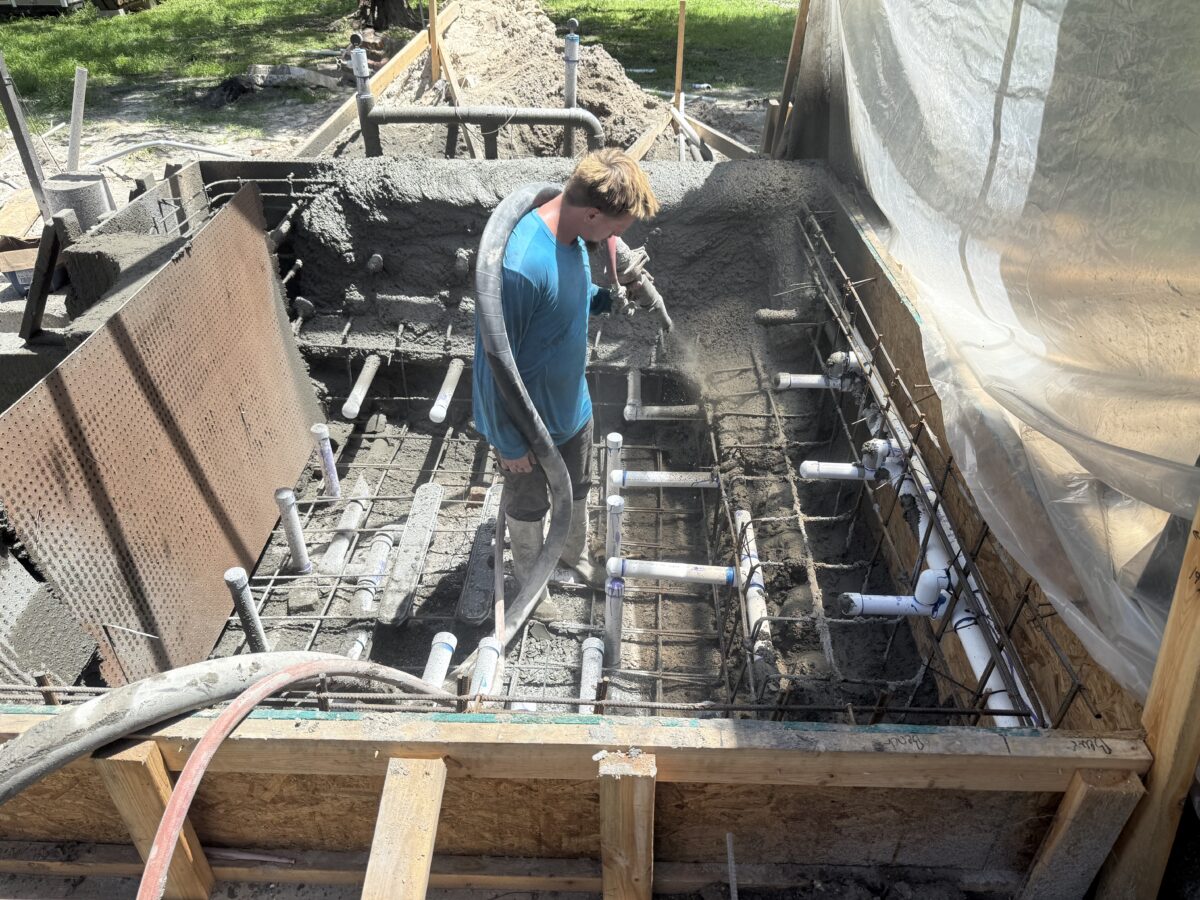
Gunite is concrete applied on-site over a reinforced framework. It offers more freedom with dimensions, benches, depth profiles, attached spas, and finishes, but involves more on-site construction stages.
Compare finished installations, not just shell prices. Include delivery or crane access, plumbing, equipment, decking, finish choices, and future repair or refinishing considerations. Lower-priced above-ground packages are not comparable to complete inground construction.
Decide whether your existing pool needs a remodel or a rebuild
Worn finishes, dated tile, and damaged coping do not automatically require demolition. Structural movement, substantial shape changes, failing buried plumbing, or an unsuitable layout can call for a much larger scope.
Request an assessment explaining what can remain, what needs replacement, and what evidence supports the recommendation. Separate cosmetic updates from structural repairs, equipment changes, and demolition followed by new construction.
For an older pool, review renovation possibilities before committing to demolition. Your estimate should explain how hidden damage discovered after draining or demolition will be documented and priced.
Get your Property’s constraints checked before finalizing the design
Your survey and a site visit should shape the design before you approve it. Confirm boundaries, easements, structures, utilities, septic components, trees, elevations, and equipment access. An older survey may need updating or supplementary information.
Picture a fiberglass shell arriving at your High Springs home, only to find that the side-yard route requires fence removal and a different lifting plan. That access question belongs in the estimate, not on delivery day.
North Florida’s sandy soil over limestone also makes excavation assumptions worth discussing. Review what rock can change during excavation, then confirm how your contract handles unexpected conditions.
Confirm your permit authority, setbacks, and HOA requirements
Have your builder identify the authority responsible for your parcel, whether High Springs or Alachua County, as applicable. A mailing address alone does not settle jurisdiction. For comparison, a property within Gainesville city limits may involve City of Gainesville permitting rather than county permitting.
Get written responsibility for plans, permit applications, fees, inspections, and corrections. Verify current setbacks and other placement requirements for your property instead of accepting a generic distance.
HOA approval is separate from government approval. In planned neighborhoods around Jonesville and Haile Plantation, review architectural requirements before paying for a finalized design.
Put drainage and pool safety in the original scope
Summer storms can expose a poor drainage plan quickly. Your design should explain deck slopes, runoff routes, pool and patio elevations, and protection of neighboring property. Confirm how groundwater, unstable excavation, or other unexpected conditions would affect construction.
Covered new residential pools in Florida require at least one qualifying safety provision. Examples include compliant barriers, approved safety covers, or specified alarm and access-control arrangements. Current building-code requirements can add details beyond that general rule.
Have your builder identify the exact proposed safety provisions, gate hardware, access requirements, and inspection responsibilities. A generic line reading “safety included” is not enough.
Compare complete pool estimates, not starting prices
Your useful budget is the installed project total, not an advertised shell or base-package price. An attractive starting figure can leave out enough work to change the decision entirely.
There is no single Florida average that reliably predicts your High Springs build. Statewide cost articles mix materials, sizes, and scopes. Regional permit valuation reports offer context, but a recorded construction valuation is not necessarily a complete homeowner invoice or a local quote.
If borrowing is part of your plan, review pool-project financing information alongside the estimate. Compare total repayment cost and construction-draw terms, not just the monthly payment.
What can a $20,000 or $30,000 inground pool budget actually cover?
Do not assume either $20,000 or $30,000 will cover your finished inground pool. Without a site-specific written estimate, either figure could describe only a shell, partial package, limited renovation, or another restricted scope.
Check for excavation, electrical work, decking, permits, safety provisions, drainage, and restoration. A price that excludes those items does not answer what your completed backyard will cost.
At a constrained budget, simplify size, shape, decking area, or optional features before cutting required work. With more room, prioritize comfortable access and useful outdoor space. At a higher budget, custom geometry, spas, premium finishes, and expanded controls add choices, but also more specifications to compare.
What changes the price of a 20-by-40 gunite pool?
A 20-by-40-foot pool does not have a dependable price based on dimensions alone. Depth, excavation access, soil and rock, engineering, finish, decking, equipment, and added features can change the scope substantially.
Use this checklist to reconcile competing bids:
- Excavation and spoil removal
- Reinforcement and concrete shell
- Plumbing and pressure testing
- Electrical work and bonding
- Equipment models and installation
- Decking, coping, and finishes
- Required safety provisions
- Plans, permits, and inspections
- Drainage, cleanup, and restoration
- Allowances and explicit exclusions
An allowance is a budget placeholder, not a fixed specification. If one quote includes a generous deck allowance and another includes very little decking, the totals are not comparable.
Separate upfront choices from operating costs. Heating can extend comfortable swimming but adds equipment and energy costs. Variable-speed pumps can reduce electricity use compared with older single-speed equipment, while automation mainly adds control and convenience. Request equipment sizing, expected usage assumptions, and the cost difference for each upgrade.
Make your contract explain what happens when plans change
A verbal promise is not a substitute for a written scope.
Your contract should match the drawings and specify dimensions, depth, materials, finishes, equipment models, allowances, exclusions, and responsibility for associated work. Include fence removal, access repairs, irrigation damage, and yard restoration where relevant.
Watch for vague “equivalent equipment” substitutions, undefined excavation surcharges, or a quote that cannot be reconciled with the plan. Require written change orders describing the added work, price, and schedule effect before approval.
Pressure to sign before site questions are resolved is a reason to slow down, not a reason to skip review.
Tie payments to clear milestones and get warranties in writing
Connect payments to defined progress, such as an identified construction stage completed and any associated inspection passed. Avoid milestones described only as “work underway.” Confirm deposit terms, delay provisions, cancellation rights, dispute procedures, and final-payment conditions.
Builder workmanship, shell, finish, and equipment warranties can have different providers and terms. Request the actual documents, including exclusions, claim procedures, transfer conditions, and responsibility for coordinating repairs.
Pressure for full payment before completion deserves particular caution. Your contract should make the remaining work and payment obligations clear.
Ask how your build will run from excavation to final inspection
Expect approvals and preconstruction planning before site preparation and excavation. Fiberglass construction then involves shell placement and backfilling; gunite involves reinforcement, concrete application, and required curing and finishing stages. Plumbing, electrical work, equipment installation, decking, inspections, and startup follow the approved construction sequence, with some stages overlapping.
Request a schedule with assumptions rather than an unconditional completion promise. Summer storms, inspection availability, access restrictions, material deliveries, and unexpected excavation conditions can change progress.
When comparing start dates, consider how Florida’s seasons affect construction planning. A projected excavation date is not the same as a guaranteed swimming date.
Identify your main contact, the expected update frequency, and responsibility for coordinating subcontractors. Confirm how schedule changes and inspection corrections will be communicated.
Bring a short checklist to your pool consultation
Gather your survey if available, backyard photos, inspiration images, must-have features, and a comfortable budget range. During the site visit, get clear answers about included work, unresolved property questions, and the information needed for a firm estimate.
Before committing, make sure your handover requirements include:
- Required final inspection approvals
- Applicable permit closeout documentation
- Written warranty documents
- Equipment manuals and model records
- Startup and controls orientation
- Completed cleanup and agreed restoration
Try the pool cost estimator to organize your starting budget, or call Swim State at (352) 318-9782 for a build consultation and to confirm High Springs project availability. Request an itemized, site-specific estimate before committing.
Frequently asked questions
How do you verify a pool builder’s Florida license?
Search the contractor or business through Florida DBPR. Confirm active status, the appropriate construction scope, and available disciplinary information. Match those records to the business named in your contract, then separately verify current insurance and workers’ compensation documentation.
Does a High Springs mailing address determine who issues your pool permit?
No. Your parcel’s jurisdiction determines the permitting authority. Have your builder confirm whether High Springs or Alachua County handles your project, along with any other applicable approvals. HOA permission does not replace a building permit.
Can you keep your existing pool shell during a major renovation?
Possibly, but the decision needs an assessment of the shell, plumbing, layout, and proposed changes. Request a written explanation of retained components and required repairs. Include a process for approving additional work if demolition exposes concealed problems.
How long should you expect a new inground pool build to take?
Use a project-specific schedule rather than a generic local promise. Distinguish design and permitting time from active construction, and confirm assumptions about weather, inspections, access, deliveries, and excavation. Your estimate should identify the conditions that could move the completion date.
What should you bring to your first pool-build consultation?
Bring a survey if available, backyard photos, design examples, your budget range, and a short description of how you want to use the pool. Start by having your proposed pool location checked against access, drainage, utilities, and property restrictions before getting attached to a finished design.