
Best Pool Material for Gainesville Homes: What to Choose
September 3, 2026
Small Backyard Pool Ideas That Fit Tight Spaces
September 10, 2026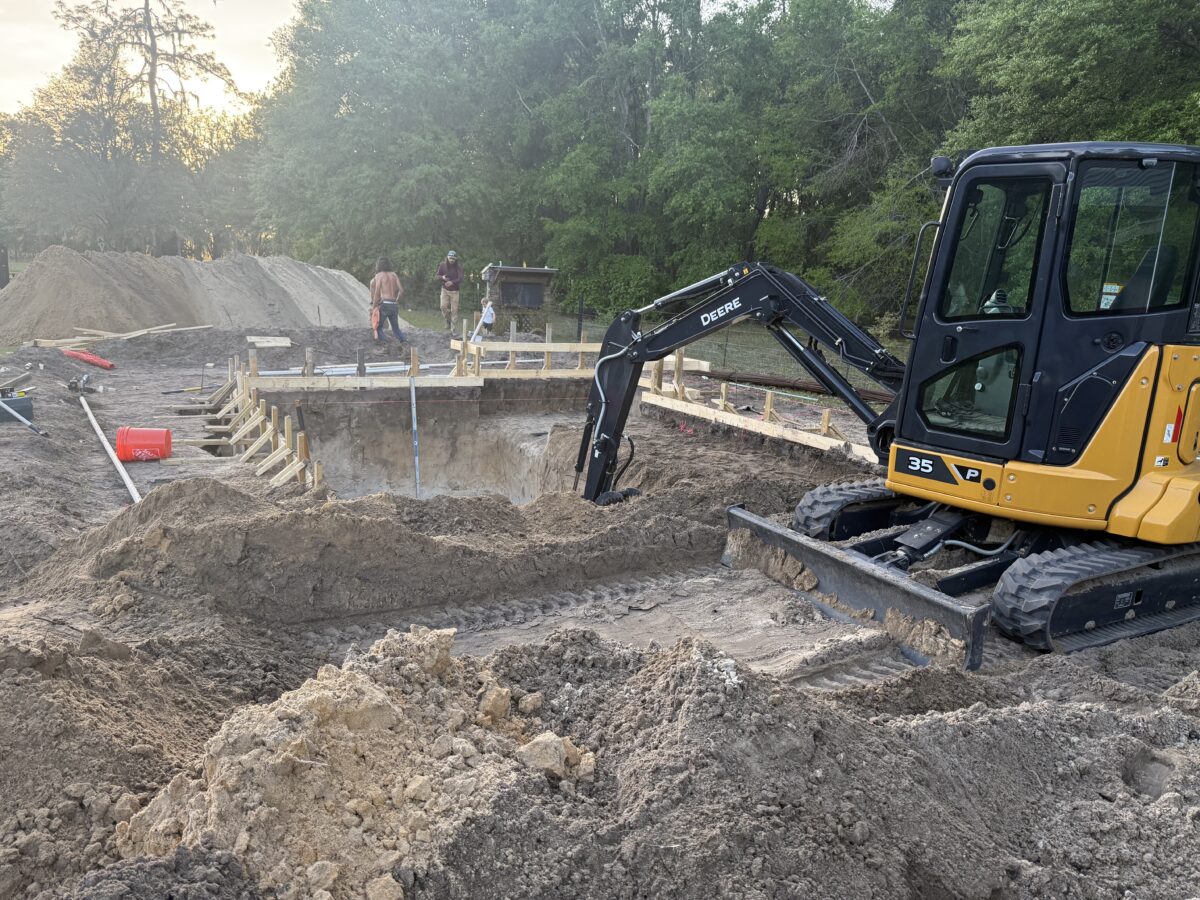
The best time to build a pool in Florida is generally fall into winter, especially if you want to swim by spring rather than spend the first hot weekend looking at an unfinished backyard. Around Gainesville and Alachua County, your best starting date also depends on permits, ground conditions, and an available construction slot.
When is the best time to build a pool in Florida?
Choose your first-swim goal before choosing an excavation date. North Florida’s long swimming season gives you flexibility, but design, approvals, and construction need room on your calendar.
Fall and winter: a strong starting point
Fall into winter generally brings drier conditions, cooler working weather, and breathing room before spring. For a backyard in Gainesville, High Springs, or Alachua, that makes a strong starting point.
The catch is that early fall still overlaps hurricane season, which runs through November 30. Gainesville also gets winter cold snaps, so temperature-sensitive concrete and finish work may need adjustments.
Spring and summer: workable with more planning
Spring can offer useful construction weather if your design, permits, and builder’s slot are already arranged. Starting planning in spring does not guarantee swimming by summer.
Summer construction is possible, but afternoon thunderstorms, lightning, and saturated ground can interrupt progress. Year-round building is workable; year-round predictability is not.
How local weather and your yard affect pool construction
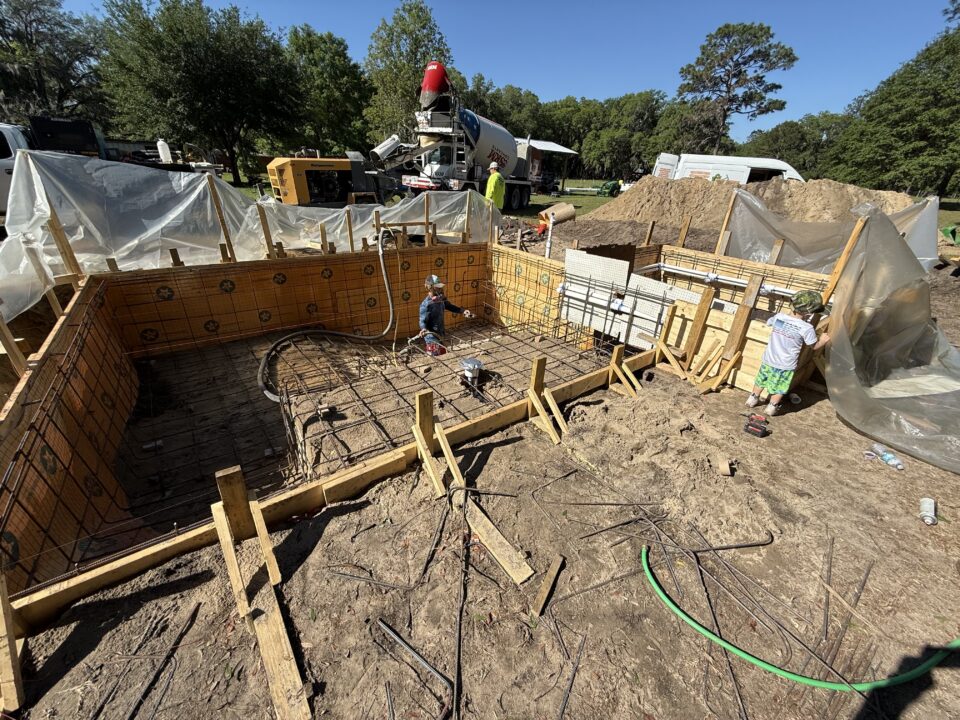
Your lot matters as much as the month. Around Alachua County, sandy soil over limestone can create excavation challenges, while drainage patterns and seasonal groundwater vary by property.
A high water table means groundwater sits close to the surface. Dewatering, temporarily removing groundwater so excavation can proceed safely, may become necessary. Before committing to a start date, ask how your site will be assessed, whether dewatering is likely, and how wet ground could change your price or schedule.
During hurricane season, get a site-protection plan covering loose materials, equipment, open excavation, and surrounding property. Not every storm requires a shutdown, but approaching severe weather can require preparation and a pause.
Concrete, fiberglass, and vinyl-liner pools follow different timelines
Excavation conditions affect every inground pool. Concrete adds shell placement, curing, and finish requirements. Fiberglass depends on shell delivery, equipment access, setting, and backfilling. Vinyl-liner construction requires coordinated base preparation and liner installation.
A quicker installation stage does not erase design, permitting, delivery, or inspection time. With an older pool, demolition and hidden structural or plumbing problems add uncertainty. Include those possibilities in your pool renovation plan before setting a completion target.
Work backward from your first-swim date
Think of your swimming date like a flight departure: excavation is not the moment to start packing. Your design and approvals need to happen earlier.
For a May 1 first swim in Newberry, an illustrative schedule could look like this:
September-October of the previous year: Develop your design, settle dimensions and major features, choose materials, and confirm equipment access. A spa, sun shelf, heater, or expanded deck can affect engineering, utilities, and ordering.
November-December: Allow for permitting and construction scheduling. Confirm material availability and any financing before committing to the construction window.
January-March: Allow for excavation, the shell or pool installation, plumbing, electrical work, decking, and applicable inspections. Inspections happen during construction, not just at the end.
Early April: Target required final inspections, startup, and handover. Keep the rest of April available as a delay buffer.
These are planning allowances, not promises about local permit turnaround or construction speed. Pool type, access, weather, and added features can shift every stage.
Confirm whether your address falls under City of Gainesville, Alachua County, or another municipal permitting authority, such as Newberry. Check setbacks, easements, applicable safety-barrier requirements, and HOA approval. In planned neighborhoods such as Haile Plantation, account for architectural review before scheduling work.
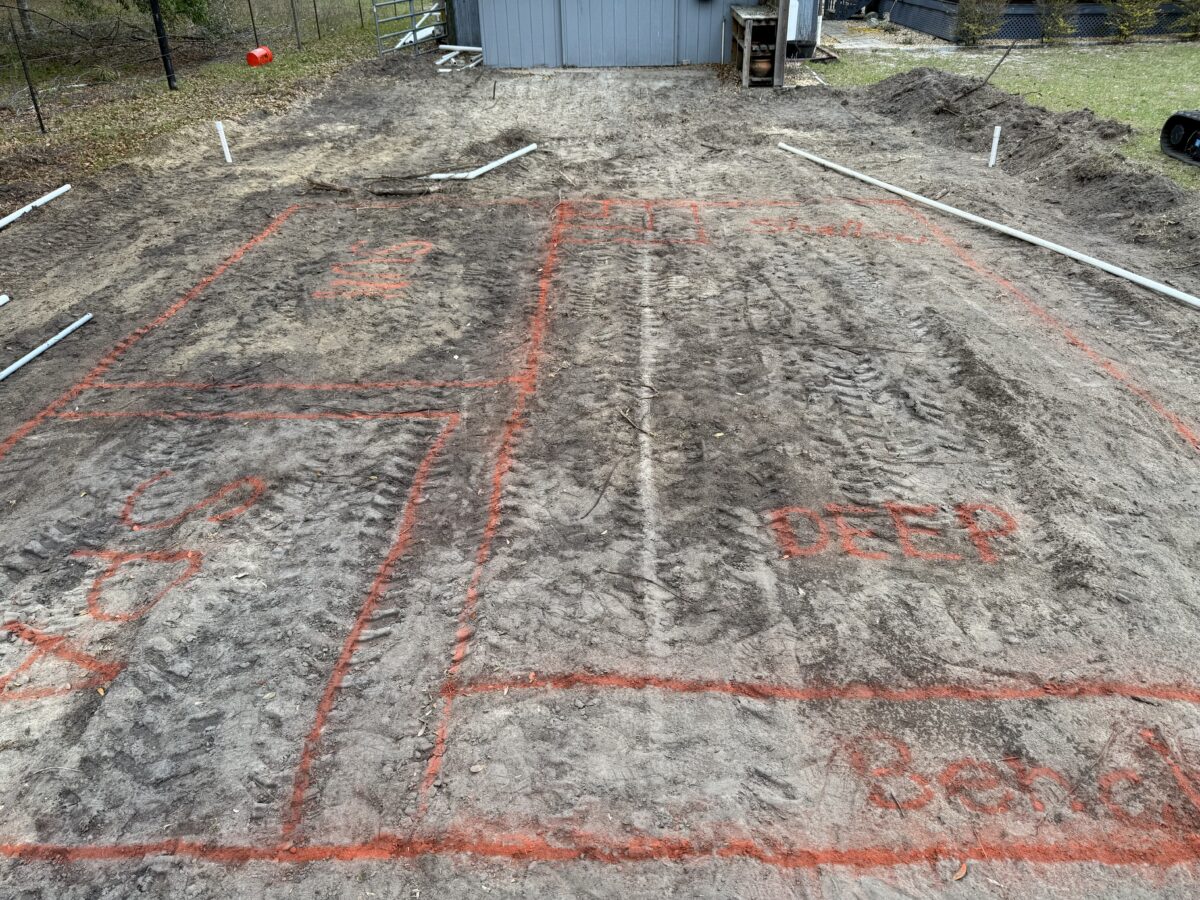
The most useful preparation is settling major choices early. Confirm machinery access, and include decking, drainage, and yard restoration in your completion plan. A filled pool surrounded by unfinished work is not the same as a ready backyard.
Is there a cheaper time of year to build a pool?
Fall or winter can bring scheduling flexibility or occasional incentives, but an off-season discount is not guaranteed. General seasonal guidance points toward potential cooler-season savings, not a promise about Gainesville pricing (Latham).
There is no verified current Florida average in the supplied research that can reliably price your backyard. Your total depends on size, pool type, access, decking, equipment, features, and any demolition. Difficult excavation or groundwater management can also change the estimate.
Use a property-specific estimate rather than a statewide headline number. If payment timing affects your start date, review pool financing before reserving construction.
Compare the schedule and contract, not just the price
Compare bids with matching scopes. Check included work, material allowances, exclusions, permit fees, and restoration. A lower bid may simply leave more work outside the contract.
Read weather-delay provisions closely. Confirm schedule assumptions, how delay notices arrive, possible dewatering or remobilization charges, and responsibility for protecting excavation and nearby property. Remobilization means bringing crews or equipment back after an interruption.
A projected completion window is not the same as a contractual deadline. Get that distinction in writing.
For resale in 2026, a pool can add appeal, but no guaranteed percentage increase or full cost recovery belongs in your budget. Use current local comparable sales or appraisal guidance to judge potential value.
Choose a build window that fits your schedule
Prioritize fall into winter when spring readiness matters most. Choose another available window when approvals, site conditions, and your builder’s schedule support it. Waiting for a supposedly perfect month can be less useful than securing a realistic plan.
If you spend part of the year away, arrange remote design approvals, property access, inspection coordination, and final handover before work starts. Your presence is not normally necessary at every inspection, but responsibility for access and decisions should be clear.
Pick your preferred first-swim date and bring it to a build consultation. Share your address, backyard photos, desired features, and whether you need a new inground pool or a rebuild. Try Swim State’s pool cost estimator or call (352) 318-9782 to discuss a realistic construction window.
Frequently asked questions
What month should you start planning for a spring pool opening?
Start the previous summer or early fall. Allow room for design, HOA review, permitting, scheduling, construction, and delays.
Can you build an inground pool during Florida’s rainy season?
Yes. Budget schedule flexibility for thunderstorms, wet excavation, and site drying rather than assuming uninterrupted work.
Is winter too cold for pool construction in Gainesville?
Usually not for the entire project. Cold snaps can affect particular materials and finishes, so your schedule needs temperature-appropriate work windows.
Is rebuilding an old pool faster than building a new pool?
Not necessarily. Demolition, structural repairs, and concealed plumbing problems can offset any time saved by keeping the existing location. Start with an assessment of what can safely remain.