Pool Automation Systems: What You Really Need to Know
September 24, 2026
Tanning Ledges: What They Are and Who Should Add One
October 1, 2026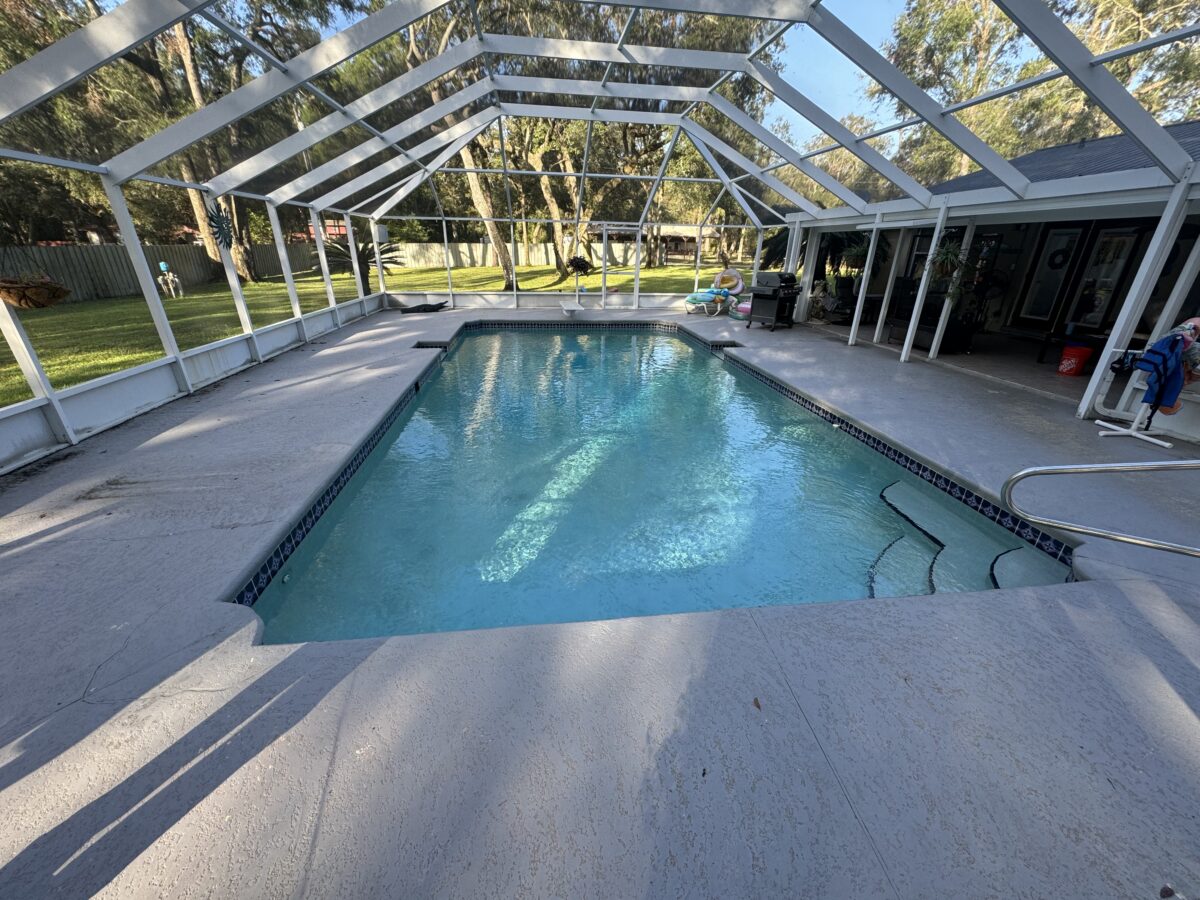
Your favorite pool rendering tells you nothing about who will finish your backyard. When you search for a pool builder in Newberry, FL, start with qualifications, a property evaluation, and a complete written scope, not the prettiest design or lowest advertised price.
Before you hire a pool builder in Newberry, FL, check credentials
A low bid is not proof of a good builder. Before comparing sun shelves and tile colors, confirm that your contractor is qualified to handle your project and can show relevant completed work.
Verify your Builder’s license, insurance, and local track record
Check your contractor’s active license through Florida’s Department of Business and Professional Regulation, or DBPR. Confirm that the license classification covers your proposed work and that the licensed business matches your proposal and contract. A logo with “licensed and insured” underneath is not verification.
Request current proof of general liability insurance and applicable workers’ compensation coverage. Clarify coverage for subcontracted work, too.
Look for recent projects around Newberry, Gainesville, or High Springs with a similar pool type and scope. Experience installing a straightforward fiberglass shell does not automatically establish experience rebuilding a damaged concrete pool.
Look beyond star ratings to finished projects
Use reviews to spot repeated patterns: missed updates, unfinished details, unexpected charges, or difficulty getting warranty support. A single complaint offers less insight than the same problem appearing across several projects.
Request finished-pool photos and references from both recent and older builds. During reference calls, discuss how the final cost compared with the contract, how unfinished items were resolved, and how quickly the builder responded after final payment. Renderings show design intent. Completed projects show follow-through.
Get your property and permit requirements checked before design goes too far
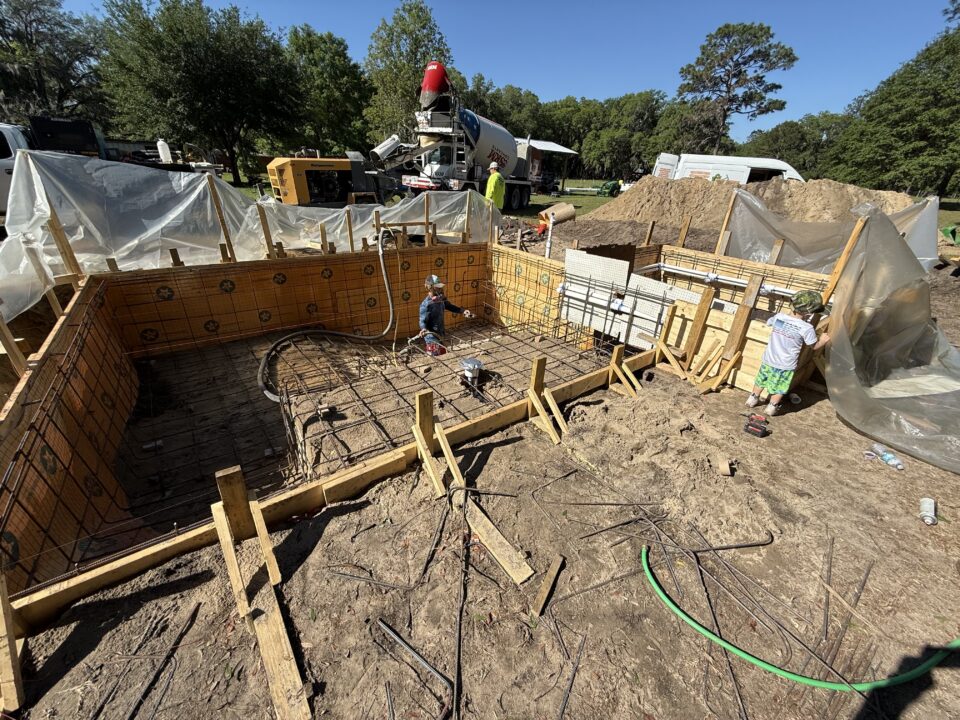
An on-site visit should happen before your design becomes too detailed. Your builder should evaluate excavation access, drainage, underground utilities, easements, septic components, equipment placement, and space for construction deliveries.
Across North Central Florida, sandy soil over limestone can complicate excavation, but your address alone cannot establish what sits below your yard. Request written assumptions about rock, groundwater, unsuitable soil, and any testing or engineering needed. For a sloped lot, include retaining work and runoff management before comparing prices.
Confirm the permitting authority for your actual parcel. A Newberry mailing address does not establish whether City of Newberry or Alachua County requirements apply. City of Gainesville permitting applies within its jurisdiction, not simply because your home is near Gainesville.
Keep HOA or architectural approval separate from government permits. In planned neighborhoods such as Haile Plantation, design restrictions can affect placement, fencing, screening, and equipment visibility. Approval from one office does not replace approval from another.
Put pool safety into your plan from day one
Your proposal should identify the safety measures included, the applicable approvals, and responsibility for inspections. Florida’s residential pool-safety framework requires a qualifying safety feature for covered new residential pools, with options involving compliant barriers, approved safety covers, alarms, or specified door devices. Confirm the current requirements for your property rather than treating a statewide summary as a permit ruling.
Consider four-sided isolation fencing that separates the pool from both the house and yard. An older research review found isolation fencing more protective against child drowning or near-drowning than three-sided fencing.
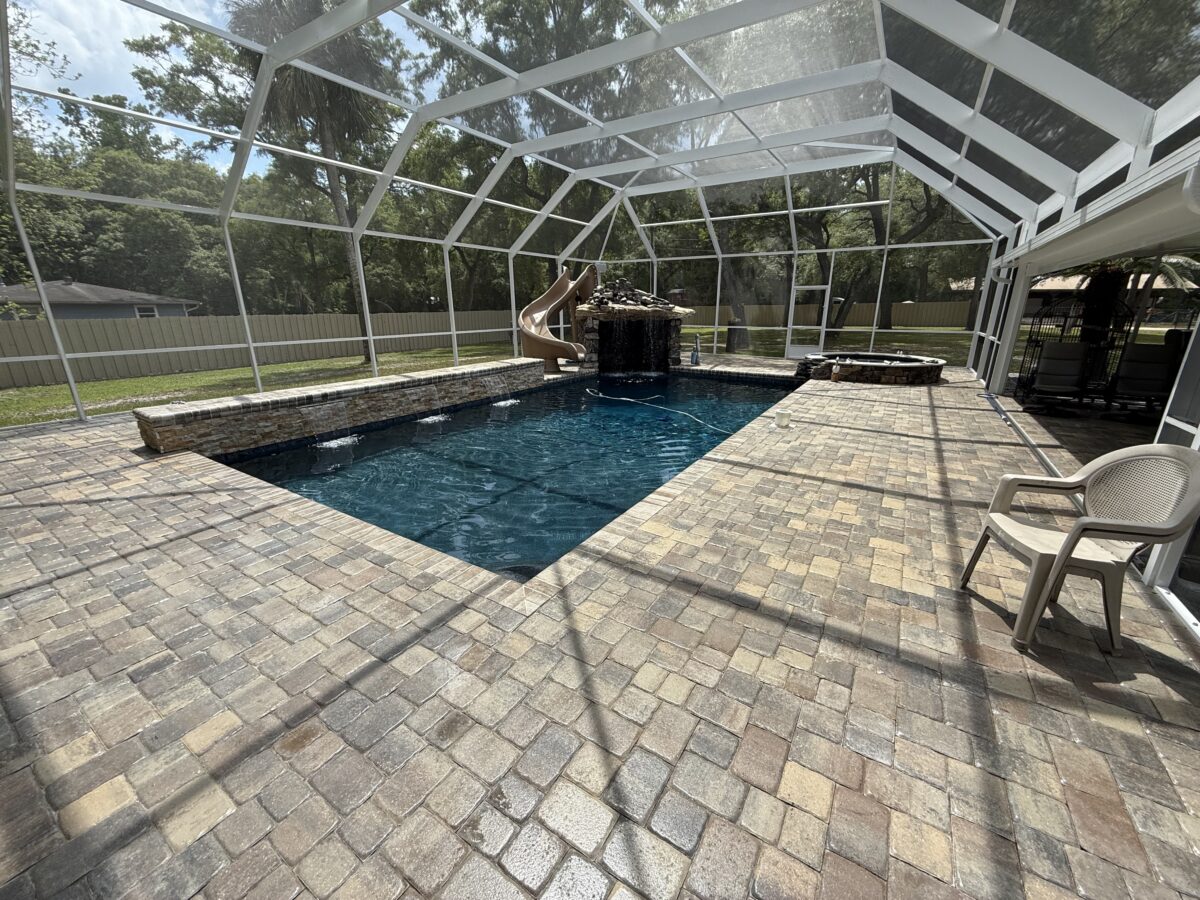
A screen enclosure is not automatically a compliant safety barrier. Door hardware, openings, access points, and the approved design matter. Review how pool access protections work before approving your layout, and treat barriers as one layer of safety, not a replacement for supervision.
If You’re rebuilding, find out what you can actually reuse
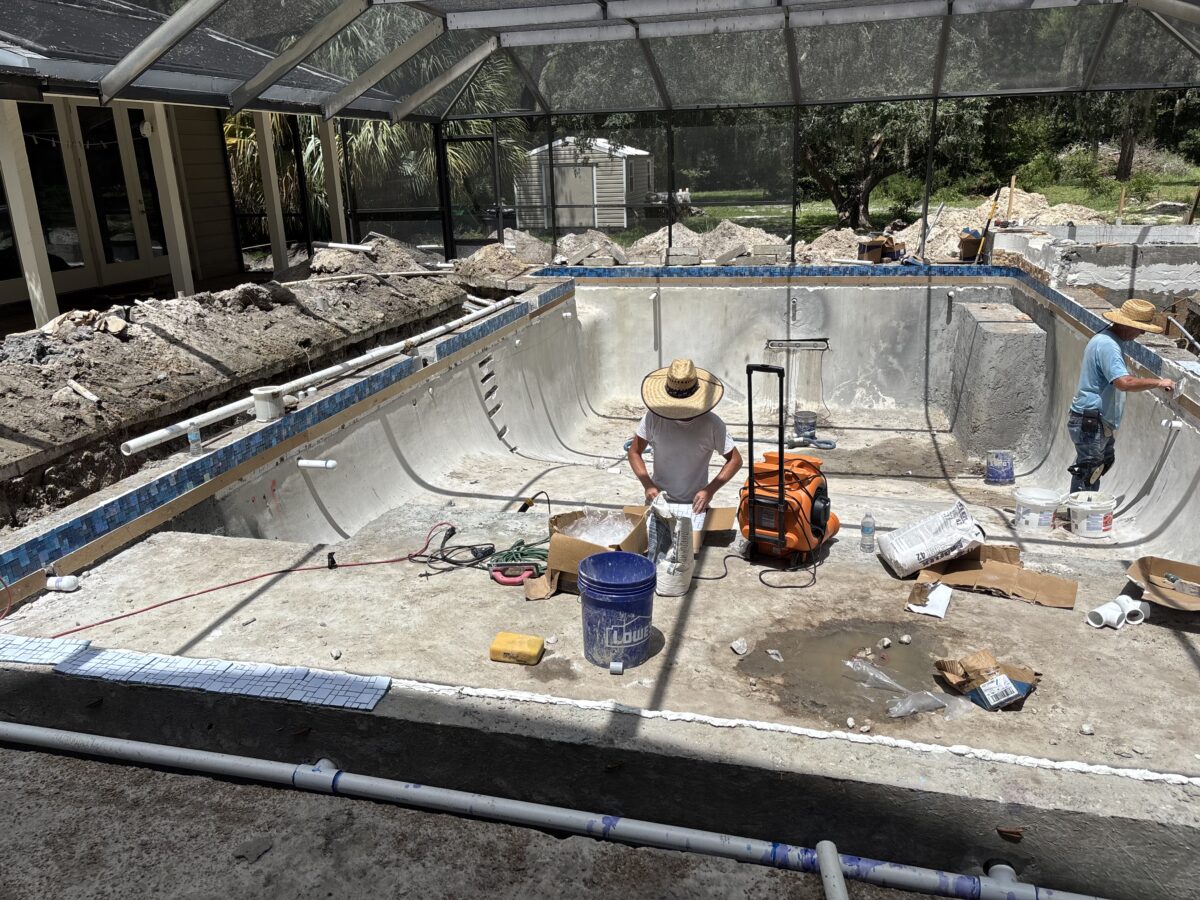
Resurfacing changes a pool’s interior finish. Equipment replacement updates individual components. Structural renovation or complete replacement involves a much broader scope.
Before accepting a rebuild estimate, get an assessment of the shell, plumbing, electrical system, deck, and barriers. Cosmetic improvements cannot fix an underlying structural problem.
Your scope should address demolition, disposal, testing, and hidden damage. Require written approval before additional work begins after an unexpected condition appears. For an existing pool, review options for updating your pool alongside a replacement proposal so your comparison reflects what can reasonably stay.
Match your pool type and features to how You’ll use your backyard
Start with your backyard routine. Family play favors usable shallow space; lap swimming needs an uninterrupted swimming path. Entertaining calls for deck space, while accessibility may favor a handrail, gentler entry, or a transfer area designed around your needs.
Gunite is concrete sprayed into a reinforced framework. Its flexibility suits custom dimensions, integrated spas, unusual shapes, and sites where a stock shell will not fit. The trade-off is a construction process with more on-site work and curing stages.
Fiberglass uses a prefabricated shell delivered to your property. Available shapes and dimensions limit customization, and delivery requires suitable access or a workable lifting plan. Shell installation can move quickly, but decking, electrical work, barriers, and inspections still take time.
Vinyl-liner pools can offer a lower initial construction cost, but local builder availability matters. Budget for eventual liner replacement rather than treating the liner as permanent. The supplied Florida market guide estimates approximately 10-15 years per liner, not a guaranteed replacement interval.
No material is universally best. Match the construction method to your site, desired shape, available budget, and willingness to pay for future component or finish replacement.
Get specific about equipment and upgrades
A “standard equipment package” is too vague for a useful comparison. Request pump and filter models, sanitation equipment, lighting specifications, heating capacity, and automation details.
A salt system generates chlorine from dissolved salt. It does not create a chlorine-free pool. Compare equipment cost, replacement components, warranty terms, and compatibility with your selected finishes.
North Florida’s long swim season makes heating worth discussing if you want comfortable shoulder-season swimming. Request operating-cost assumptions based on your pool size, desired temperature, and intended months of use, not a generic savings promise.
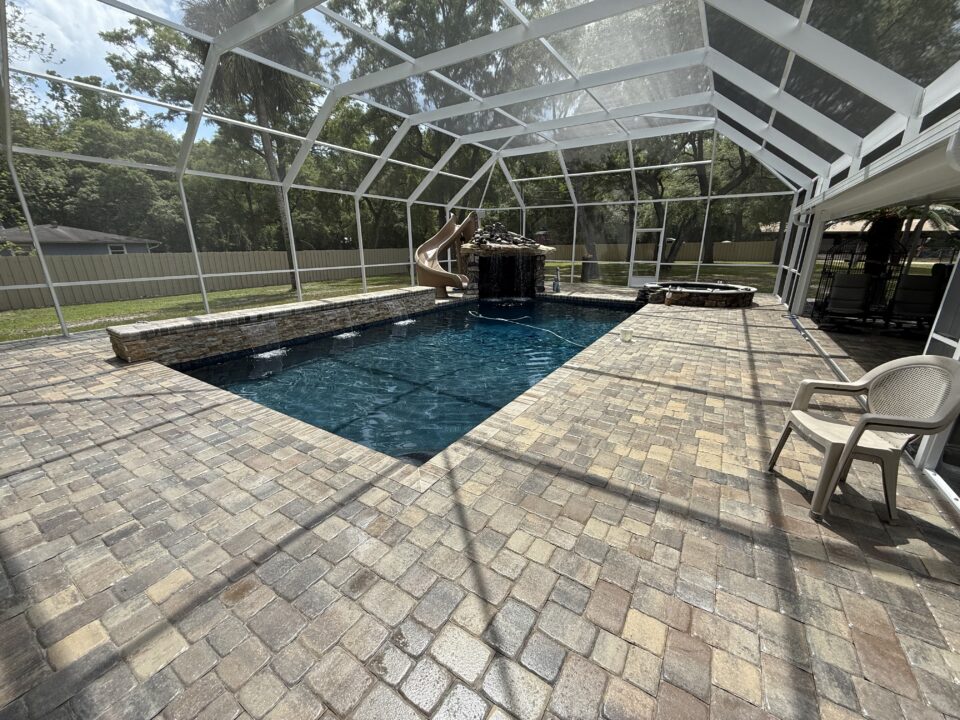
Keep optional features separate from the base build. A spa, sun shelf, heater, or enclosure can be worthwhile, but each changes the budget and sometimes the layout. Before pricing screening, consider what an enclosure adds to your project, including structural work and usable deck space.
Compare complete project prices, not starting prices
There is no dependable Newberry average in the supplied research. A Florida market guide offers a broad statewide installed range of roughly $35,000-$120,000+, which is planning context, not a local quote or statistical average.
Toward the lower end, expect more restrained dimensions, simpler features, and favorable site conditions. Larger custom designs, extensive decking, difficult access, retaining work, and added structures can push a project much higher.
Request matching, itemized proposals covering pool dimensions and depth, construction material, excavation, soil disposal, decking, equipment, barriers, permits, cleanup, and startup. Include utility relocation, irrigation repairs, sod restoration, and enclosure work wherever applicable.
An allowance is a placeholder amount for uncertain work. Require the basis for each allowance, the rate or method for calculating overruns, and written approval before exceeding it. Keep a separate contingency for surprises rather than spending your entire budget on visible upgrades.
If borrowing is part of your plan, compare payment and borrowing details alongside the construction contract. A manageable monthly payment does not establish the total project cost; interest, term length, and staged fund releases matter.
Can your inground pool budget be $20,000 or $30,000?
Neither amount is a dependable starting budget for a complete new inground project because both fall below the supplied statewide installed range.
A low advertisement may describe a shell only, an above-ground package, a financing payment, or renovation work rather than complete construction. Identify every exclusion before treating that price as achievable for your yard. Access, permits, electrical work, decking, and barriers do not disappear because an advertisement leaves those costs out.
What would a 20-by-40 gunite pool cost?
Dimensions alone cannot establish a reliable price. A 20-by-40-foot pool can vary substantially in depth, structural requirements, equipment, deck area, and site work.
The supplied broad Florida gunite range of $50,000-$120,000+ describes a category, not a quote for this size. A larger or more complicated project can exceed that context. Request an on-site estimate that identifies excavation assumptions, access, depth profile, decking, equipment, and optional features.
Ask for a schedule that includes more than dig day
Your schedule should cover design, engineering where needed, HOA review, permitting, excavation, shell construction or placement, plumbing and electrical work, decking, barriers, inspections, filling, and startup. Some stages overlap; others cannot proceed until an inspection or curing period is complete.
Clarify when your project can actually start and what “completion” means. The supplied Florida index reports a median of about 13 weeks from permit issuance to final inspection for custom gunite, but that is statewide context, not a Newberry promise. Design and permit processing can add time before that clock starts.
Summer storms can interrupt excavation and concrete work. Material availability, inspection scheduling, groundwater, and concealed conditions can also shift the sequence. Consider how seasonal timing affects construction, then get a schedule based on your project rather than a statewide benchmark.
Identify your main contact, job-site supervisor, and responsibility for subcontractor coordination. Set an update frequency and a written process for communicating delays.
Also document construction access and yard protection. Your proposal should explain how fences, driveways, irrigation, and disturbed areas will be protected or restored. A finished pool should not leave an unresolved repair bill across the rest of your yard.
Read the contract before you pay a deposit
Your contract should match the approved design, equipment specifications, exclusions, allowances, schedule assumptions, and total price. Verbal promises about extra decking or upgraded lights belong in writing before signing.
Request a clear deposit and milestone-payment schedule tied to defined work. Large payments disconnected from completed work deserve scrutiny. Financing draws should also match the construction agreement.
Require written change orders identifying the added or reduced scope, price, and schedule effect before approval. Discuss appropriate lien releases and other lien documentation with your contractor, lender, or Florida construction attorney. Paying the builder alone does not answer every question about payment to suppliers and subcontractors.
Pressure to sign immediately, unclear allowances, and resistance to documenting promises are reasons to pause.
Separate construction, equipment, and finish warranties
Construction workmanship, manufactured equipment, and interior finishes may have separate warranties. Request the duration, covered defects, exclusions, registration requirements, and service contact for each.
Clarify responsibility for workmanship problems versus manufacturer claims. A lengthy warranty headline means little without clear coverage and a workable service process.
Define completion to include required final approvals, startup, equipment instruction, manuals, and a written punch list with resolution dates. Water in the pool is not the same as a completed project.
Bring these details to your pool-build consultation
Gather your survey or site plan, backyard photos, approximate budget, preferred pool size, and must-have features before requesting a consultation. For a rebuild, add existing plans, repair records, equipment information, and photos of visible damage.
Request an on-site evaluation and written estimate. Then compare two or three qualified builders using the same scope. Treat credentials, site assumptions, communication, and contract clarity as decision criteria, not extras that only matter after choosing the lowest price.
Frequently asked questions
How can you verify a pool builder’s Florida license?
Use Florida DBPR’s license search to check the contractor’s status and license classification. Match the licensed business to your proposal, then request current insurance documentation separately.
Does a Newberry mailing address determine the pool permit office?
No. Your parcel’s jurisdiction determines the permitting authority. Confirm whether your address falls under City of Newberry, Alachua County, or another municipality before relying on a permit estimate.
Can you get a reliable estimate without a backyard visit?
An online estimate can help establish a planning budget, but a dependable proposal needs property-specific information. Access, drainage, utilities, soil conditions, and your selected scope can substantially change the total.
Should you renovate an older pool or replace it?
Base that decision on the shell’s condition, plumbing and electrical assessments, desired layout, and the cost of correcting defects. A sound shell may support renovation; major structural problems or a completely different layout can make replacement worth comparing.
When should you request a pool-build consultation?
Start before committing to a final design or outdoor construction that could block access. Early site evaluation helps coordinate the pool, deck, barriers, drainage, and approvals.
Put your survey and backyard photos together, then try the pool cost estimator or call Swim State at (352) 318-9782 for a build consultation. Use that conversation to turn your preferred design into a written, site-specific scope.