
Custom Pool Maintenance in Gainesville: What to Know
September 3, 2026
Custom Pool Cost in Gainesville: What You’ll Really Pay
September 3, 2026
Florida pool design gets overwhelming fast. One minute you’re picking tile colors, the next you’re staring at tanning ledges, screen cages, sun shelves, and waterfall photos that all look great until you picture them in your actual yard. The trick is to start with how you want the space to live, because a pool that looks good on paper can still feel wrong every single Saturday afternoon.
Start With How You Want the Pool to Feel
Before shape, finish, or water feature talk, decide what kind of backyard you want to step into. Calm retreat. Kid-friendly hangout. Party space. Exercise zone. Maybe a mix, but usually one use matters most, and that use should drive the design.
That sounds obvious, but it gets missed all the time. It is very easy to get pulled toward whatever looks impressive in a showroom or on social media. Good pool design is less about impressing someone for ten seconds and more about making your backyard easy to enjoy for ten years.
Match the Pool Design to Your Daily Use
If your pool is mostly for family time, usable shallow space matters more than a dramatic deep end. Wide entry steps, bench seating, and clear sightlines make everyday use easier. If you picture kids jumping in after school, a gentle depth transition is usually a better choice than a pool that drops off quickly.
If exercise is the goal, you need a layout that gives you uninterrupted swim length. In many yards, that points to a cleaner rectangular design. If entertaining matters most, deck space becomes just as important as water area, because people gather around the pool as much as in it.
Here’s the thing: “a little of everything” is fine, but only if the layout makes tradeoffs clear. A compact pool can still do a lot, though it probably cannot be a lap pool, oversized play pool, and full resort setup at the same time.
Think Beyond the Waterline
Your pool is not just the shell. It is the walking path from the back door, the chair where you drink coffee at 8 a.m., the shade spot that saves you in August, and the place towels land after a swim.
In Florida, the best backyards feel connected. The pool, deck, dining area, shade structure, and planting beds should work like one outdoor room. If the seating is too far from the water, the space feels awkward. If every path cuts across wet decking, it gets annoying fast. A smart layout keeps movement simple and natural.
Build for Florida’s Climate, Sun, and Storms
Florida changes the math. Heat, humidity, sudden downpours, coastal salt air in some areas, and storm season all affect what ages well and what becomes a headache.
A pool that works beautifully in another state can feel punishing here. Hot decking, bad drainage, rust-prone hardware, and no real shade can make a brand-new build feel uncomfortable by the first serious summer.
Plan Around Sun Exposure
Sun angle matters more than most homeowners expect. A pool can feel perfect at 10 a.m. and harsh by late afternoon if the layout puts all seating in direct western sun. Water temperature, glare, and deck temperature all shift with exposure.
If you love sunbathing, a tanning ledge in a sunny spot makes sense. If you actually want to linger outdoors in July, shaded seating nearby matters just as much. Try to picture where you will sit at 3 p.m., not just how the pool looks in a bright design rendering.
This is also where placement near the house helps. Covered patio edges, partial shade from a structure, and a deck that gives you both sun and relief usually beat an all-sun setup. If you are still narrowing material options, it helps to understand how different pool types affect the build and long-term feel.
Choose Materials That Handle Heat and Moisture
Materials should feel good under bare feet and hold up under constant moisture. That means slip resistance, which simply means the surface gives your feet some grip when wet, and heat performance, which is what you notice when the deck is too hot to cross without sprinting.
Cooler pavers, textured concrete finishes, and lighter deck colors often make day-to-day life better than darker, prettier options that soak up heat. Around the pool itself, finish durability matters too. Humidity, chemicals, and regular use will expose cheap choices quickly.
Near the coast, corrosion resistance becomes a bigger deal. Metal hardware, fasteners, and certain fixtures should be chosen with salt exposure in mind. This is not the glamorous part of Florida pool design, but it is exactly the kind of choice that separates a good-looking build from one that still looks good later.
Don’t Ignore Drainage and Storm Prep
Water should move away from your house, away from the deck, and away from places where puddles will sit. If the yard already holds water after a summer storm, adding a pool without correcting grading can make that worse.
Drainage planning includes deck slope, overflow handling, and where runoff goes when heavy rain hits. During design, this deserves as much attention as tile and coping. If you are early in the planning process, sorting out permits before digging also helps you catch site and drainage issues before they become expensive changes.
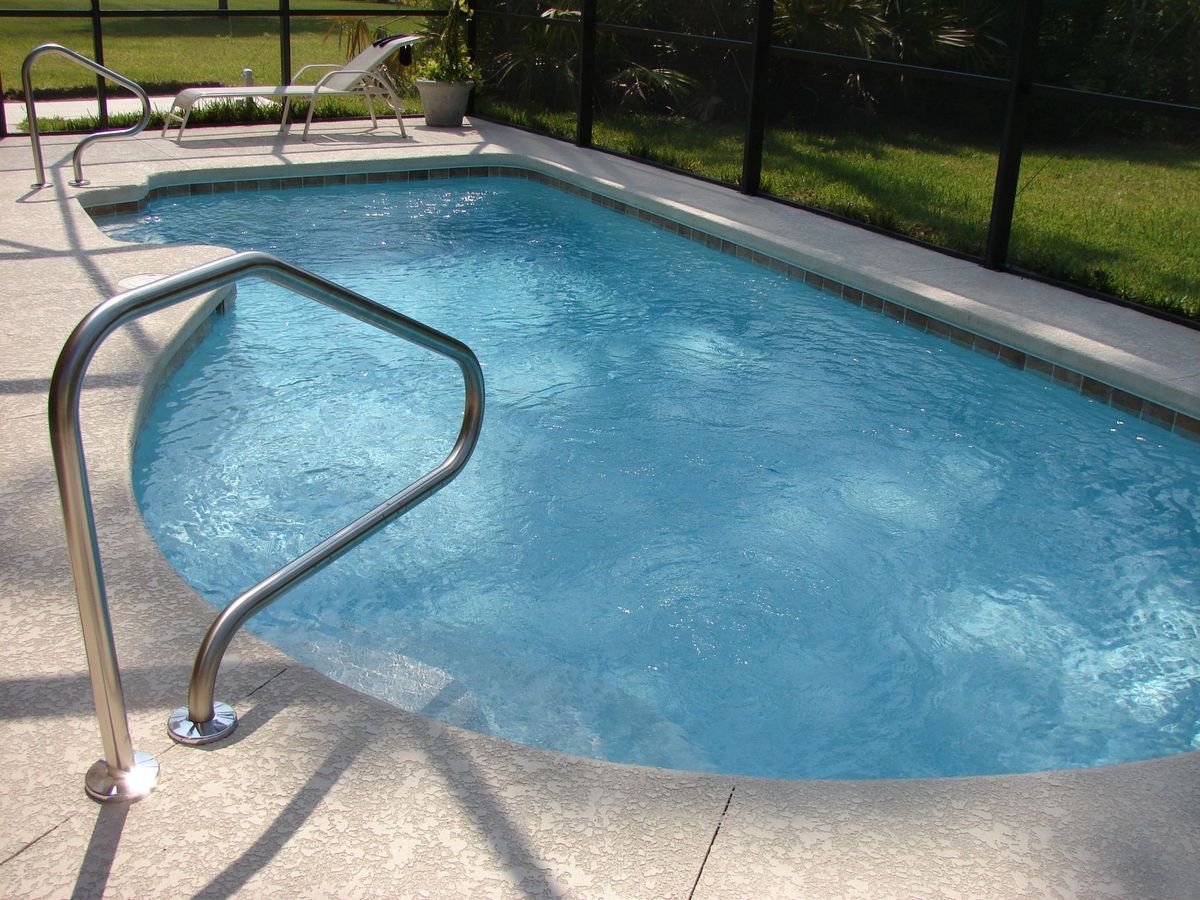
Screen enclosures can help with debris and bugs, but they also change wind exposure, maintenance, and the overall feel of the yard. Open-sky pools feel more expansive. Enclosed pools often feel easier to live with in buggy months. Neither is automatically better. The layout around local weather is what matters.
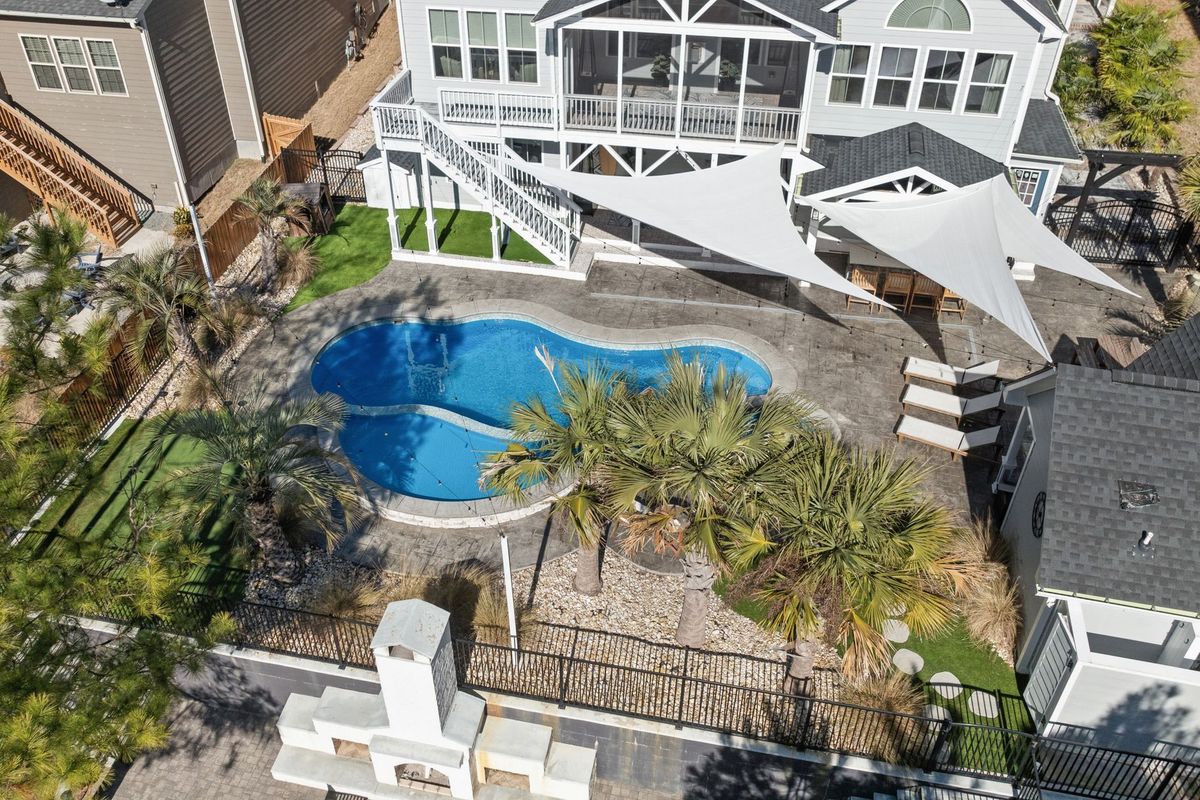
Pick a Pool Shape and Layout That Fits Your Yard
A good pool belongs in the yard. It does not fight it. Lot lines, setbacks, existing trees, utility locations, and the style of your home should all shape the design.
Trying to force a trendy shape into the wrong backyard usually creates leftover problems: pinched walkways, unusable corners, awkward furniture placement, and less lawn than you wanted.
Geometric vs. Freeform Designs
Geometric pools have straight lines and a cleaner, more architectural look. They usually pair well with modern homes, narrower lots, and backyards where you want a neat, structured layout. They also make lap swimming easier.
Freeform pools use softer curves and tend to feel more natural or resort-like. If your yard has tropical landscaping, irregular edges, or a looser layout, a freeform design can feel more relaxed. The catch is that curves can eat into usable deck space if the yard is tight.
Neither style is better on its own. The better choice is the one that makes your house and yard feel intentional instead of patched together.
Make the Most of Small or Awkward Backyards
A smaller yard does not mean settling for a bad pool. It means being more selective. Narrow rectangles, cocktail pools, and integrated spa designs often work better than trying to squeeze in a full sprawling shape.
In tighter suburban lots, every foot matters. A side-yard installation, a compact plunge-style layout, or a pool with one crisp edge aligned to the patio can make the whole yard feel bigger. Smart deck planning helps too. Sometimes trimming the pool footprint by a few feet gives you enough room for loungers, which ends up making the space much more useful.
Leave Room for the Backyard to Function
A beautiful pool that swallows the whole yard is a bad design. You still need walking paths, furniture space, storage, and maybe lawn for pets or play.
Think about how doors open onto the deck. Think about where guests will gather when nobody is swimming. Think about grill smoke, dining space, and where wet kids will run. Good layouts leave breathing room. That is what makes the backyard feel comfortable instead of crowded.
Focus on the Features That Change How You Use the Pool
Some add-ons change daily use in a real way. Others mostly look nice in photos. Knowing the difference can save you a lot of money and regret.
The best upgrades usually improve comfort, access, seating, shade, or visibility. Flashier features can still be fun, but only after the basics are right.
Baja Shelves, Benches, and Shallow Zones
A Baja shelf, also called a tanning ledge or sun shelf, is a large shallow platform just under the water. It is great for lounging, supervising kids, or simply cooling off without fully swimming. In Florida, where the pool often gets used casually as much as actively, this feature earns its keep.
Built-in benches are another practical upgrade. You get a place to sit without dragging furniture into splash range, and the pool feels more welcoming for conversation. Shallow zones also help with easy entry and multi-age use, especially if the pool is part family hangout, part adult retreat.
Spas, Water Features, and Lighting
Integrated spas can be worth the spend if you know you will use them regularly. They add year-round value because warm water still feels inviting on cooler evenings. But if the spa is mostly for the look, that money may be better spent elsewhere.
Waterfalls, bubblers, and scuppers can add movement and sound, though more features usually mean more maintenance and more cost. LED lighting tends to be one of the better upgrades because it changes how the space feels at night without complicating the pool too much. If you want a build that stays enjoyable without constant tinkering, learning what easier upkeep really looks like helps frame these decisions.
Screen Enclosures and Shade Options
This is one of the most Florida-specific choices you will make. Screen enclosures help with bugs, leaves, and a lot of everyday cleaning frustration. They also soften direct sun a bit and make evening swims more pleasant in mosquito season.
But open pools have a different feel. More sky, more breeze, more visual openness. Pergolas, shade sails, umbrellas, and covered lanais can create a middle ground. If you hate debris and bugs, the screen enclosure is often worth it. If you care most about an open resort feel, layered shade outside the pool may be the better move.
Keep Maintenance, Safety, and Running Costs in the Plan
A smart pool is easier to own, not just prettier to unveil. Design choices affect how much debris lands in the water, how simple the system is to clean, and what your monthly costs look like.
That matters more than most upgrades.
Design for Easier Cleaning and Circulation
Circulation simply means how water moves through the pool system. Good circulation helps keep water cleaner, reduces dead spots, and makes chemicals work more evenly.
Pool shape affects that. So does skimmer placement, nearby landscaping, and how exposed the water is to falling leaves. A complicated design with tight curves and decorative pockets may look interesting but create places where debris collects. Simpler layouts are often easier to keep clean, especially if your yard has trees.
Safety Features That Blend Into the Design
Safety does not have to make the pool feel harsh or institutional. Fencing, alarms, non-slip decking, handrails, and good visibility from the house can all be incorporated without ruining the look.
What matters most is practical supervision and easy movement. Clear sightlines to shallow areas, gentle entries, and surfaces that stay grippy when wet do more for daily safety than a dramatic design statement ever will.
Equipment, Heating, and Energy Use
Pumps, filters, heaters, automation, and salt systems all affect ownership more than tile color does. Variable-speed pumps, for example, cost more up front but often run quieter and more efficiently over time. Automation can make the pool much easier to manage if you want fewer manual adjustments.
Heating is another lifestyle choice. If you want to stretch your swim season, it may be worth it. Salt systems can make water feel softer, though they still require monitoring and compatible materials. For a deeper look at long-term surface and system tradeoffs, it helps to compare which pool material makes the most sense for your home.
Set a Real Budget Before the Wish List Takes Over
Pool budgets expand fast because the shell is only the beginning. Decking, finishes, lighting, enclosure choices, drainage work, equipment, and landscaping can move the total much higher than the starting number you had in mind.
The trick is to decide early what actually improves your life outdoors.
Know What Drives Pool Costs in Florida
Size is a major cost driver, but it is not the only one. Excavation complexity, material choice, decking area, integrated spas, upgraded finishes, and screen enclosures all add up quickly. A difficult site can also affect labor and prep costs.
That is why base price discussions can be misleading. The pool itself is only part of the bill. If you want a clearer picture, breaking down what Florida pool builds really cost helps you understand where the money usually goes.
Decide Where to Spend More
Spend more on the parts you will feel every day: layout, shade, deck comfort, circulation, and durable materials. Those choices pay you back in usability.
Spend carefully on features that mostly photograph well. Extra water effects, oversized depth, and decorative complexity can inflate cost without making the backyard better. Honestly, a simple pool with excellent shade and a comfortable deck usually beats a flashy pool with nowhere pleasant to sit.
Leave Room for Landscaping and Finishing Touches
Do not blow the full budget on the shell and hardscape. Privacy planting, lighting, furniture, and softening around the deck are what make the space feel finished.
Without that layer, a new pool can feel like a slab in the middle of the yard. Picture bare concrete in July at 4 p.m. That is not the mood you are after.
Avoid the Florida Pool Design Mistakes That Cause Regret
Most pool regret comes from choices that looked exciting early and felt inconvenient later. The good news is that these mistakes are easy to avoid if you stay focused on use, comfort, and proportion.
Going Too Big or Too Deep
Bigger is not automatically better. Large pools cost more to build, more to run, and more to maintain. They also take over yards that could have supported better seating, shade, and landscaping.
Deep ends are another common misstep. Many homeowners end up using shallow lounging and play space far more than a dramatic deep section. If diving is not a real priority, keep more of the pool comfortably usable.
Chasing Trends Over Function
Trends move faster than construction budgets. A detail that feels fresh today can feel dated in a few summers, especially if it never fit how you use the space in the first place.
Choose features that support your habits. If you are not going to host glowing nighttime pool parties, do not build the backyard around that fantasy. Build for Tuesday evening, not just Instagram.
Forgetting Privacy, Noise, and Neighbor Sightlines
Privacy changes everything. Before finalizing the layout, stand in the yard and notice where neighboring windows, second-story rooms, or a nearby lanai look down into the space. That moment catches surprises that drawings often hide.
Noise matters too. Waterfalls, pumps, and gathering areas all create sound. Equipment placement should support comfort, not put a steady mechanical hum beside your favorite chair.
Choose the Right Pool Design for Your Style and Use Case
The best Florida pool design is the one that supports the life you actually live. Not the version that exists in brochures, and not the one built around every possible upgrade.
Best Florida Pool Design for Families
For family use, prioritize shallow play areas, visible sightlines, non-slip decking, nearby shade, and seating close to the water. A gentle entry, bench space, and room to supervise comfortably will matter more than dramatic shape.
Best Florida Pool Design for Entertaining
For entertaining, focus on broad deck zones, easy flow from the house, integrated seating, nighttime lighting, and enough dry space for dining and conversation. The pool should anchor the party, not block it.
Best Florida Pool Design for a Low-Maintenance Backyard
For lower upkeep, keep the shape simpler, avoid debris-catching extras, choose durable finishes, and invest in efficient equipment and practical shade. Fewer fussy details usually means more time enjoying the pool and less time fixing it.
A good final test is simple: picture your backyard on a hot Gainesville afternoon, barefoot on the deck, towel on a chair, cold drink in hand. If the design makes that moment feel easy, comfortable, and natural, you are probably getting it right.